
Free on-site gate assessment - hinges, posts, and your LiftMaster or Nice gate operator checked before anything is quoted
The assessment is free and the quote is the invoice.

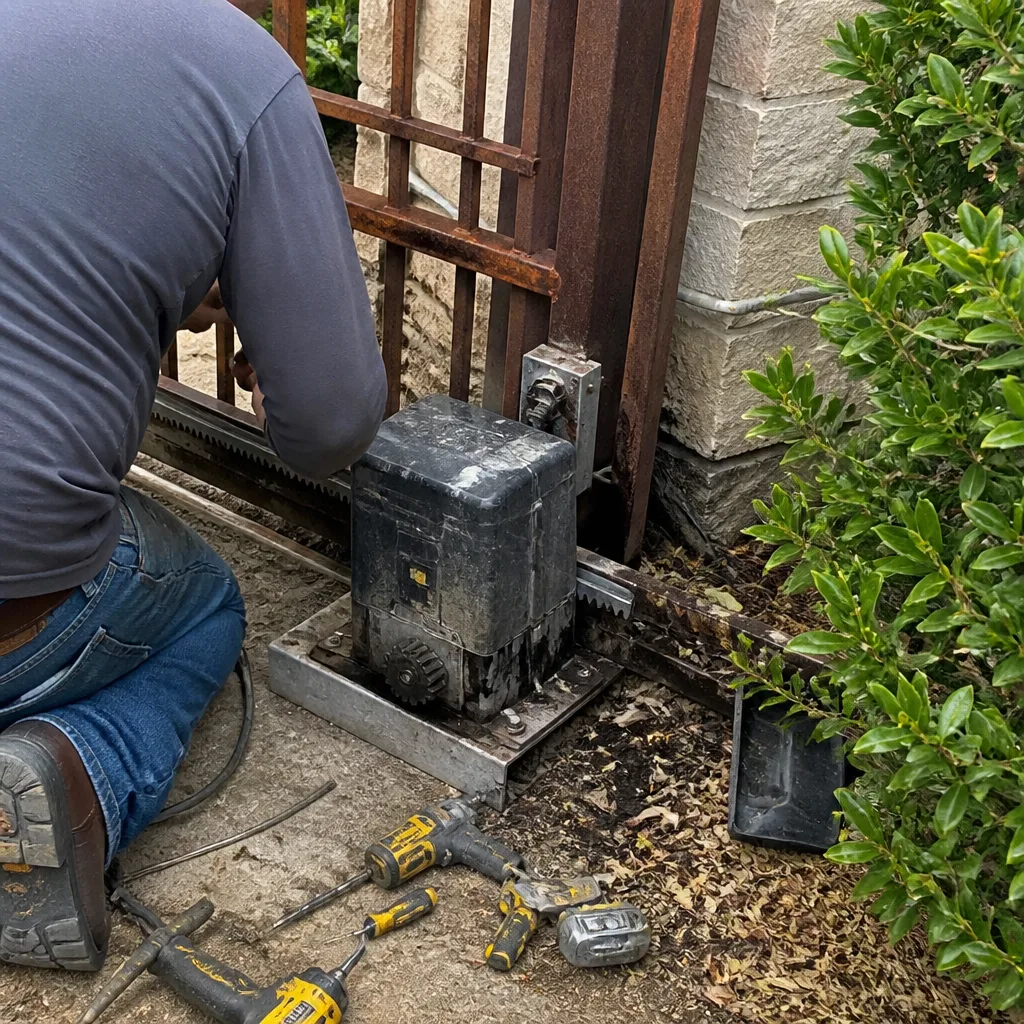 Before
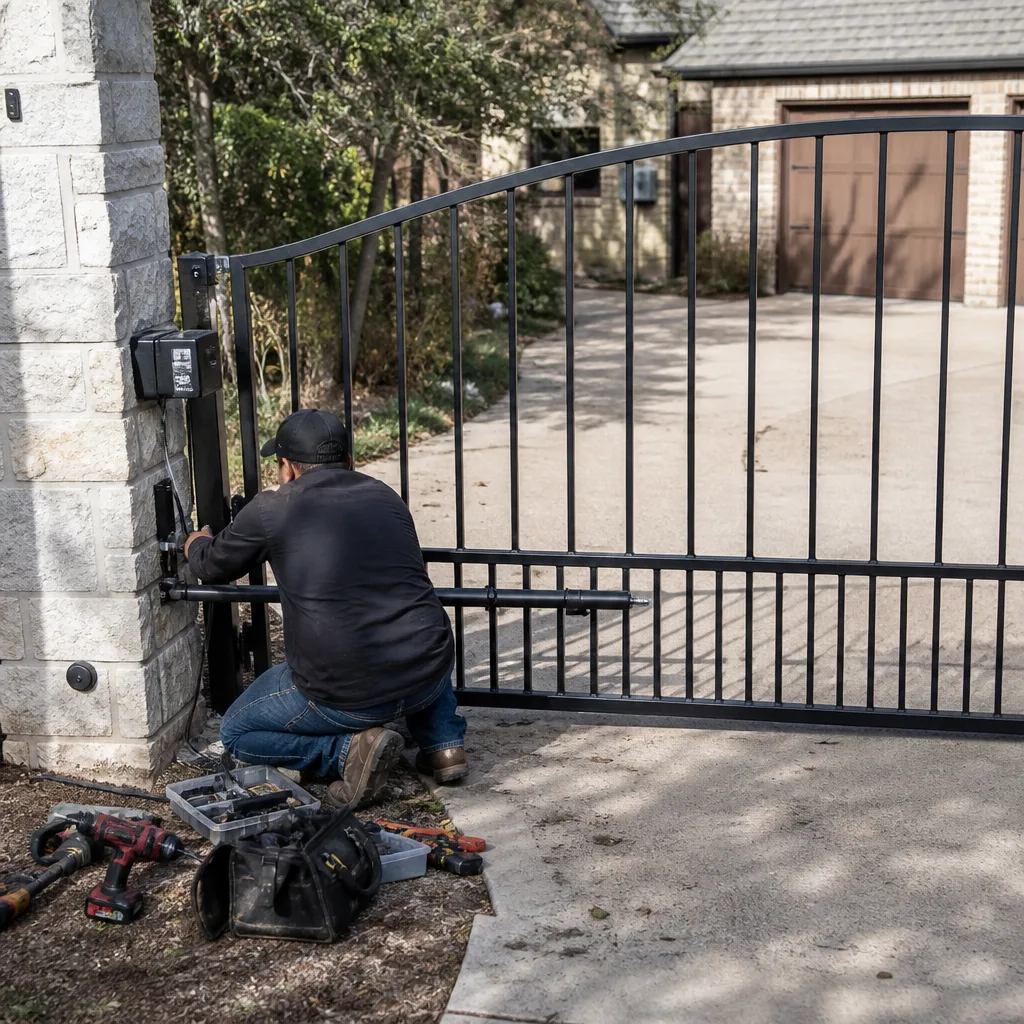 After
After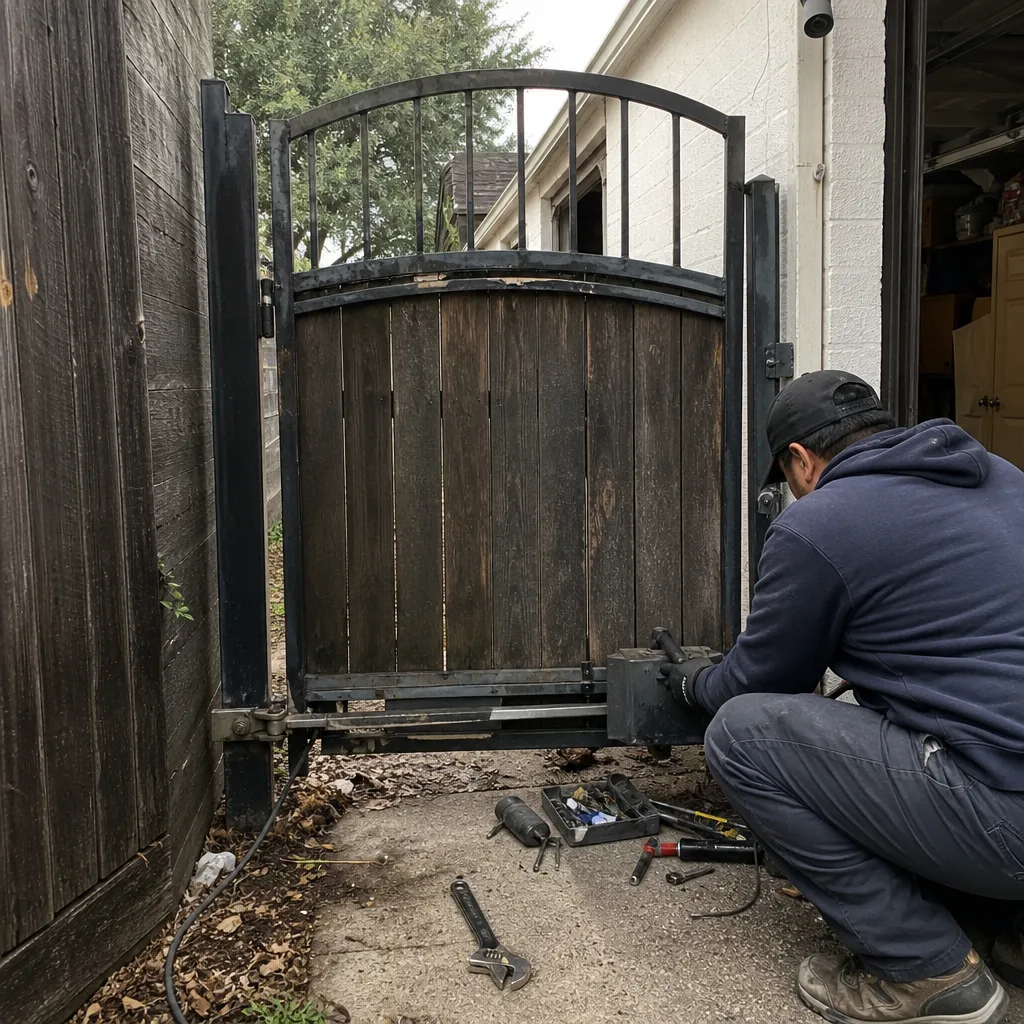 Before
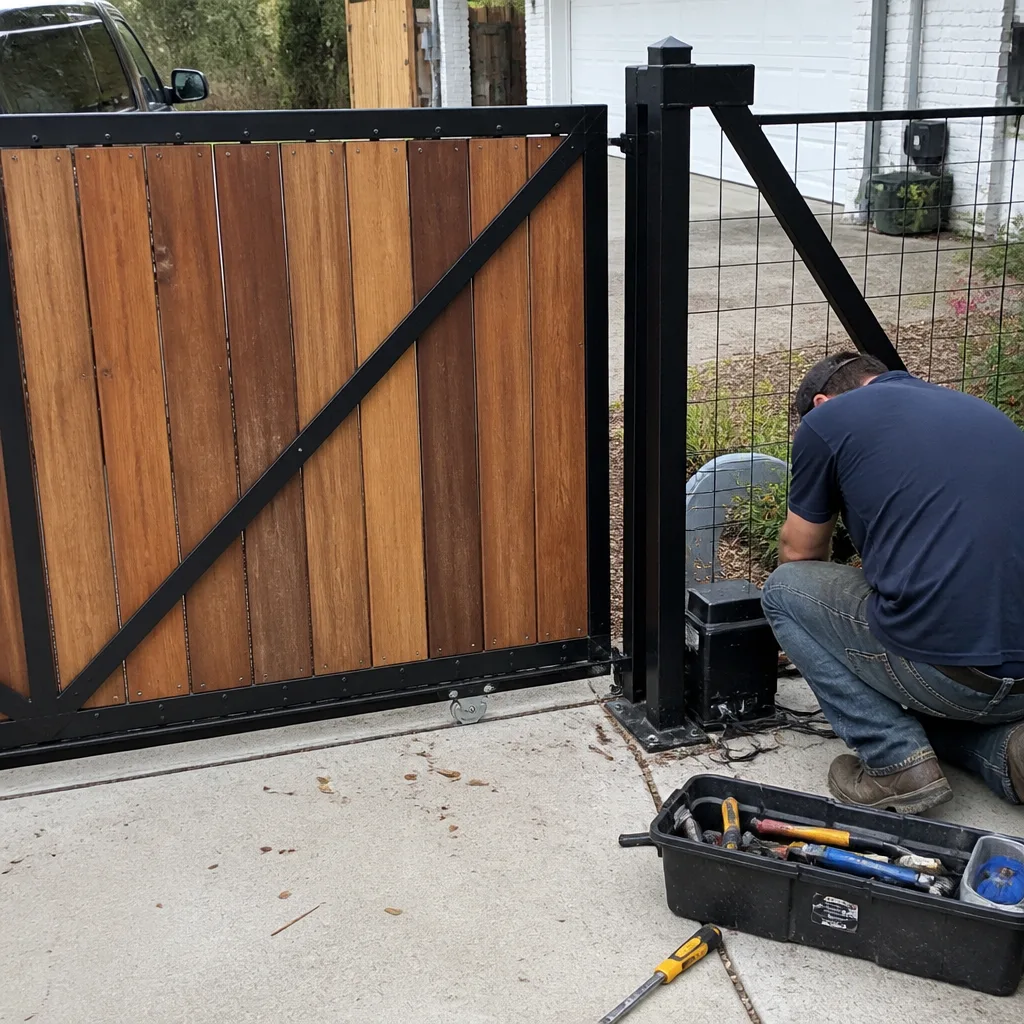 After
After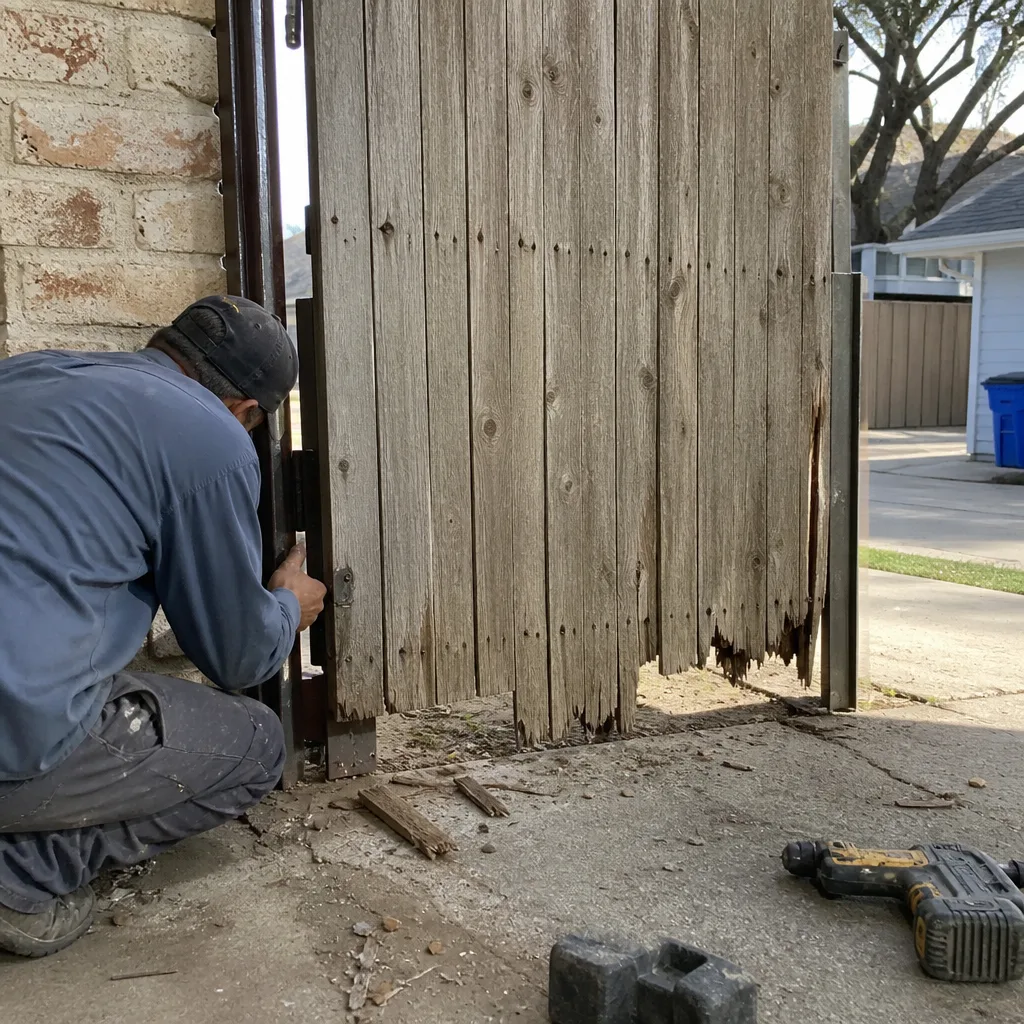 Before
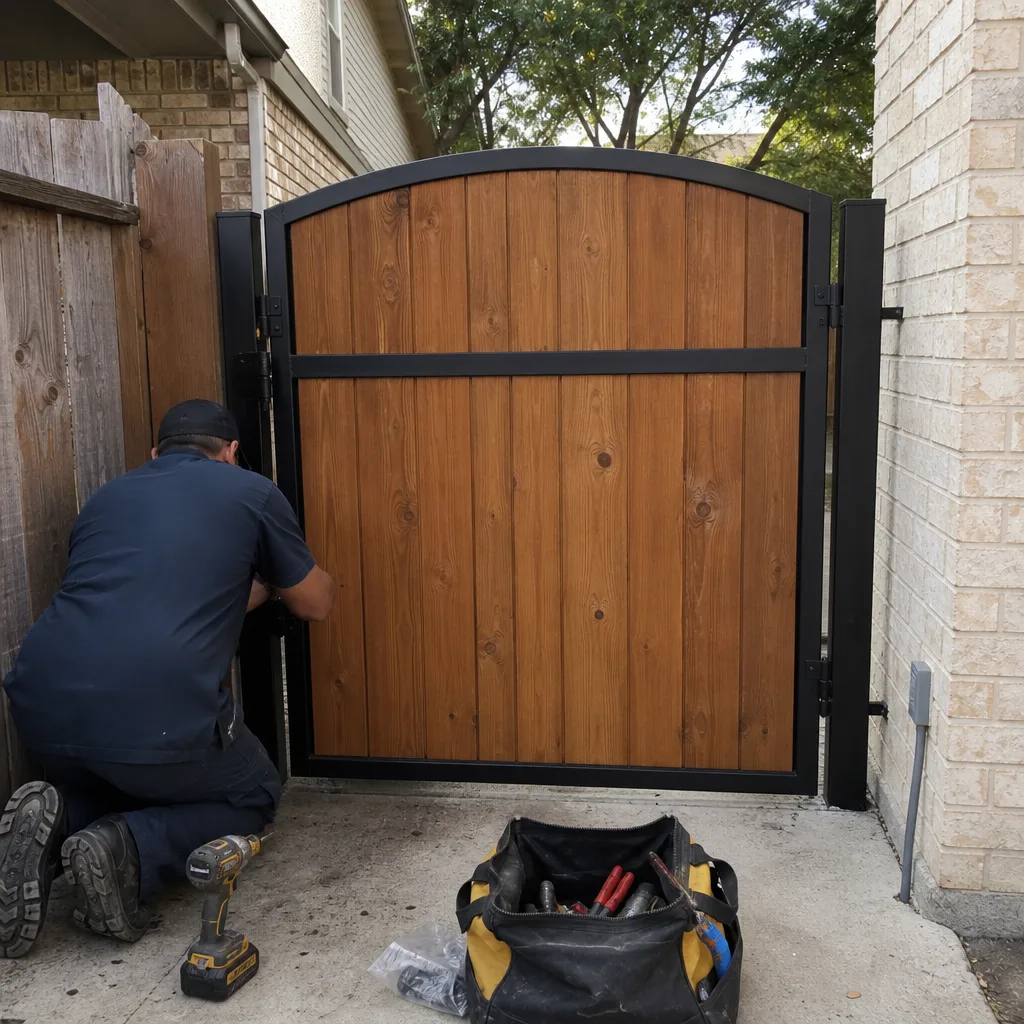 After
AfterLinear Keypad & Intercom Repair: The Fort Worth Owner’s Guide
We stock and install Linear-compatible keypads, intercom panels, and the wiring harnesses that connect them, with most Fort Worth repairs running $185-$420 installed depending on the model and whether the existing wire is still sound. We carry Linear and Linear-compatible parts on the truck, so same-day replacement is realistic for most standalone keypad and basic intercom failures. The typical discovery goes like this: the keypad lights up, the gate doesn’t move, and after three tries the display flickers and dies. Or the intercom rings through but the voice is a crackle, the listen button does nothing, and the delivery driver is back out at the street waving his phone.
If that’s your situation, you’ve probably already done what a careful owner does: changed the batteries, checked the breaker, maybe unscrewed the faceplate to look for a loose wire. You’re on this page because the obvious fixes didn’t hold. The good news is that Linear keypads and intercom modules are among the most straightforward parts we repair, and we diagnose them the same way Linear’s commercial installers did: by reading continuity at the terminal block, checking voltage at the panel, and replacing exactly what failed instead of throwing a new controller at the problem.
Which Linear Models This Applies To
The Linear parts we service fall into two general families: the older AK-series and ACP-series keypads (the kind typically paired with Linear APeX and MegaCode receivers), and the newer IEI-branded Linear keypads and telephone-entry intercoms that shipped with Linear’s 2000-series and later controllers. The AK-11, AK-21, ACP-00751, IEI 212i, IEI 212R, and the Linear AE-1000 telephone-entry unit are the models we see most often on Fort Worth residential gates.
The identification step matters more here than most homeowners expect. A Linear AK-11 keypad and an IEI 212i look nearly identical from the front, but the wiring differs: the AK-11 runs on a 4-wire Wiegand output while the 212i can be jumpered for either Wiegand or 5-wire. If you swap in the wrong one, the gate controller sees a signal it doesn’t recognize and the keys do nothing. Before we order or install anything, we photograph the label inside the keypad housing, note the wire colors at the terminal block, and match the part to what’s actually there, not to what the homeowner thinks it is.
On OEM versus aftermarket: Linear no longer manufactures every legacy model, which is where the decision gets real. For keypads, a quality aftermarket equivalent like the improved-membrane models from Nortek’s current distribution line or a proven third-party Wiegand keypad will work and often outlasts the original membrane. For intercom boards, we’re more conservative. The AE-1000’s relay logic and ring voltage are specific enough that we recommend OEM or a directly cross-referenced replacement; a generic telephone-entry board won’t drive the same door-release circuit. We stock both OEM Linear and aftermarket equivalents on the truck, and we’ll tell you which one makes sense for your gate and why, with the part number written on the quote.
One more thing worth knowing: we’re an independent repair company serving Fort Worth, not a Linear distributor or an authorized Linear service center. We work on Linear equipment because it’s durable and common in Texas, and because we keep the parts and the wiring diagrams on hand.
Signs Your Linear Keypad or Intercom Is Failing
- The keypad lights up but the gate won’t open. This usually means the keypad is transmitting but the receiver or controller isn’t accepting the code. We see this in Fort Worth after power surges from spring storms; the keypad’s Wiegand output survives, but the gate controller’s input channel resets or locks. Fix is often a re-learn at the controller plus new weather seals at the keypad.
- Keys require three or four presses before they register. The membrane is worn or moisture has crept between the circuit board and the keypad overlay. Linear’s older AK-series membranes are the weak point; they delaminate after a few hard Texas summers. We replace the membrane assembly and reseal the housing.
- The intercom rings, but the audio is a wall of static or you can hear them and they can’t hear you. This is a failing audio board or a corroded microphone element; on the AE-1000, it’s often the small electret mic that goes first. The fix is a board-level replacement or a rebuilt audio module, not a wiring job.
- Intermittent operation, worse after rain. Water is getting into the keypad or intercom enclosure. We open the unit, find the failed gasket or the cracked faceplate seam, dry out the board if it’s salvageable, and replace the seal. Left unchecked, the same moisture that’s causing the intermittent fault will kill the board permanently.
- The display is blank or shows nonsense characters. For Linear keypads with a display, this is almost always a failing voltage regulator or a bad ribbon connection inside the unit. It’s repairable if caught early; if it’s been flickering for months, the LCD driver is usually beyond salvage and the keypad gets replaced.
BeforeAfterReplacement Cost & What’s Included
Keypad and intercom repair in Fort Worth runs about $185 to $420 installed, and here’s where the range comes from. A basic Linear AK-11 or IEI 212i keypad replacement, including the part and labor, runs $185 to $260. An intercom module or telephone-entry board, like the AE-1000 audio/control board, runs $310 to $420 installed, depending on whether the existing transformer and wiring check out. If we’re replacing a membrane and resealing a housing the marginal cost on the keypad, parts and time included, lands at the lower end. If the wiring between the keypad and the controller has been chewed or is original from a 2010 build with cracked insulation, we’ll add the cost of a new low-voltage run, and we’ll show you that as a separate line item before we start.
What’s included: a written price before we touch anything, the exact part number we’re installing, labor, and a photo log of what we found and what we set. We also quote the warranty on the spot. Parts carry their manufacturer warranty; our labor carries our 365-Day Done Right Promise: if the repair isn’t right within a year, we come back and make it right without a new invoice.
You’ll see the price on a printed sheet before we open the keypad. No range that turns into a different number at the end of the job. That’s Clause 1 of The Haven Standard, and we’ve operated under it since 2014.
DIY or Call Us?

Keypad and intercom work is low-voltage, so it doesn’t carry the same immediate danger as high-tension gate springs or a live 120-volt motor circuit. But there’s a real risk in guessing wrong at the controller: shorting the wrong terminals on a Linear board can take out a $300 controller while you’re trying to save a $120 keypad. We’ve repaired more than one gate where a well-intentioned homeowner crossed the Wiegand data lines during a DIY swap and ended up replacing the keypad and the controller.
What you can safely check: the DC voltage at the keypad terminals (most Linear keypads want 12 to 24 VDC), the tightness of the wire lugs, and whether the keypad housing is cracked or the gasket is visibly missing. If you have a multimeter and you’re careful, that’s reasonable. But if the keypad is flickering, the intercom’s audio is dead, or you’ve already replaced the batteries and the gate still ignores the button press, call us at (817) 476-9945. We’ll name the part, name the price, and put it in writing before we open the enclosure. Name what you found. Name what it costs. Name what you left behind.
FAQs
A properly sealed Linear keypad typically lasts 6 to 9 years in the Fort Worth climate; intercom modules run 7 to 12 years before the audio board or relays start to fade. The main failure accelerators here are sustained heat on west-facing brick pillars and the humidity swings that get inside enclosures with degraded gaskets. Units installed on south- or west-facing masonry with direct afternoon sun fail on the earlier end of that range.
Yes, in about a third of cases. If the failure is a worn membrane, loose wire lug, corroded terminal, or failed gasket, we repair it on the spot and charge only for the part and our time, not a full keypad. If the circuit board itself is dead or the LCD driver has failed, replacement is the honest choice, and we’ll show you the failed board before we write the quote.
Most standalone Linear keypad replacements take 45 to 90 minutes from first screw to final test. Intercom board swaps run closer to 90 minutes to 2 hours because we verify ring voltage, door-release relay operation, and audio in both directions before we call it done. Same-day service is available for most keypad failures since we stock the common Linear parts on the truck.
We stock the common failure parts on the truck: AK-series and IEI keypads, membranes, gaskets, power supplies, and AE-1000 audio boards. Less common legacy parts may take 2 to 4 business days, and we’ll tell you that before you pay for anything. We also carry parts for LiftMaster, Mighty Mule, and Ghost Controls gates, so if you have more than one brand on the property, one technician can handle both.
Written by Adrian Vance, Owner, Vance Gate Repair Fort Worth at Vance Gate Repair Fort Worth, serving Fort Worth and nearby areas.