
Free on-site gate assessment - hinges, posts, and your LiftMaster or Nice gate operator checked before anything is quoted
The assessment is free and the quote is the invoice.
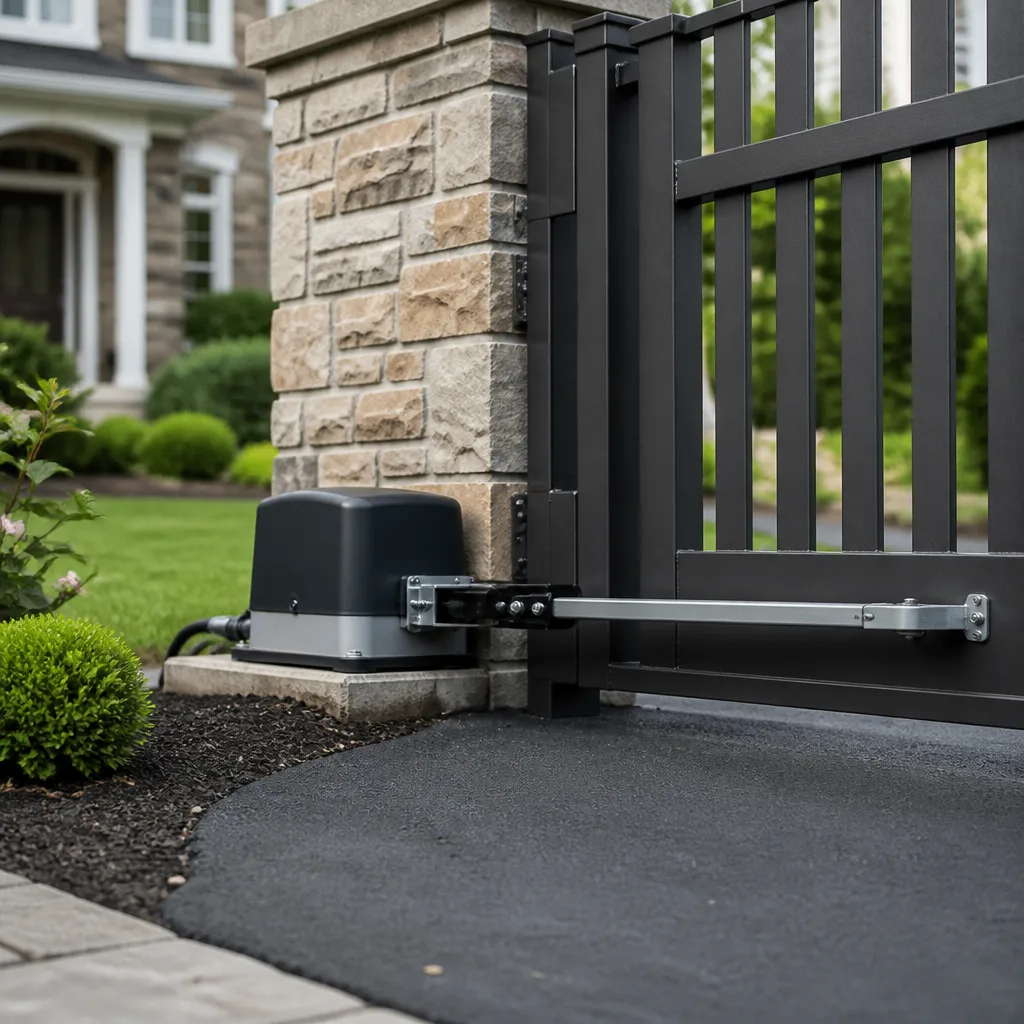
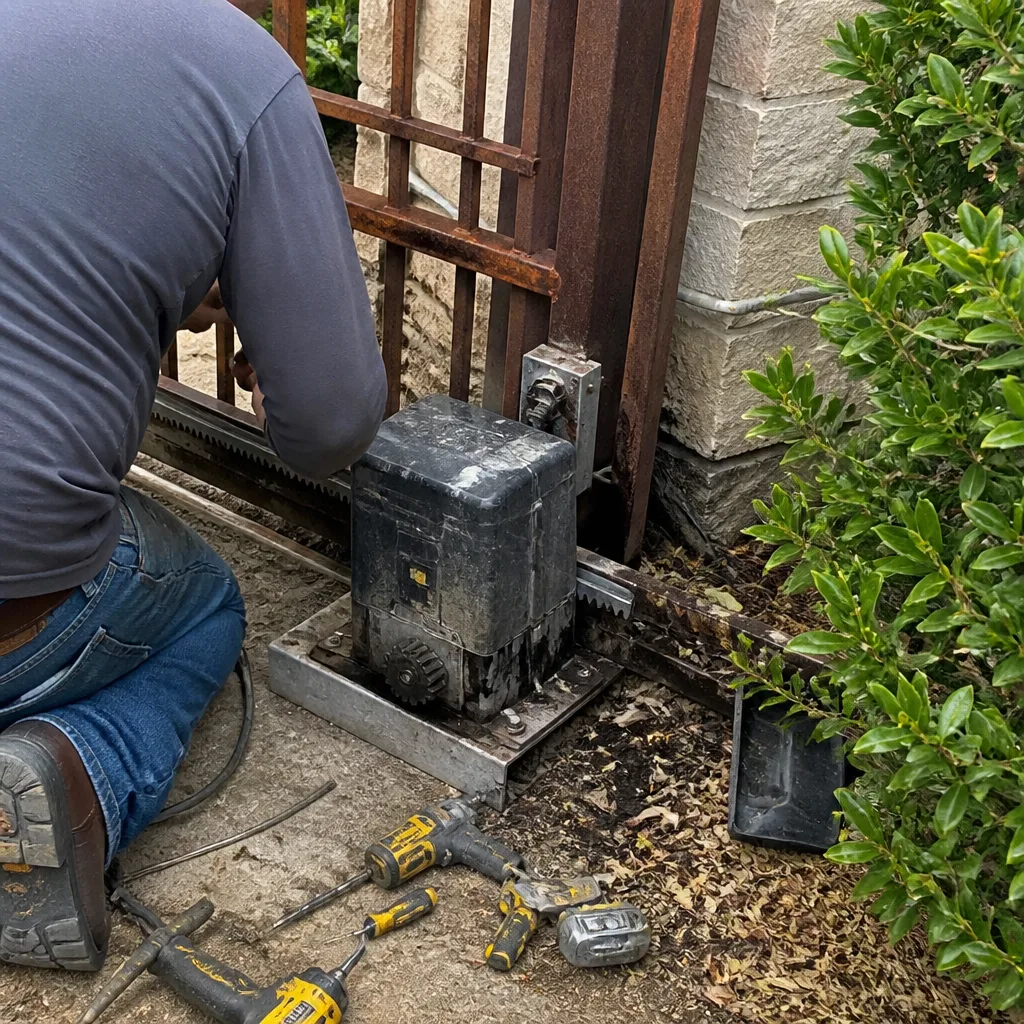 Before
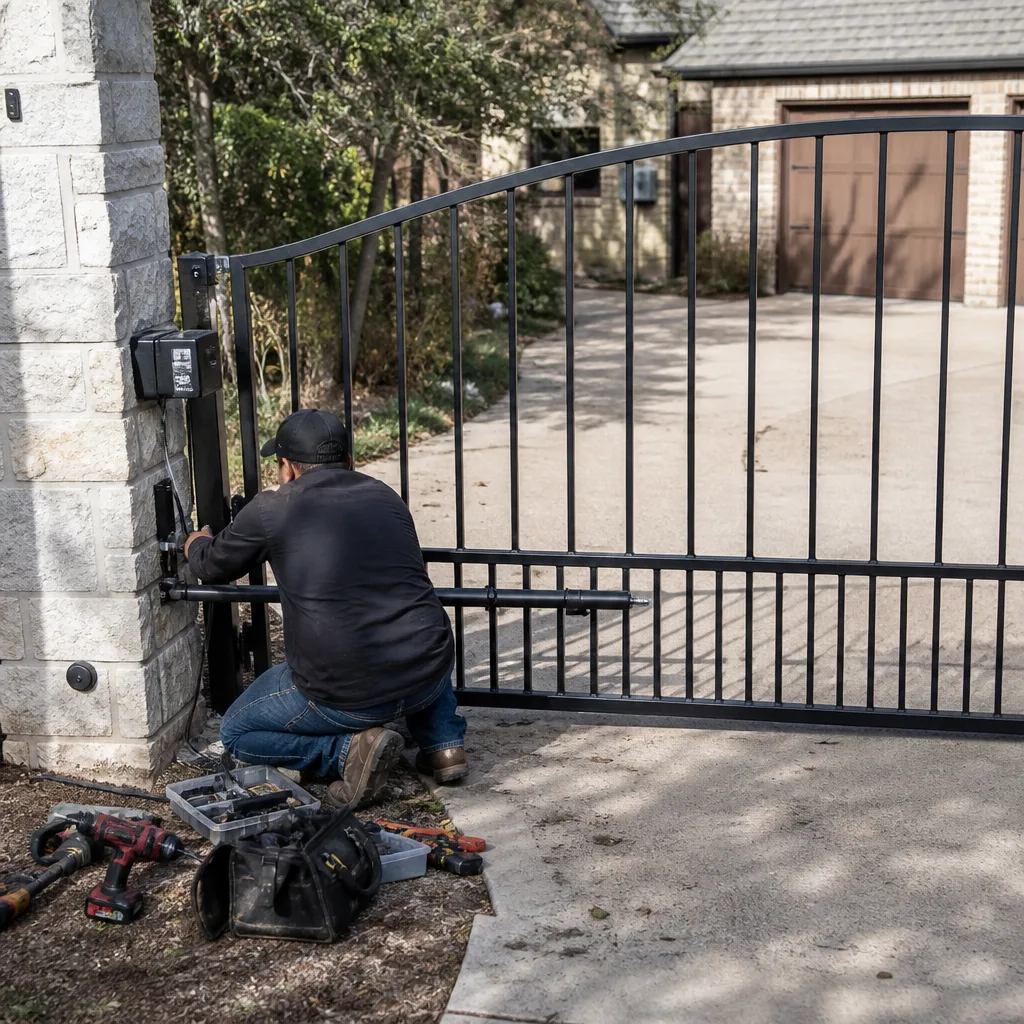 After
After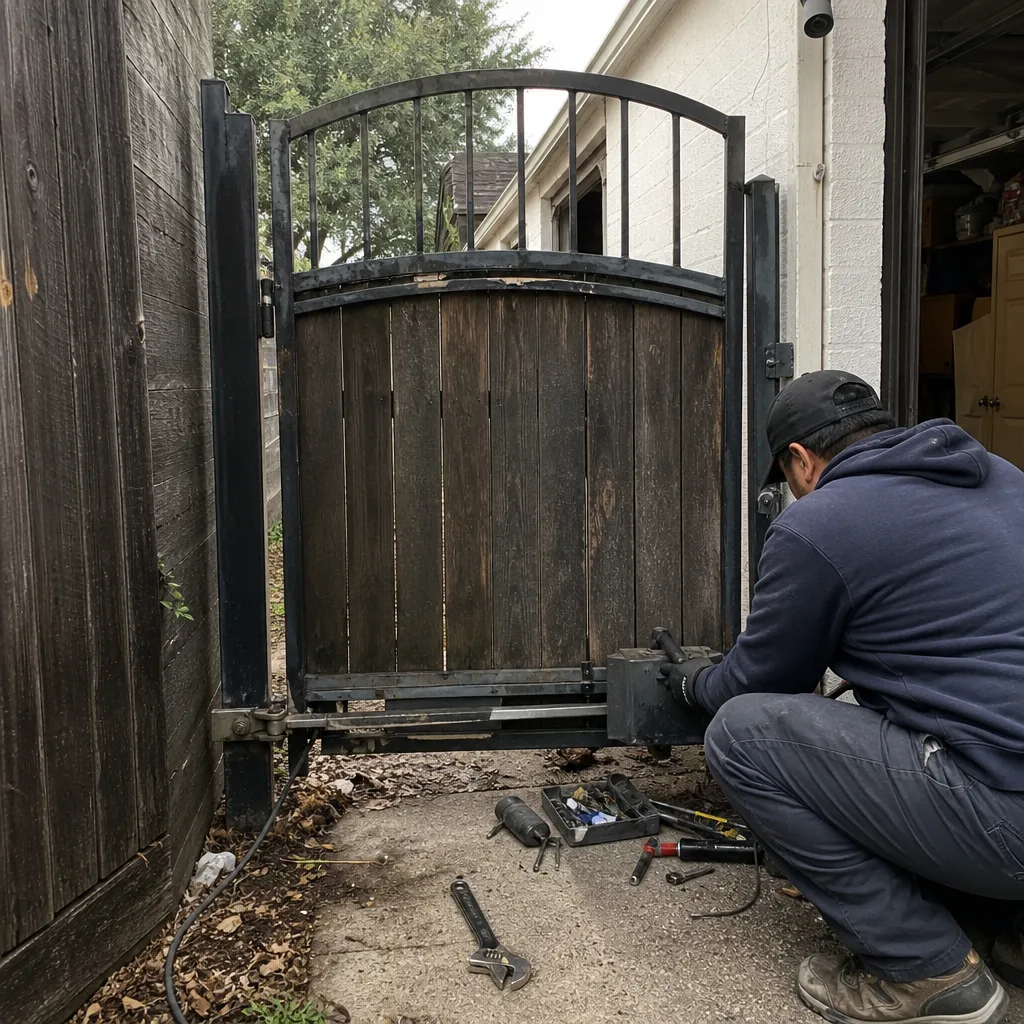 Before
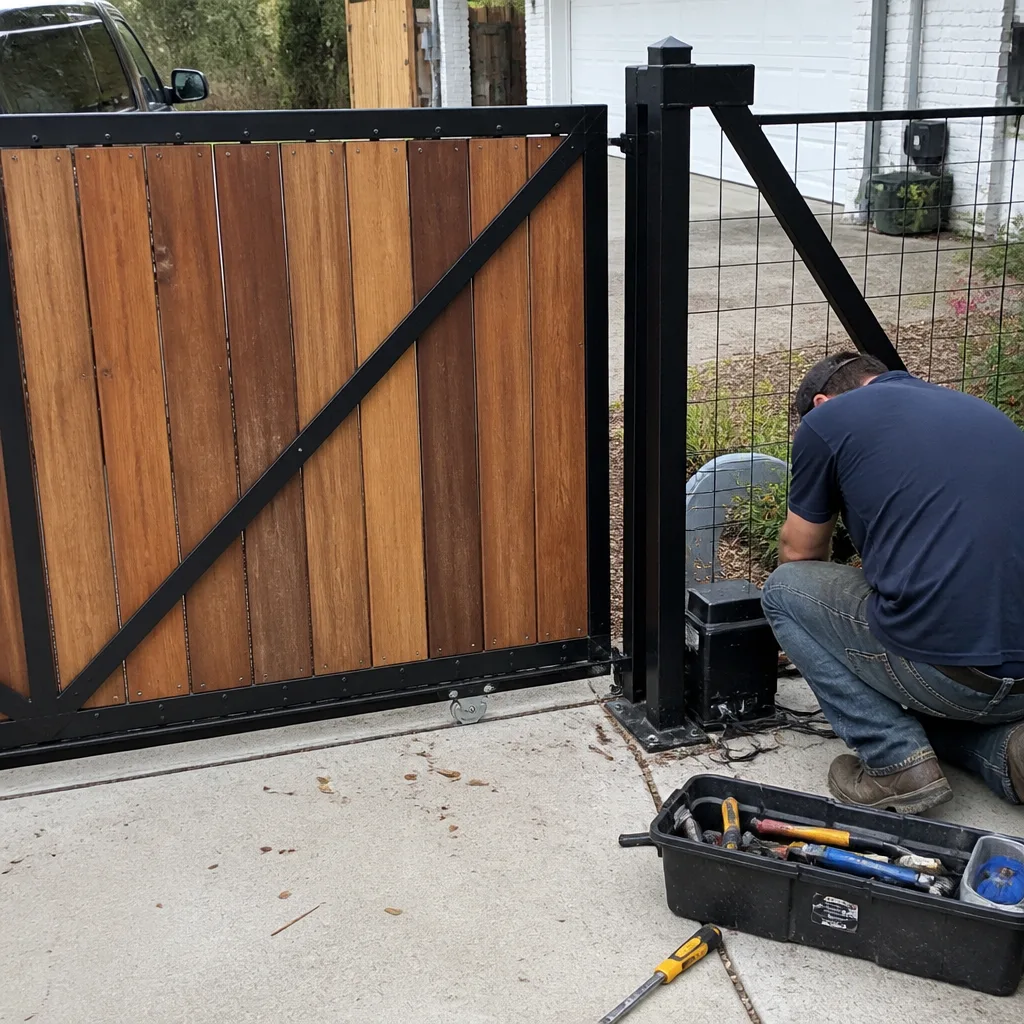 After
After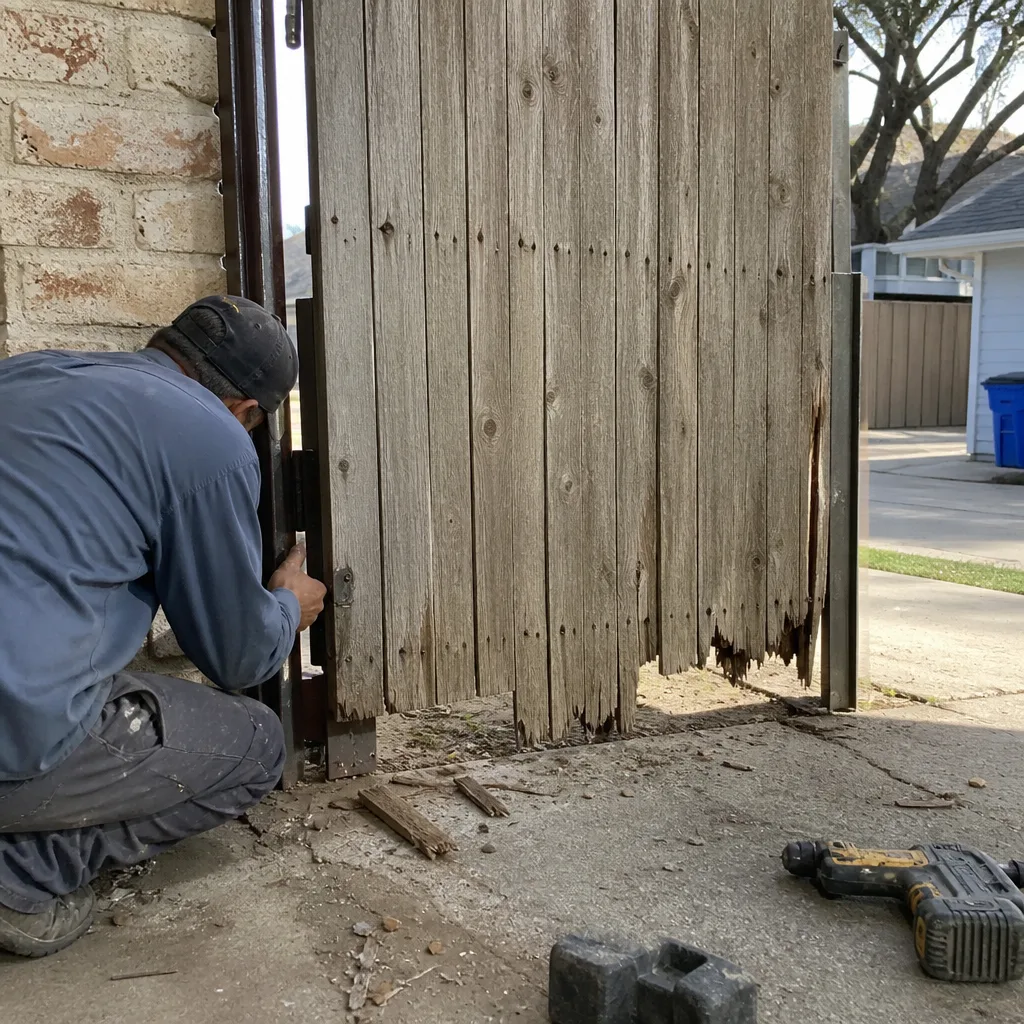 Before
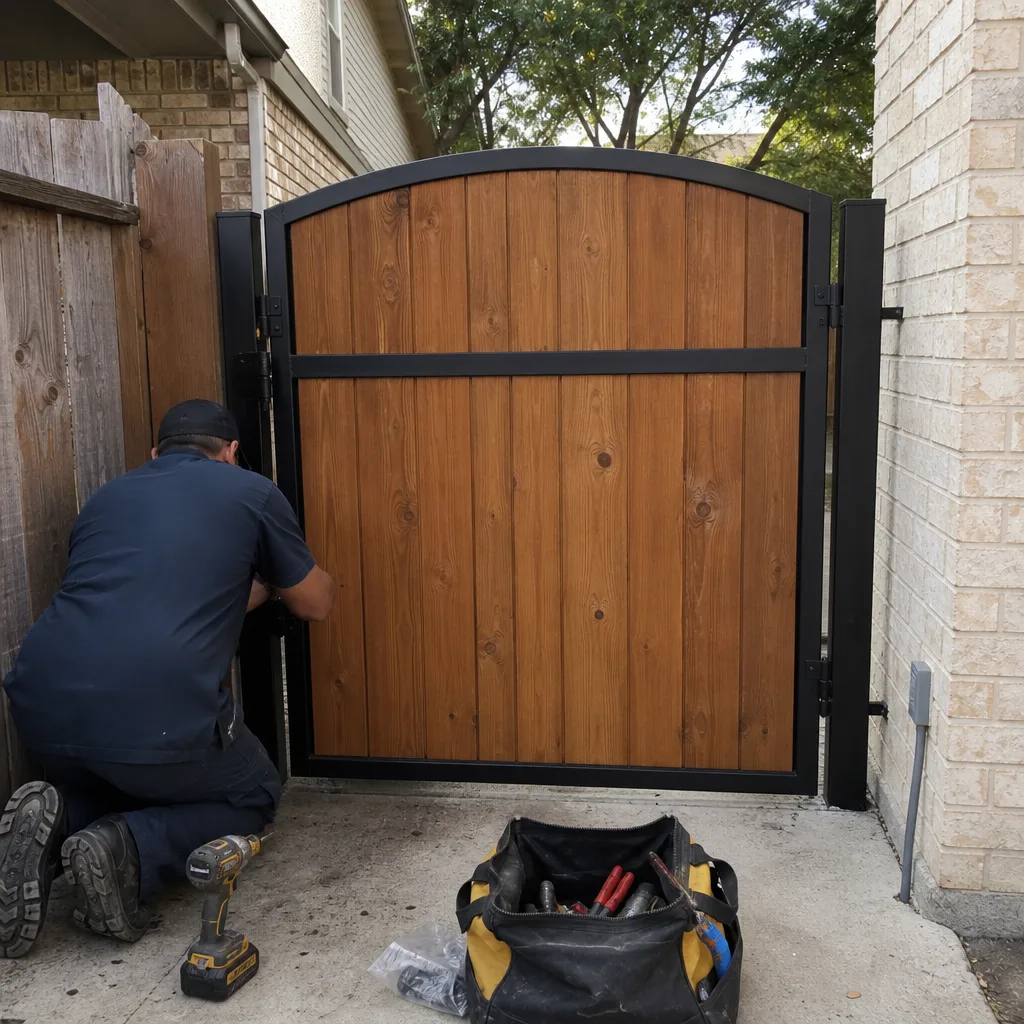 After
AfterFAAC Gate Installation in Fort Worth: What to Know First
FAAC gate installation in Fort Worth runs $2,100 to $7,500 for most residential jobs, depending on whether it’s a single swing arm, a sliding gate, or a double-leaf driveway system. We install and service FAAC operators as an independent provider, which means we’re not tied to factory sales quotas and we’ll tell you plainly whether your existing motor is worth keeping or should be replaced. Most FAAC installations take one full day, and the written price is in your hand before any work begins.
This page is for Fort Worth homeowners who already own a FAAC gate operator (or are planning to buy one) and want to know what installation actually costs, what goes wrong with these units in North Texas, and what a documented job looks like. If you have a FAAC that’s dead, intermittent, or you’re planning a new gate from scratch, call (817) 476-9945 and we’ll walk through it with you.
Key Takeaways
- FAAC gate installation in Fort Worth typically runs $2,100 to $7,500, with labor and the operator being the biggest line items
- We’re an independent FAAC service provider, not a factory-authorized shop, so our parts and labor advice is based on what the gate actually needs
- Every FAAC job gets a written price before work starts and a photo record of what was found, installed, and set
- We service eight other gate automation brands (LiftMaster, Mighty Mule, Ghost Controls, DoorKing among them), so we won’t steer you into a replacement just because the motor is unfamiliar to us
How FAAC Products Fail - and How We Fix Them
FAAC builds durable operators, but durability doesn’t mean trouble-free. After thousands of gate service calls in the Fort Worth area, we’ve learned which failures show up most often on which FAAC lines. Here’s what we see in the field:
- E024S and C721 swing operators: torque limiter drift. These workhorse FAAC swing arms are common on Fort Worth driveway gates, especially in neighborhoods like Westover Hills where heavy wrought-iron leaves are the norm. The internal torque limiter slips slightly over time, and the gate starts stalling halfway through travel. The fix is a reset and re-torque (we photograph the setting before and after), not a new motor. A lot of shops replace the whole operator because the limiter is acting up; it’s a $0 adjustment with the right procedure.
- 844ER sliding gate operators: capacitor fatigue in summer heat. This is a Fort Worth-climate issue. The 844ER’s start capacitor sits in an enclosed cabinet that bakes in direct sun six months out of the year. When the capacitor weakens, the gate moves slower and slower until it won’t start at all. We replace it with a capacitor rated for the same load, document the part number, and the gate runs fine. It’s a $40-ish part, not a reason to replace a $1,800 operator.
- FAAC 415 and 412 control boards: limit switch sensor corrosion. These boards are sensitive at their limit inputs, and Fort Worth’s humidity swings plus occasional heavy rain can cause corrosion at the connector terminals. The symptom is a gate that occasionally “forgets” its limit positions and either under-travels or slams open too far. We clean and reseat the connectors, set the limits, and photograph the readings so the next technician sees exactly where they were set.
- FAAC S418 and S450H: oil seal seepage after 5-7 years. The hydraulic FAAC lines used on some Fort Worth estate gates are quiet and powerful, but the shaft seals weep oil as they age. A little seepage isn’t a crisis, but if it’s left alone, the reservoir runs low and the operator overheats. We check the reservoir level on every visit, note it in the job record, and replace seals when the leak is actively dripping.
- FAAC gate openers with aftermarket control boards: erratic behavior from mismatched accessories. We regularly see FAAC gates in Fort Worth where someone installed a generic photo-eye or keypad that doesn’t quite handshake with the FAAC board. The gate works fine for weeks, then randomly reverses or refuses to close. The real fix is matching the accessory to the board’s input spec, not endlessly reprogramming. We’ll either source the correct FAAC-compatible part or wire in an aftermarket unit that we know from experience matches the board’s logic.
We don’t guess at any of this. We diagnose, write it down, and photograph it. When we leave a FAAC job, the homeowner has a record of what we found and what we set.
Our FAAC Gate Installation Process
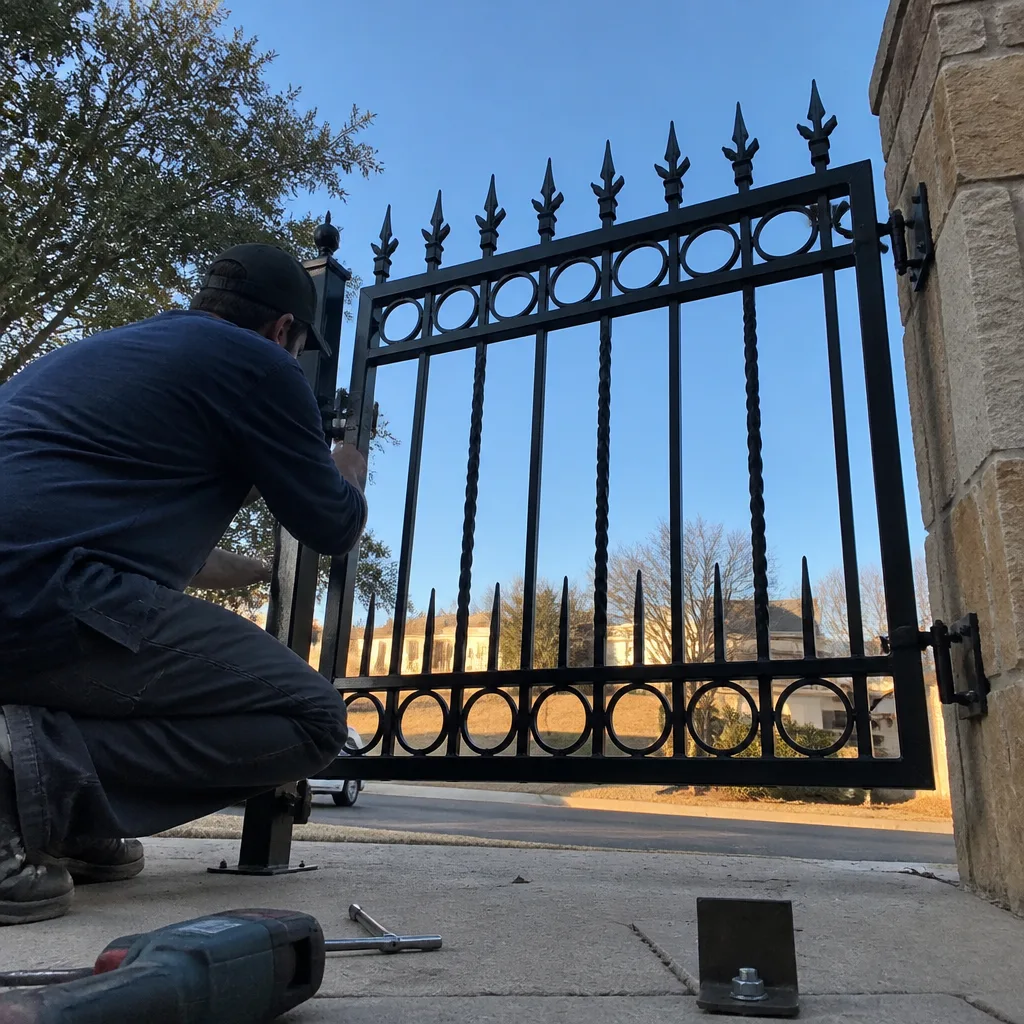
Every FAAC installation or major repair we do in Fort Worth follows the same documented sequence. No shortcuts, no mystery line items.
- 1
Site inspection and load assessment. We check the gate’s weight, hinge condition, pull-to type (swing or slide), and travel clearance. A FAAC operator that’s undersized for a heavy iron gate will eat limit switches and capacitors. We measure before we quote.
- 2
Written scope and price. Before any work starts, you get a line-item written estimate. That’s Haven Standard Clause 1: have it in writing. The price you see is the price you pay, and it’s agreed before a tool comes out of the truck.
- 3
Parts decision: OEM or proven aftermarket. If we’re replacing a FAAC part, we’ll quote the OEM option and, where a quality aftermarket equivalent makes sense, we’ll show you both. We don’t source no-name boards from a warehouse we can’t vouch for, and we keep the failed part for you to inspect.
- 4
Installation and wiring. We mount, wire, and set the operator per FAAC’s specifications, including proper torque settings, limit travel, and force adjustment. Every wiring change gets documented.
- 5
Testing and safety verification. We test the gate through a full cycle, check the photo-eye and entrapment sensor response, and run it several times to confirm repeatability. Any odd behavior gets fixed before we leave, not after.
- 6
Documentation handoff. You get a written record of what was installed, the part numbers, the limit settings, and photos of the finished work. We file the same record on our end so any future service call starts with context, not guesswork.
BeforeAfterWhat FAAC Gate Installation Costs in Fort Worth
Here’s what we typically see across Fort Worth for FAAC work. Prices include the operator, hardware, wiring, installation labor, and the written documentation. The main price movers are gate weight and length, whether it’s swing or slide, and whether the existing wiring and posts are salvageable.
- Single swing gate, FAAC C721 or E024S, new installation: $2,100 to $3,400
- Single swing gate, FAAC hydraulic (S418 or S450H), new installation: $3,200 to $4,800
- Double swing gate (two operators), FAAC C721 pair, new installation: $4,000 to $5,900
- Sliding gate, FAAC 844ER, new installation: $3,500 to $5,600
- FAAC operator replacement (motor only, existing gate and posts good): $1,600 to $2,700
- FAAC control board replacement (415, 412, or equivalent): $450 to $900
The estimate is free, it’s written, and it’s yours whether or not we do the work. Call (817) 476-9945 and we’ll schedule a site visit.
Why Fort Worth Homeowners Call Vance Gate Repair Fort Worth for FAAC Work
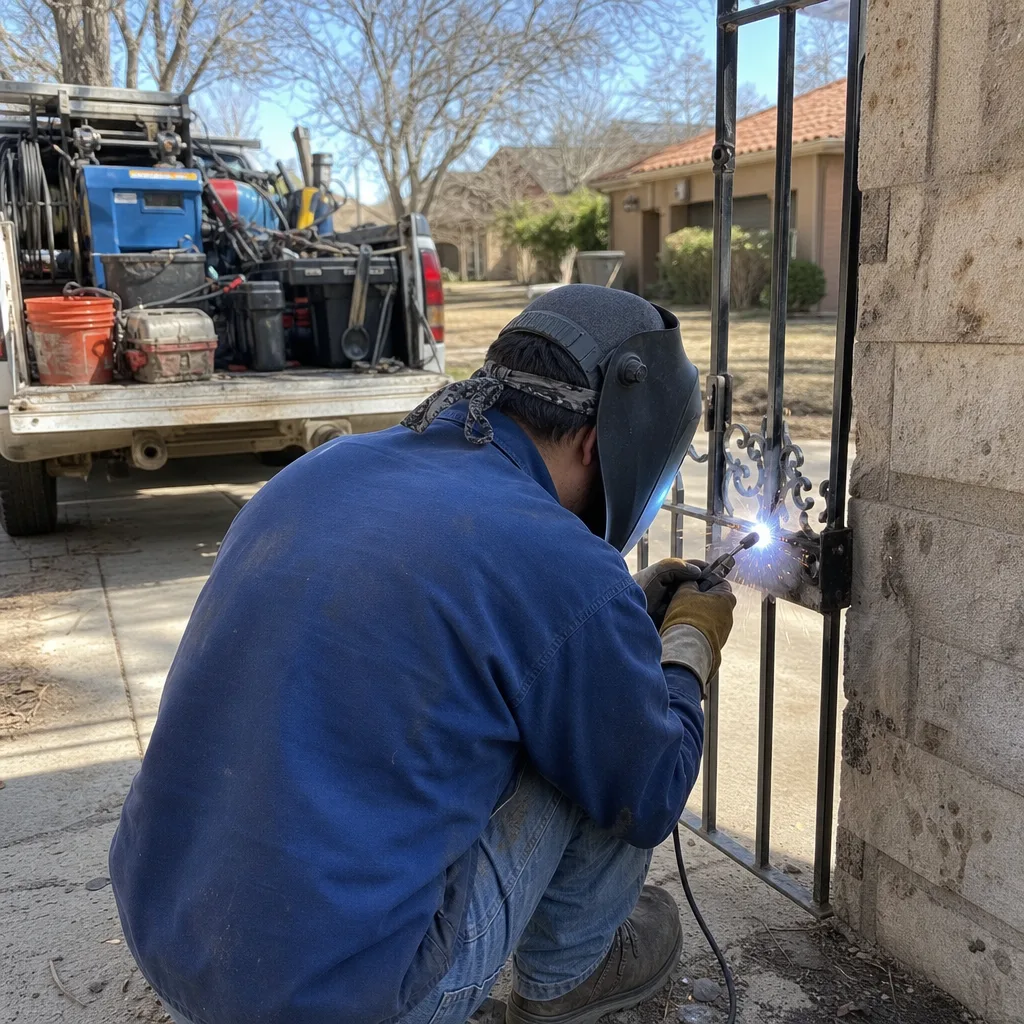
Adrian Vance started in commercial access-control work in 2014, and he brought the documentation habit with him to residential gates. Every FAAC job we do in Fort Worth leaves behind a written record: what was found, what was installed, what it cost, and what was set. Name what you found. Name what it costs. Name what you left behind.
We also service eight other gate automation brands, including LiftMaster, Mighty Mule, Ghost Controls, and DoorKing, so when a FAAC gate shares a system with another brand’s keypad or safety edge, we handle the whole thing without calling in another company. And every completed job carries the 365-Day Done Right Promise: if the repair or installation isn’t right within a year, we make it right at no additional charge.
FAQs
We install and service FAAC equipment as an independent provider, not a factory-authorized service center, so we don’t file warranty claims with FAAC directly. What we do is install and repair FAAC equipment correctly, document the work, and stand behind our own labor for a full year under the 365-Day Done Right Promise. If there’s a manufacturer defect on a new part, we’ll help you pursue the warranty claim with the supplier.
Yes, provided the unit is new or in verifiably good condition and it’s sized correctly for your gate. We’ll inspect the operator, confirm it matches your gate’s weight and travel, and install it to spec. We won’t install a unit that’s clearly undersized for a heavy Fort Worth iron gate, because we’ll be back out there fixing it and we’d rather tell you before you spend the labor money.
For a new installation or a full operator replacement, we typically schedule within 2 to 5 business days depending on parts and site access. If your FAAC gate is stuck open or closed and it’s a safety or security issue, we’ll get a live person on the phone 24/7 at (817) 476-9945 and get a technician out as fast as possible. We won’t fake a same-day guarantee on a job that requires measuring and ordering, but we’ll always tell you exactly when we can be there.
Most FAAC operators in Fort Worth are worth repairing if the housing and gear train are in good shape and the failure is in the control board, capacitor, limit mechanism, or a $50 to $150 part. We replace the operator when the gearbox is worn, the motor windings are shorted, or the cost of the repair exceeds roughly 60% of a new unit’s installed price. We’ll show you the failed part and the math either way.
We stock common FAAC capacitors, limit switches, control boards (415 and 412 series), photo-eyes, and mounting hardware on the truck for most Fort Worth service calls. For less common hydraulic rebuild kits or specific 844ER assemblies, we order ahead and schedule the install once the parts are in hand. We don’t start a job with a missing part and park your gate in a half-installed state.
Yes, every FAAC installation we do includes properly wired and tested entrapment protection, whether that’s a photo-eye (the infrared beam that reverses the gate if something crosses the path) or a contact edge sensor. FAAC boards have specific inputs for these devices, and we wire them to the correct terminals, not daisy-chained into the power supply. We test them under load before we call the job done.
Written by Adrian Vance, Owner, Vance Gate Repair Fort Worth at Vance Gate Repair Fort Worth, serving Fort Worth and nearby areas.