
Last updated September 20, 2026
Free on-site gate assessment - hinges, posts, and your LiftMaster or Nice gate operator checked before anything is quoted
The assessment is free and the quote is the invoice.
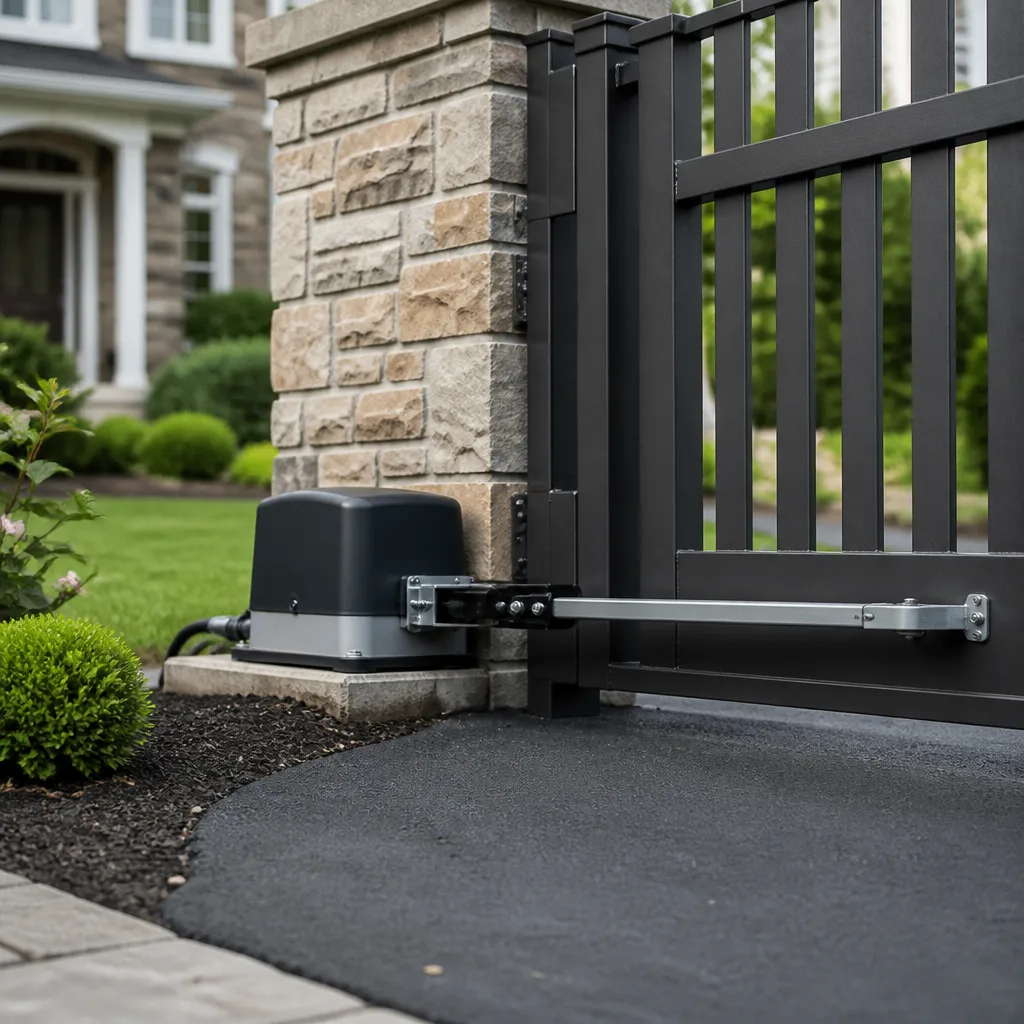
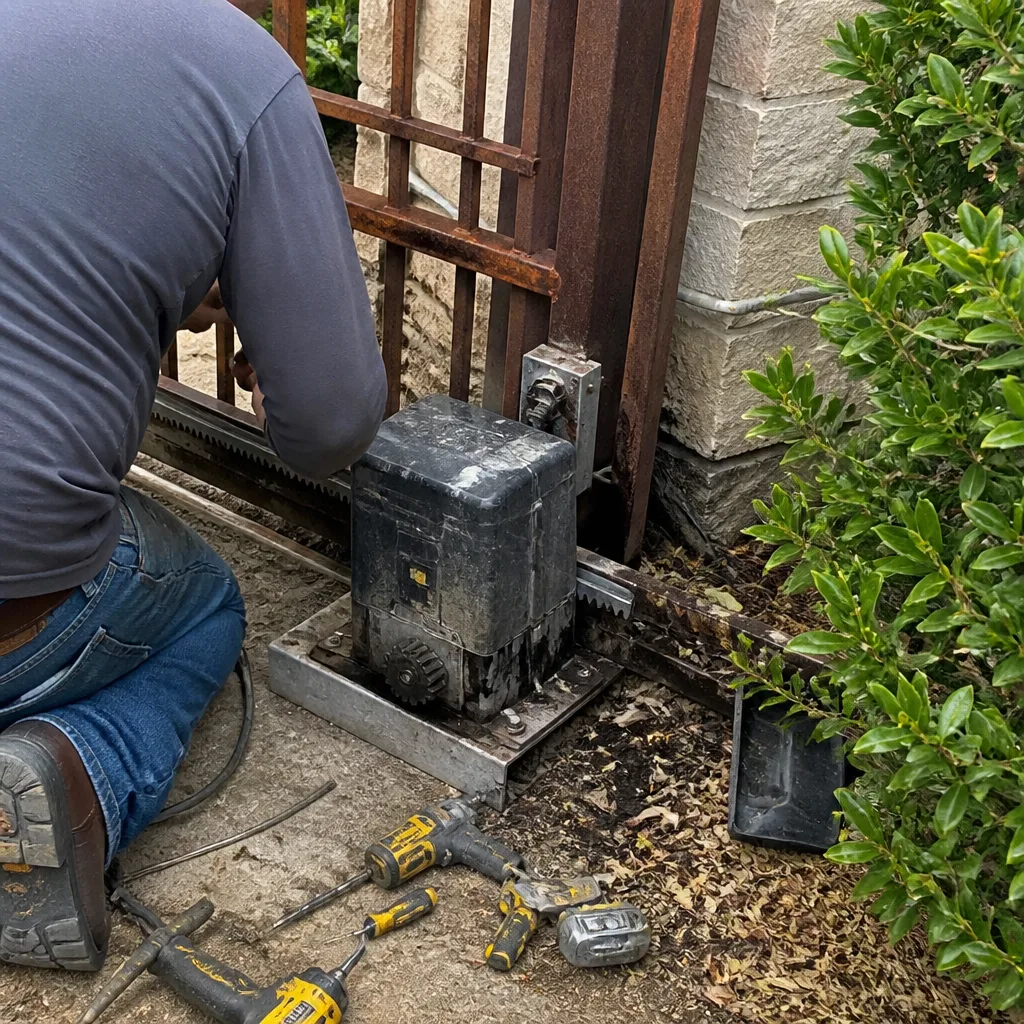 Before
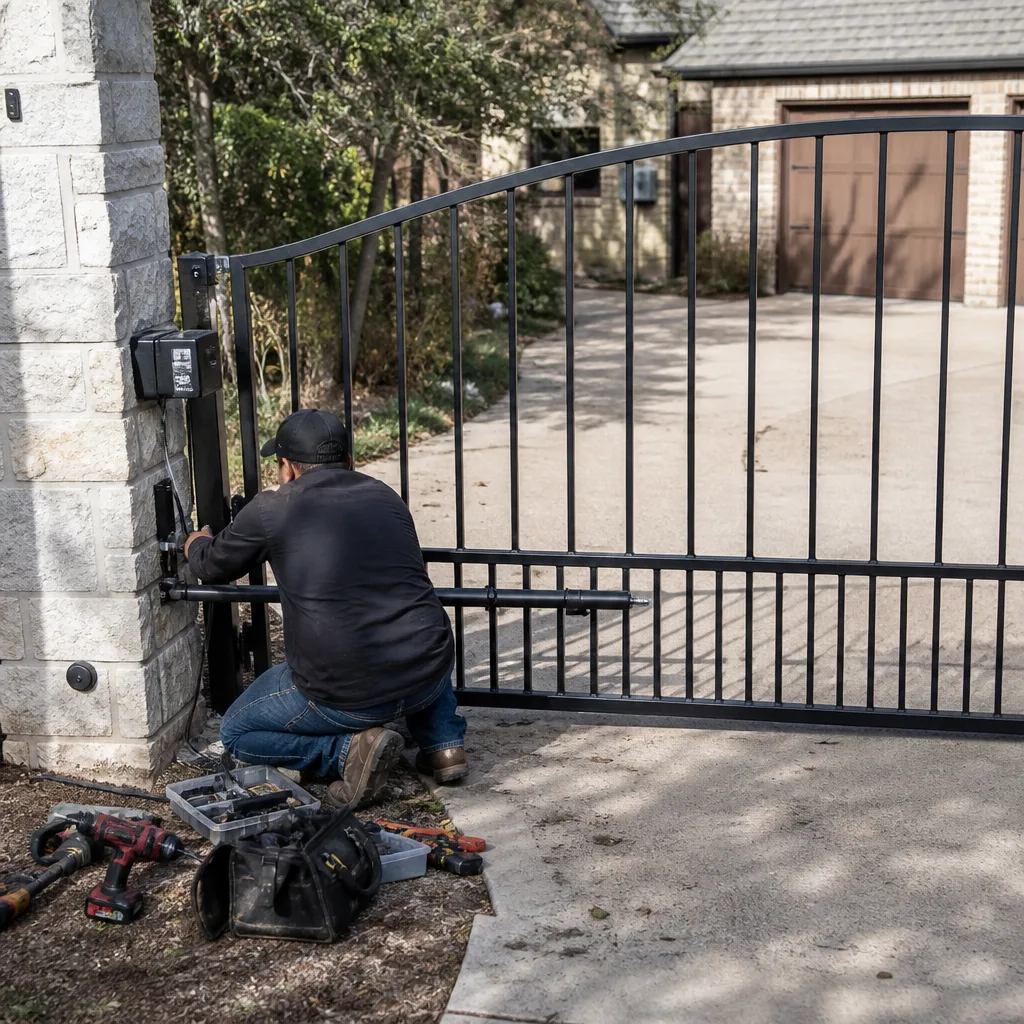 After
After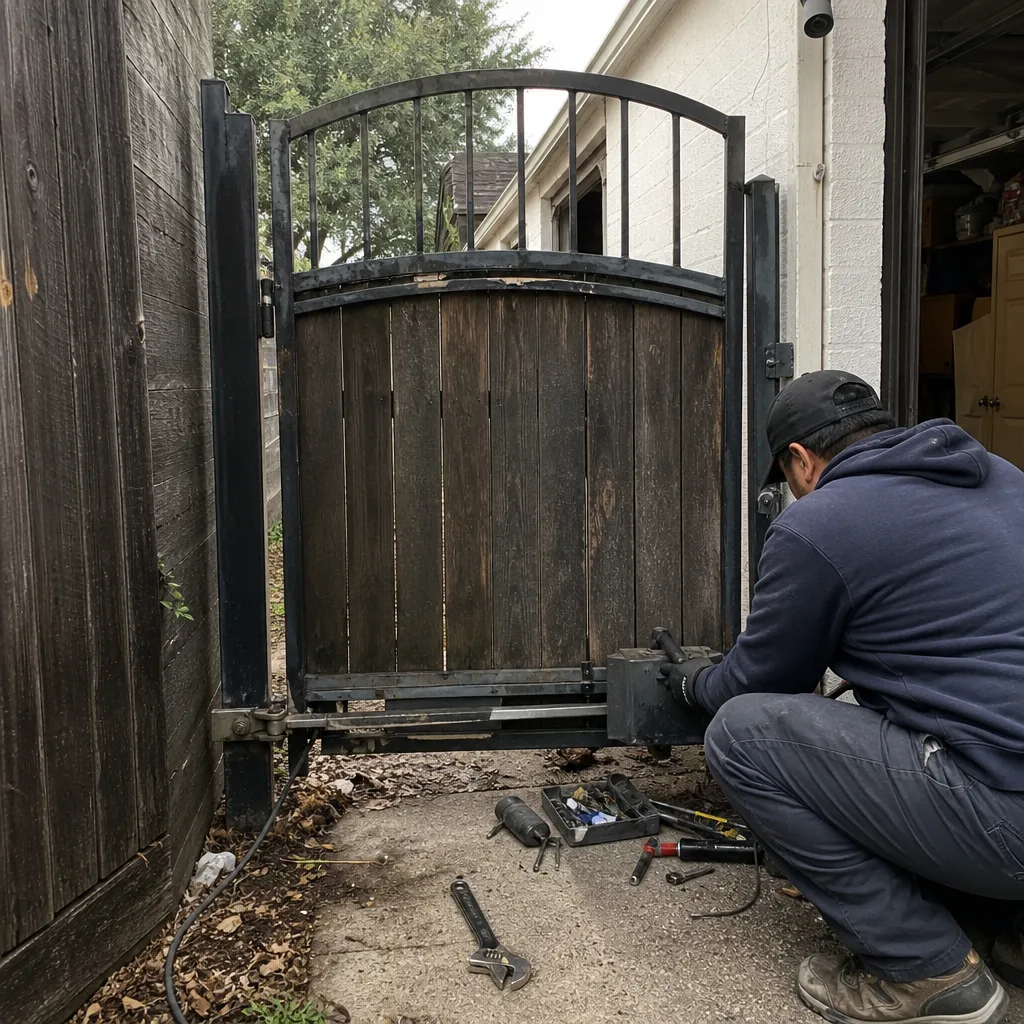 Before
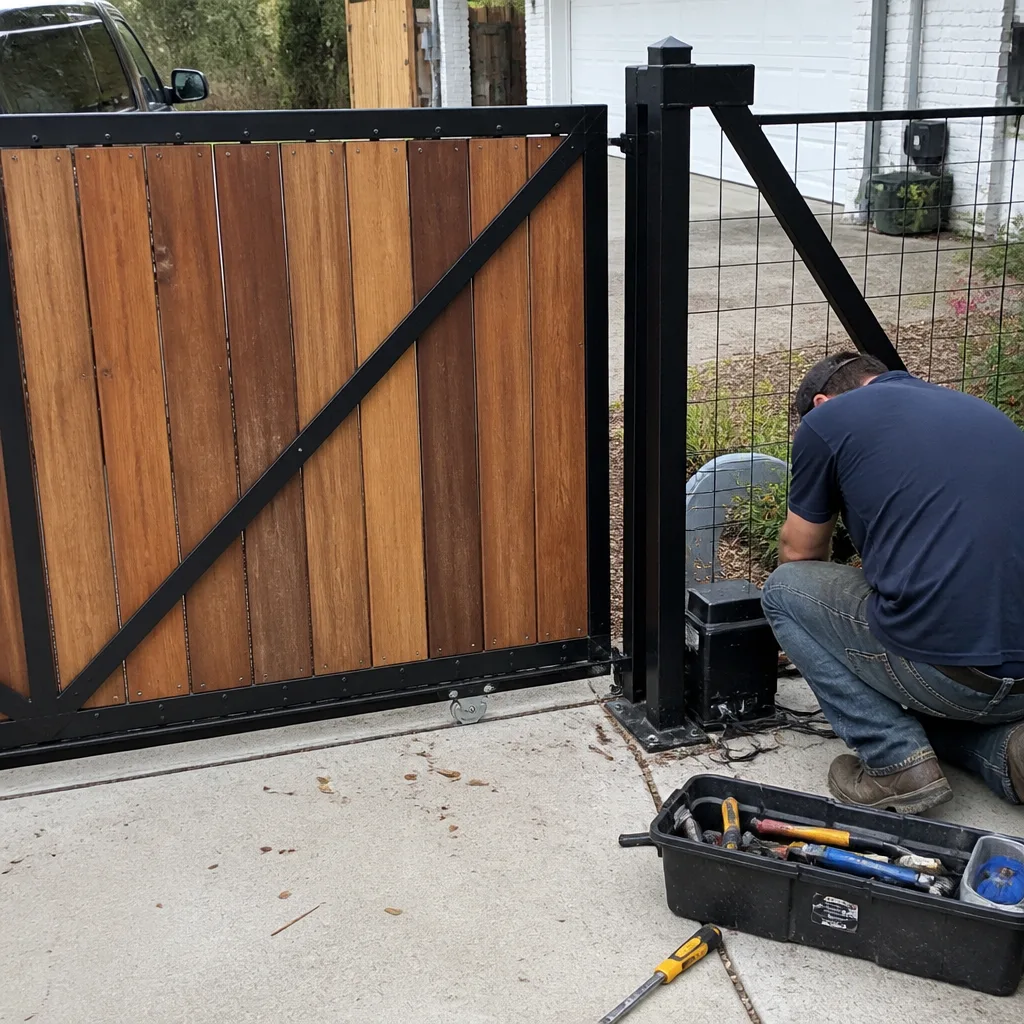 After
After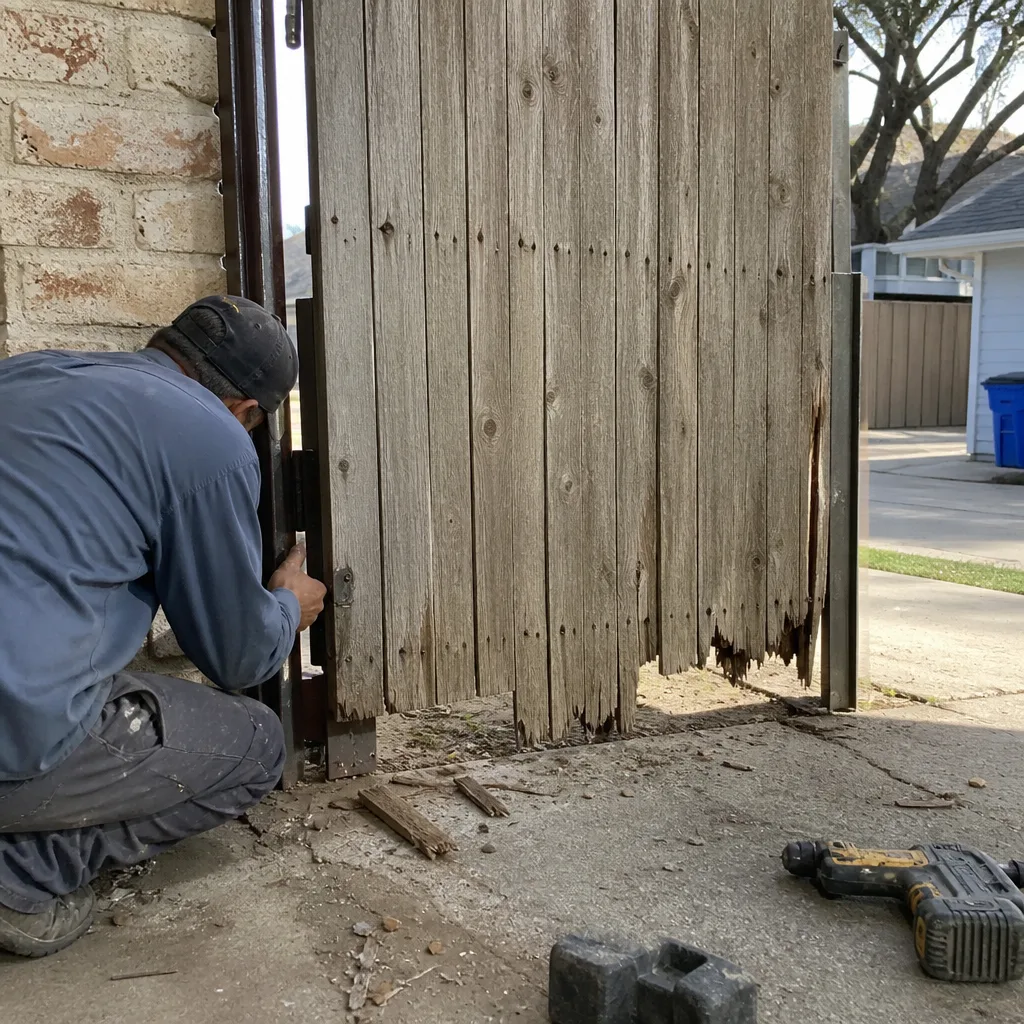 Before
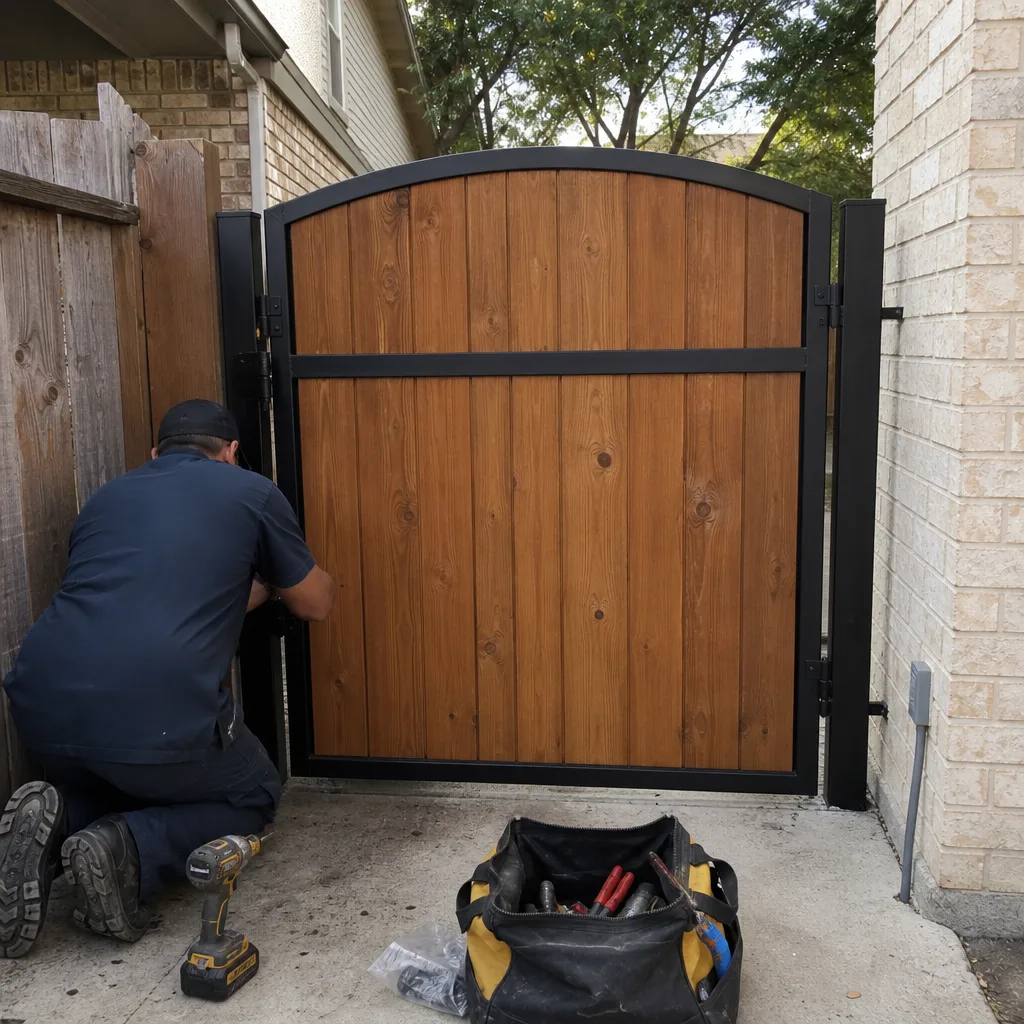 After
AfterGate Repair Warning Signs: A Fort Worth Homeowner’s Reference Guide
A gate that reverses for no visible reason and a gate that grinds on every cycle look equally broken from the driveway. But one has a $40 sensor fix and the other has a $600 hardware problem, and confusing them is what estimates without diagnostics produce. Most gate failures in Fort Worth don’t happen suddenly. They announce themselves weeks or months early, in symptoms that are easy to see but easy to misread. This guide assigns a triage level to each observable warning sign, explains the mechanism behind it, and tells you what to photograph before you touch anything. For related reading, see our Seasonal Gate Repair Care for Fort Worth: Year-Round Homeowner’s Guide. By the end, you’ll know which problems demand a call today and which ones can wait a month without costing you more.
Quick Answer
Gate repair warning signs fall into two categories: imminent failures that need same-day or next-day service, and slow-degradation symptoms you can monitor for 30 to 60 days. The five most common observable problems are slow travel, reversal without obstruction, grinding noise, partial open/close, and a dead remote. Each maps to a specific component, and each has a different price range for repair in Fort Worth, from roughly $40 for a misaligned photo-eye to $600 or more for a worn operator gearbox. The cheapest way to handle any warning sign is to photograph and document it before calling a technician.
Table of Contents
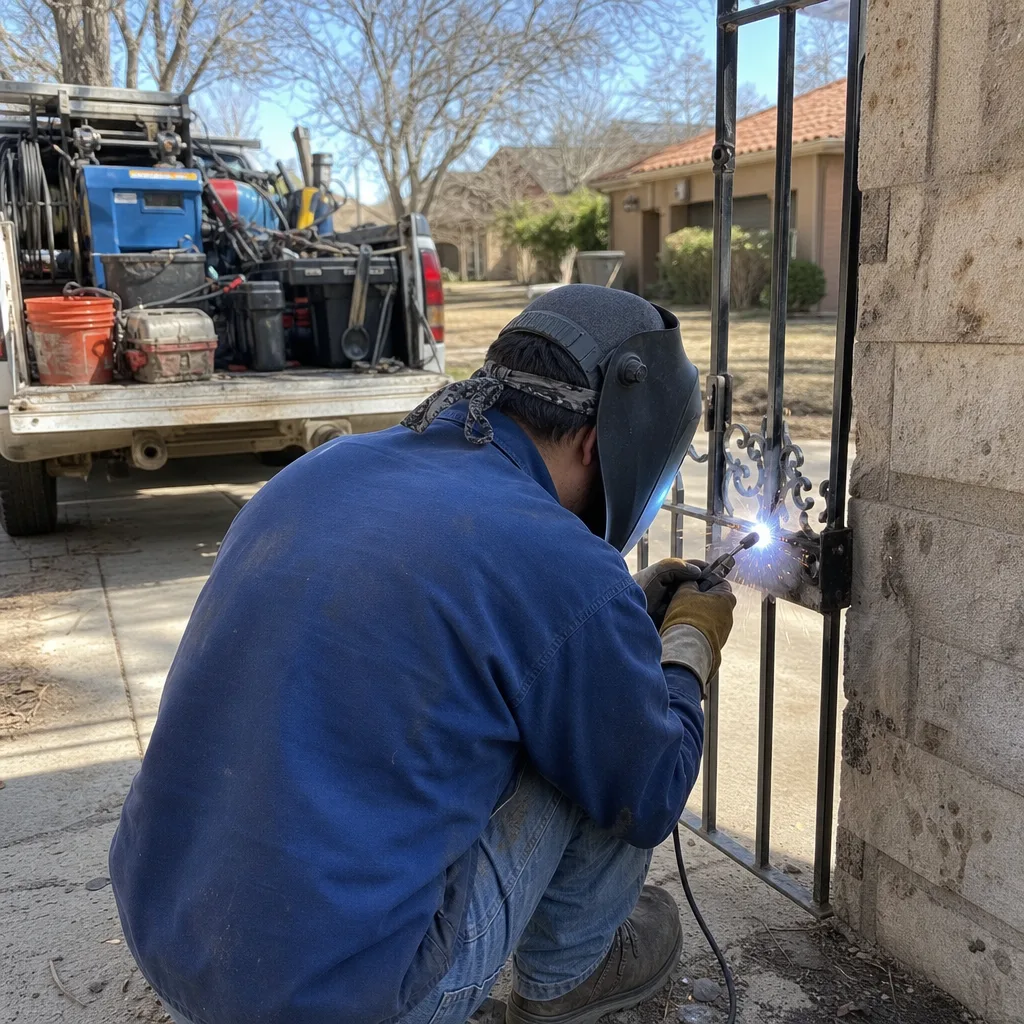
- Slow Gate Travel: What It Means and What It Costs
- Reversal Without Obstruction: The Sensor Problem
- Grinding Noise: Three Sounds That Sound the Same
- Partial Open or Close: The Limit Switch and the Travel Arc
- No Response to Remote: The Signal Chain
- The Fort Worth Heat Warning Sign: Morning Fine, Afternoon Dead
- Triage: Imminent vs. Monitorable Warning Signs
- What to Photograph and Write Down Before You Call
BeforeAfterSlow Gate Travel: What It Means and What It Costs
A gate that moves noticeably slower than it did six months ago is the most common early warning sign in Fort Worth, and it’s also the most ignored. The travel speed on an automated gate is controlled by the operator’s motor, a set of drive gears, and the interface between the operator and the gate itself. When any of those three components wears, the gate slows. The trick is knowing which one.
Slow travel is usually one of three things: a capacitor that’s losing its ability to hold and release charge, a drive belt or chain that’s stretched beyond tension, or a gate hinge that’s binding from rust or worn bearings. In our experience, a capacitor on a residential swing gate operator will often start failing 6 to 12 months before it dies completely, and the first symptom is always the same: the gate moves, but it moves like it’s exhausted.
The triage level here is yellow, not red. A slow gate is not an immediate safety risk, but every week you let it drag puts more strain on the motor, and the motor is the expensive part. Monitoring for 30 to 60 days is reasonable if the slowdown is slight. If you can count the seconds of travel from fully open to fully closed and that number has increased by 30% or more, don’t monitor. Call for a diagnostic.
Price range in Fort Worth: a new capacitor typically runs $80 to $180 installed. A chain tension adjustment runs $90 to $140. A gate hinge replacement runs $120 to $250, depending on the hinge size and whether the post has rotated. None of those are emergency pricing. All of them are cheaper than an operator replacement, which starts around $500 and climbs from there.
Reversal Without Obstruction: The Sensor Problem

The gate starts to close, gets halfway, and reverses for no reason you can see. No dog, no kid, no trash can. It just backs up. This is the warning sign that costs homeowners the most money in misdiagnosis, because it looks like a control board problem but is usually a photo-eye problem.
A photo-eye, which is the infrared beam that stops the gate if something crosses the path, is mounted on two posts or brackets opposite each other. When the beam is broken, the gate reverses. When the beam is misaligned, the gate thinks the beam is broken, even when nothing is there. The difference between aligned and misaligned is about two inches of drift, and drift happens slowly. Wind, a bumped post, a kid swinging on the gate, a lawnmower that clipped the bracket: any of them can move the photo-eye enough to trip the circuit.
The confusion happens because a failing control board can produce the exact same symptom. The board sends a close command, loses its signal, and defaults to reverse. The way to tell the difference without opening the operator is to watch the gate. A photo-eye problem reverses at the same point in the travel arc every time, because the beam is broken at the same spot. A board problem reverses at random points, because the signal loss is intermittent.
If it reverses at the same point every time, you’re probably looking at a $40 to $90 realignment or a $60 to $120 sensor replacement. If it reverses randomly, you may be looking at a board, and gate motor and opener service in Fort Worth handles both. Reversal without obstruction is a yellow-to-red triage depending on frequency. If it’s once a day, monitor it. If it’s once a cycle, the gate cannot be trusted to stay closed, and in Fort Worth a gate that won’t stay closed is not a gate at all.
Grinding Noise: Three Sounds That Sound the Same
A grinding noise is the most alarming warning sign a gate can make, and also the most easily misread by ear. The sound of a stripped gear in the operator, the sound of a dry chain scraping its rail, and the sound of a hinge with blown bearings are all described by homeowners as “grinding.” They require completely different repairs, at completely different prices.
The way to tell them apart is to stand close and locate the sound. A gearbox grind comes from inside the operator housing, and it’s rhythmic with the motor. Every rotation of the drive gear produces the same rasp. This is the expensive one. A residential operator gearbox that has lost a tooth or sheared a keyway will need a gear set replacement, which in Fort Worth runs anywhere from $250 to $600 depending on the operator brand. A LiftMaster gear kit costs less than a FAAC or BFT unit, but the labor is similar.
A chain or rack grind is different. It’s a metallic scrape that pulses as the gate moves, and it comes from where the chain meets the rail, not from the motor itself. The fix is usually a chain tension adjustment and rail lubrication, which runs $90 to $150, or a chain replacement at $180 to $280. This is the one that gets ignored until the chain snaps, and a snapped chain on a rolling gate is dangerous. The gate can free-roll off its track if the stop is compromised.
A hinge grind is the cheapest of the three and the easiest to identify. It happens when the gate is stationary, not when it’s moving. Open the gate manually halfway and rock it. If the hinge groans, it’s the hinge. A worn hinge replacement runs $120 to $250 in most Fort Worth neighborhoods. Grinding is always a red triage if the sound is coming from the operator. If it’s the hinge and you can still open the gate smoothly by hand, you have time.
Partial Open or Close: The Limit Switch and the Travel Arc
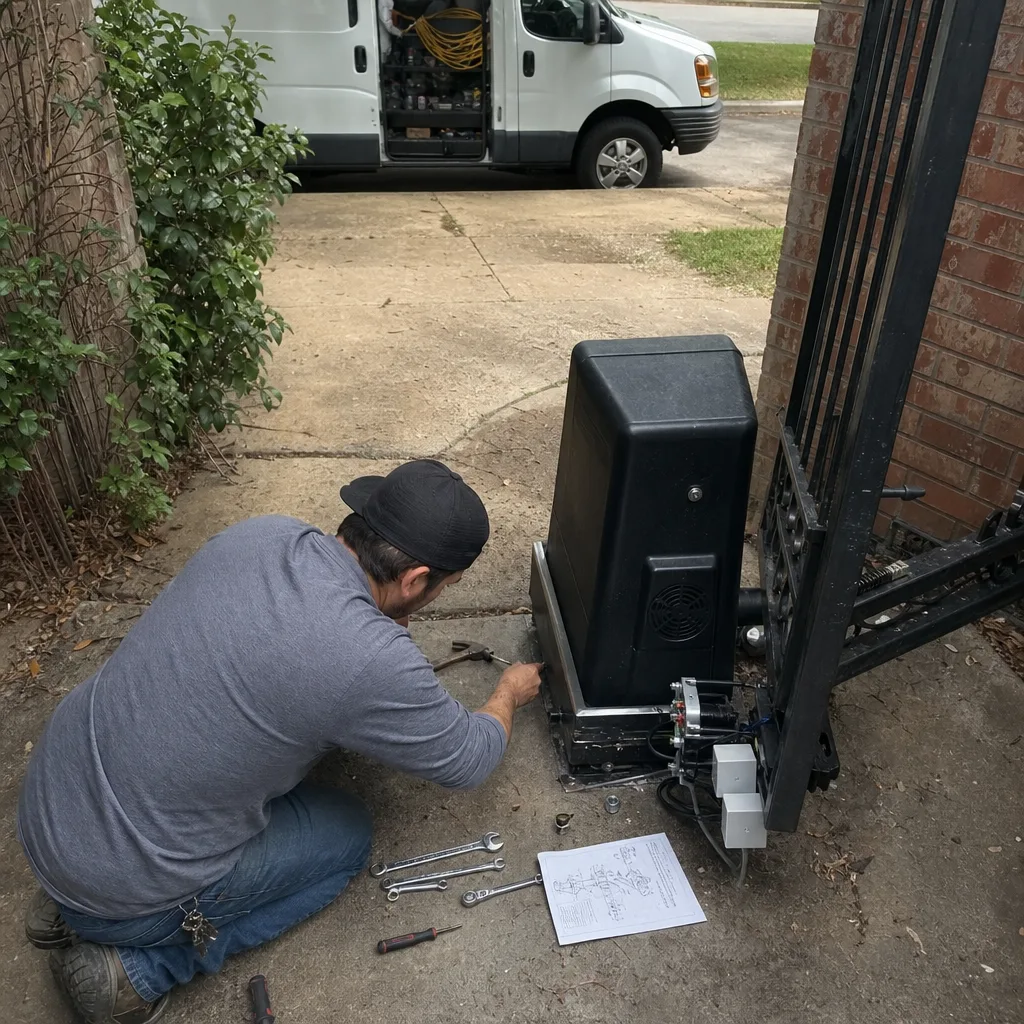
Your gate opens to 80% and stops. Or it closes to 90% and reverses. Or it opens fully but then creeps back four inches for no visible reason. This is a limit switch problem, and it’s one of the few gate failures that has a clean mechanical explanation.
The limit switch is the component that tells the operator where “fully open” and “fully closed” are. It’s a physical or magnetic stop inside the operator housing. When it drifts out of position, the operator stops the gate at the wrong point. The gate isn’t broken in any meaningful sense; it’s just operating under bad information. We’ve seen limit switches set 12 degrees past travel, and the gate will fight itself every single cycle, pushing against a stop it was told to ignore.
Partial travel is a yellow triage. The gate still functions, but it’s putting stress on the motor, the chain or belt, and the gate frame itself. A misaligned limit switch can also leave a gap at the bottom of the gate that’s wide enough for a small dog to slip through, which in Fort Worth matters when the neighbor’s terrier comes to visit.
The fix is a limit switch adjustment or replacement, which runs $80 to $160. In about a third of the cases we see, the limit switch itself isn’t the root cause; the gate has physically shifted on its hinges, and the limit switch was compensating for a gate that no longer closes square. Gate repair in Fort Worth starts with finding out which it is before replacing anything.
No Response to Remote: The Signal Chain
You press the remote and nothing happens. This is the warning sign that sends homeowners to the operator first, when the operator is usually the last thing to check. The signal chain on an automated gate is long: remote, receiver, board, motor, and power supply. Any one of them can fail and produce the same silence.
The cheapest and most common cause is a dead remote battery. Replace it before you do anything else. If a fresh battery doesn’t work, the next thing to check is whether the gate opens from the keypad or the button inside the house. If it does, the problem is the remote or the receiver, and those are $40 to $120 fixes. If the gate won’t open from anything, the problem is downstream: the board, the motor, or the wiring between them.
We service nine automation brands, including LiftMaster, FAAC, BFT, and Mighty Mule, and every brand has its own failure pattern. A LiftMaster remote of a certain age will lose its programming when the battery dies. A FAAC board has a known capacitor failure mode. A BFT unit can show no response when the transformer overheats. Knowing which motor is on the property is the first thing we ask for, because it tells us what to expect before we arrive.
Triaging no response: if the keypad works, it’s a yellow. You can live with a dead remote for weeks if you don’t mind opening the gate from the wall button. If nothing works, including the keypad, it’s a red if you can’t get the gate open manually. A gate that won’t open at all is a stranded car, a blocked delivery, and a fire-access problem. In Fort Worth, where a single driveway can be the only way in and out of a property, a dead gate is not an inconvenience. It’s an access failure. Vance Gate Repair Fort Worth dispatches a technician for exactly this reason, with no automated phone tree between you and a person.
The Fort Worth Heat Warning Sign: Morning Fine, Afternoon Dead
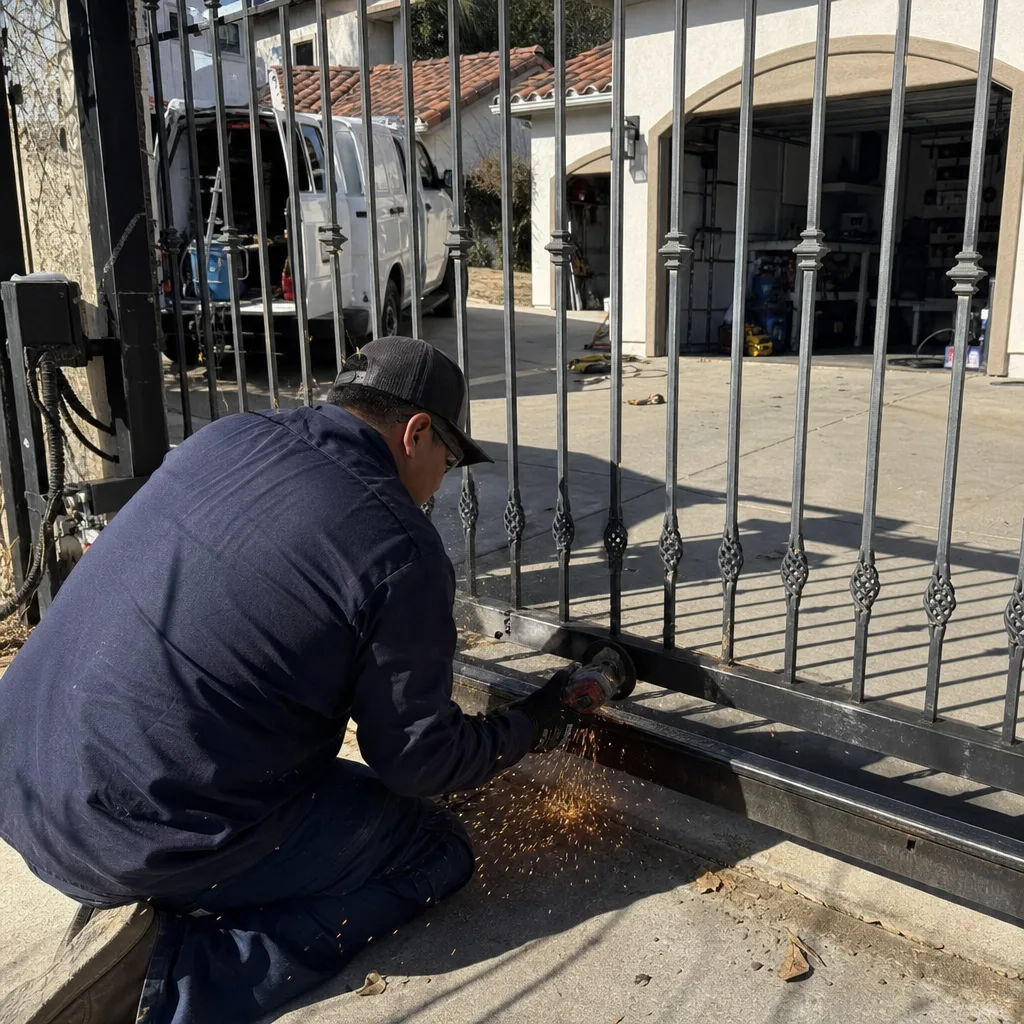
This is the symptom most national repair guides miss, because most national repair guides are written by people who have never worked a Texas summer. Your gate works perfectly at 7 a.m. and hesitates or fails at 3 p.m. The only variable that changed is the temperature. That is a diagnostic clue, not a coincidence.
Two components have thermal expansion failure signatures that match this profile. The first is a capacitor. A capacitor stores the electrical charge that the motor uses to start, and a failing capacitor loses its ability to hold charge as it heats up. In the cool morning, it holds enough. In the afternoon, the electrolyte inside expands and the capacitance drops, and the motor won’t start or starts slow. This is one of the most common gate failures we see in Fort Worth from May through September, and it’s typically a $80 to $180 repair.
The second is a control board with a cold-solder joint. A cold-solder joint is a microscopic crack in a solder connection on the circuit board. When the board is cool, the crack is closed and the circuit works. When the board heats up, the metal expands, the crack opens, and the circuit fails. Diagnosing this requires experience, because the board works fine when the technician tests it in the morning. We document the failure window, in terms of outside temperature, before we open anything.
If your gate fails in the afternoon and recovers by evening, write down the ambient temperature each time it happens. That log is worth more than a verbal description. It tells us whether we’re chasing a capacitor or a board, and it saves you the diagnostic labor of a technician watching a working gate. Fort Worth’s heat is not a background detail here. It’s the test condition.
Triage: Imminent vs. Monitorable Warning Signs
The entire point of a warning sign is to tell you how much time you have. Here’s the triage system we use, mapped to the symptoms above.
- Red, call today: grinding noise from the operator housing, no response from any input including the keypad, a gate that reverses multiple times per cycle and cannot hold closed, any gate that has come off its track.
- Orange, call within a week: significant slowing (30% or more added travel time), a gate that stops 20% short of fully closed, a gate that fails in afternoon heat more than twice in a row.
- Yellow, monitor 30 to 60 days: slight slowdown, a gate that reverses once a day at the same point, a dead remote when the keypad still works, a hinge grind that doesn’t affect travel.
The risk of monitoring a yellow symptom is that it becomes an orange or red symptom while you’re not looking. That’s why we tell Fort Worth homeowners to photograph and log the symptom the moment it appears. The documentation habit costs nothing and turns a vague complaint into a diagnostic starting point. If you call us and say “the gate has been slow for two months,” we start with the capacitor and the drive tension. If you call and say “the gate takes nine seconds to close now and it took six seconds in March, here’s a photo of the chain,” we start further down the diagnostic path. You have paid for less discovery time, and you’ve made the technician’s first hour more useful.
What to Photograph and Write Down Before You Call
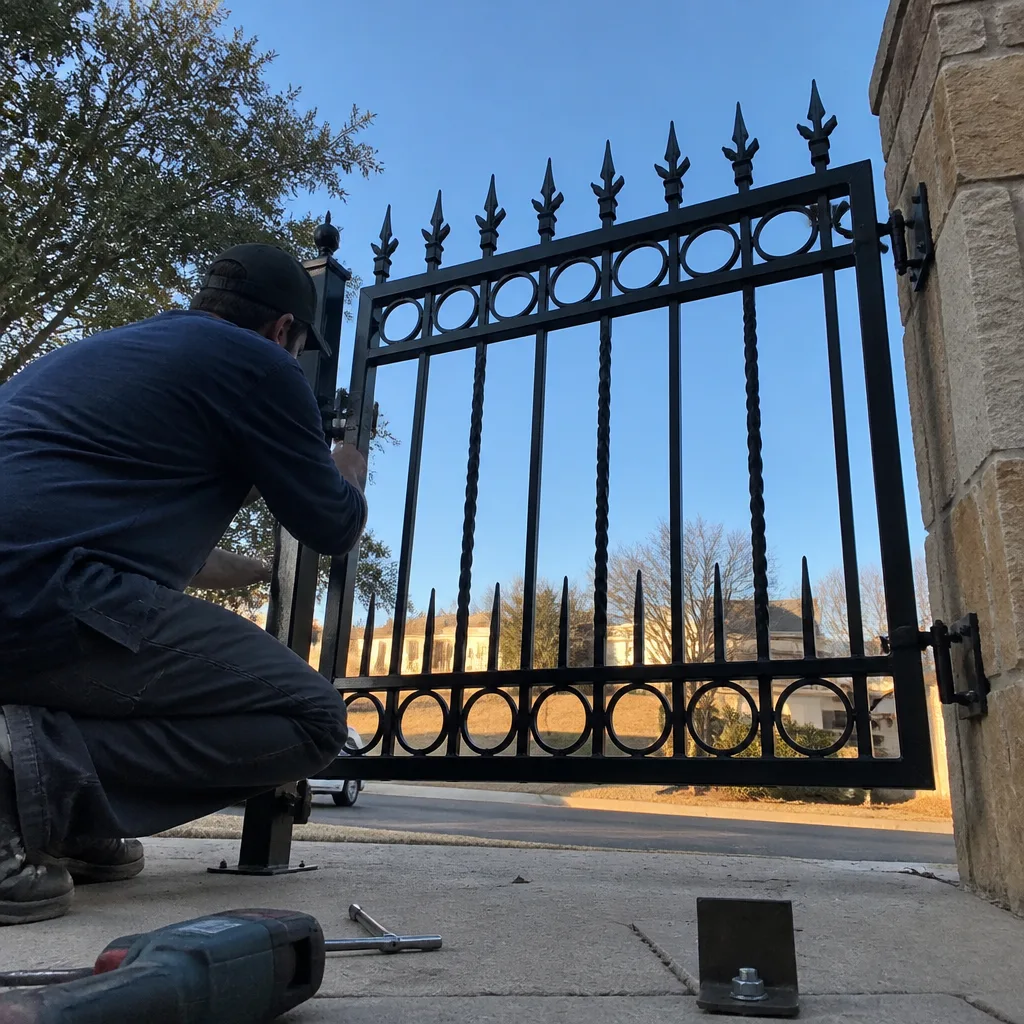
The single most useful thing a Fort Worth homeowner can do when a warning sign appears is document it. Not fix it. Document it. Here’s the list.
- Photograph the operator unit. The brand name and model number are on a label on the side. LiftMaster, FAAC, BFT, Mighty Mule: the label tells us the motor type, the age, and the failure pattern before we arrive.
- Photograph the gate and hinges. A photo of the hinge post and the gate bracket takes ten seconds and gives us the mounting configuration we’d otherwise have to measure on-site.
- Write down the symptom frequency. Every time, once a day, only in the afternoon, only after rain. Frequency is diagnostic.
- Write down the travel time. Count the seconds from fully open to fully closed. Do it three times. If there’s a difference between cycles, that’s a data point.
- Photograph the path of the gate. If the gate is a sliding gate, photograph the track. If it’s a swing gate, photograph the ground where the gate swings. Wheel ruts, dirt buildup, and shifting are visible in photos.
Vance Gate Repair’s approach is built on documentation. Adrian Vance started in commercial access control, where every job leaves a record, and carried that habit into residential work. Every visit we make to a Fort Worth property includes a written scope, a written price, and a photographic record of what was found, what was adjusted, and what was replaced. The Haven Standard Clause 4: evidence on every job. You don’t pay twice to rediscover the same problem, and the next technician, if there ever is one, doesn’t start blind. Many of our customers in Fort Worth find us through gate installation referrals after a repair turned into a replacement conversation, and the documentation we leave behind is part of why.
Common Mistakes to Avoid
- Lubricating a grinding operator without opening it. Grease on the outside of a gearbox does nothing for a stripped gear, and it can attract dust that accelerates the failure. If the grind is inside, opening it is the only fix.
- Replacing the remote before checking the receiver. We see Fort Worth homeowners spend $60 on a new remote when the problem was a $25 receiver capacitor. The remote was fine.
- Adjusting the limit switch without checking the gate hinges first. If the gate has sagged on worn hinges, resetting the limit switch is a temporary patch. The gate will drift again.
- Ignoring a photo-eye misalignment until it’s chronic. A gate that reverses once a day will reverse every cycle eventually. The beam drift doesn’t stabilize; it gets worse.
- Running a slow gate “just one more month.” The motor is working harder every time, and about half the operator replacements we do in Fort Worth could have been avoided with a $100 capacitor fix six months earlier.
- Not writing down the failure pattern. “It’s been acting weird” is not a diagnostic. “It fails at 3 p.m. and recovers at 8 p.m.” is a diagnostic. Write it down.
When to Call a Professional
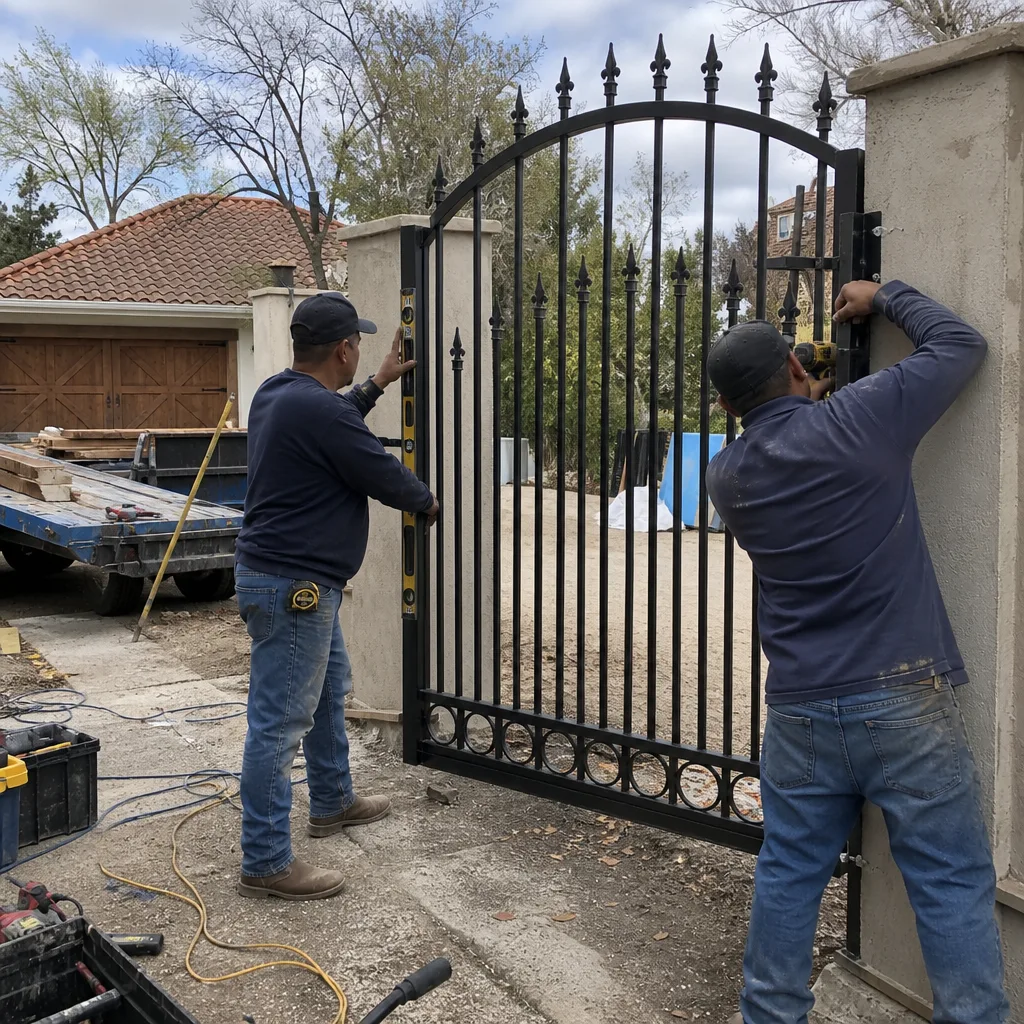
If the grinding is coming from inside the operator housing, call a professional. If the gate won’t respond to any input and you can’t open it manually, call a professional. If the gate has come off its track or the chain has snapped, call a professional and don’t stand near it. If the gate fails in heat and you want to know whether it’s a capacitor or a board without paying for two separate visits, call a professional with a documentation habit.
If you tell us what you’ve observed and photographed, we’ll give you a written price before any work starts. Not an estimate over the phone that changes when the technician arrives. A price in writing. That’s Clause 1 of the Haven Standard, and it applies to every job we take in Fort Worth. The 365-Day Done Right Promise covers all completed work for a full year. If the repair isn’t right, we make it right, no argument and no fee. Call Vance Gate Repair Fort Worth at (817) 476-9945 for a free estimate. A live person answers, at any hour.
Frequently Asked Questions
Gate repair in Fort Worth typically runs between $80 and $600 depending on the component. A photo-eye realignment runs $40 to $90, a hinge replacement $120 to $250, a limit switch replacement $80 to $160, and an operator gearbox replacement $250 to $600. The price is quoted in writing before any work starts, so there’s no surprise in the invoice. Call (817) 476-9945 for an exact quote on your gate.
Yes, same-day repair is available for red-triage failures: a gate that won’t open, a gate that won’t stay closed, or a gate that’s grinding from the operator. A technician is dispatched with the name and photo provided before arrival, and a live person answers the phone 24/7 to schedule it.
That’s the thermal expansion signature of a failing capacitor or a control board with a cold-solder joint. The capacitor loses charge as it heats up, or the board’s microscopic crack opens as the metal expands. In Fort Worth, where afternoon heat is intense from May through September, this is one of the most common gate failures we diagnose. Write down the exact temperatures at which the gate fails, and call (817) 476-9945 for a diagnostic.
Stand close and locate the sound. If it’s coming from inside the operator housing, it’s a gearbox problem and you should stop using the gate until it’s inspected. If it’s coming from the chain or rail, it’s a tension or lubrication problem. If it’s coming from the hinge when the gate is manually rocked, it’s a hinge bearing. Each has a different price and urgency, and misdiagnosing them is the most expensive mistake a homeowner can make.
We service nine major gate automation brands, including LiftMaster, FAAC, BFT, and Mighty Mule. We repair whatever motor is already on the property rather than steering you toward a replacement. If your operator can be repaired for $150, we’ll tell you that. If it needs a gearbox at $450, we’ll write that down. Either way, you get a written price before we touch a tool.
Yes. Free estimates are available for gate repair, gate motor service, and gate installation in Fort Worth. The estimate is in writing, it’s delivered before any work starts, and the price on the page is the price you pay. Call (817) 476-9945 and a live person will answer, any hour, any day.
The Bottom Line
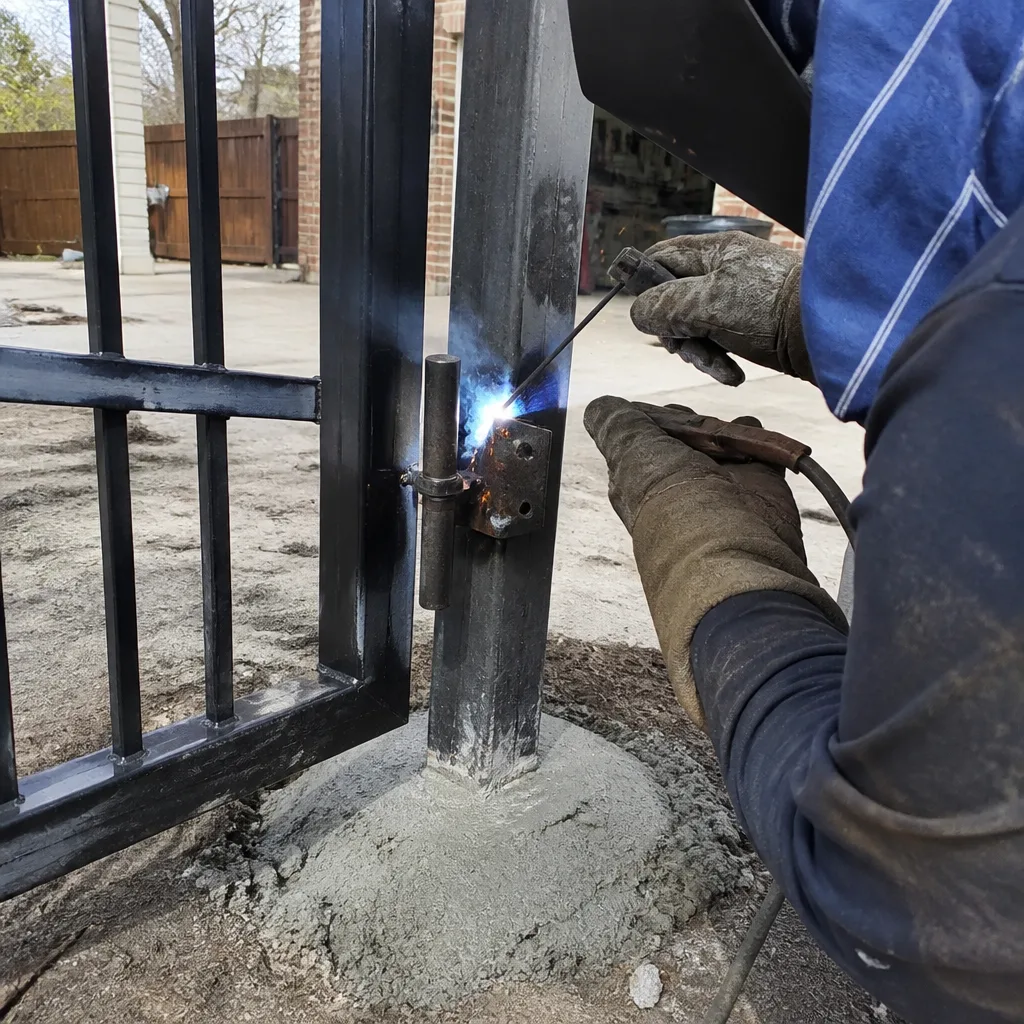
Gate warning signs are not mysteries. They’re physical symptoms with mechanical causes, and each one tells you how much time you have. A slow gate is a capacitor or a drive tension problem. A reversing gate is a photo-eye or a board. A grinding gate is either a gearbox, a chain, or a hinge, and you can tell which by standing in the right spot. Document the symptom, photograph the operator label, count the travel time, and write down the failure pattern. In Fort Worth, where heat turns a minor capacitor problem into an afternoon failure, that documentation is the difference between a $100 repair and a $600 replacement. Find more guides & resources on our blog.
Written by Adrian Vance, Owner at Vance Gate Repair Fort Worth, serving Fort Worth since 2014.