
Last updated September 20, 2026
Free on-site gate assessment - hinges, posts, and your LiftMaster or Nice gate operator checked before anything is quoted
The assessment is free and the quote is the invoice.
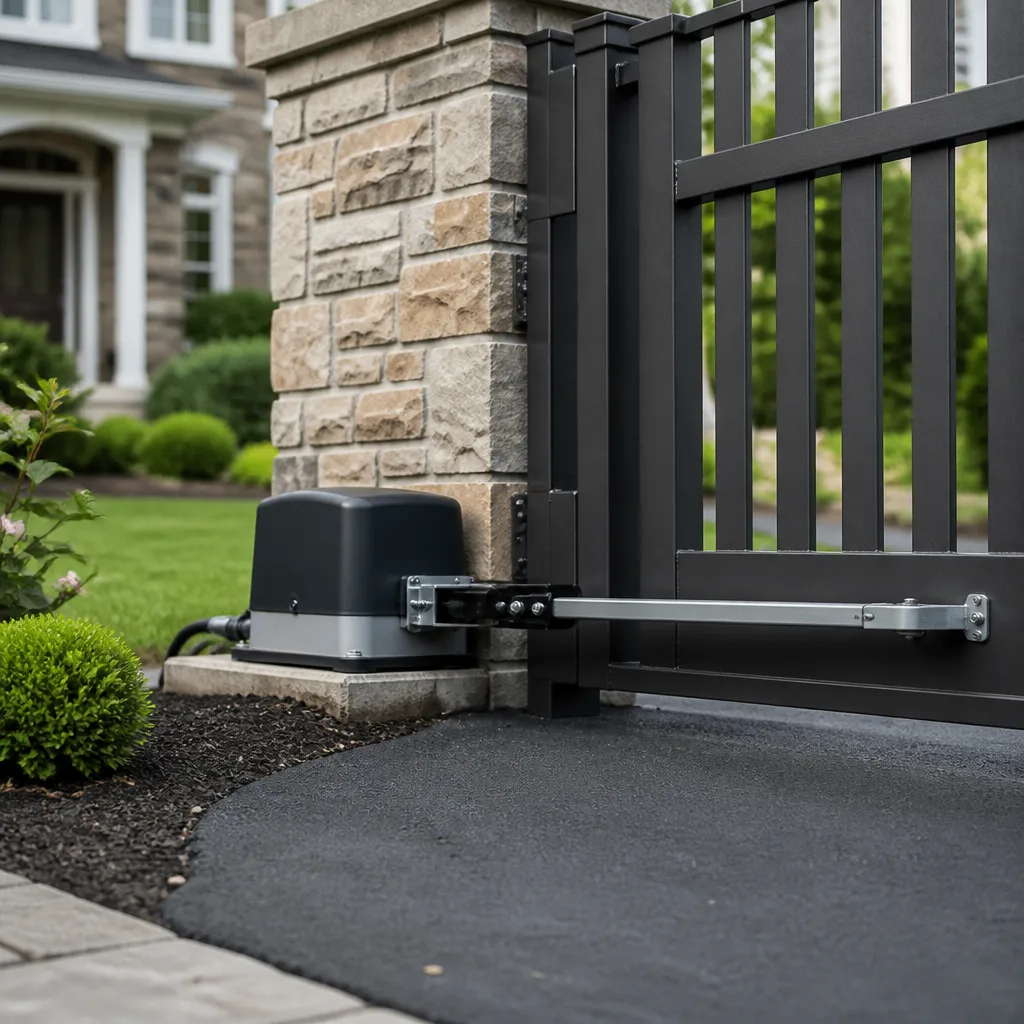
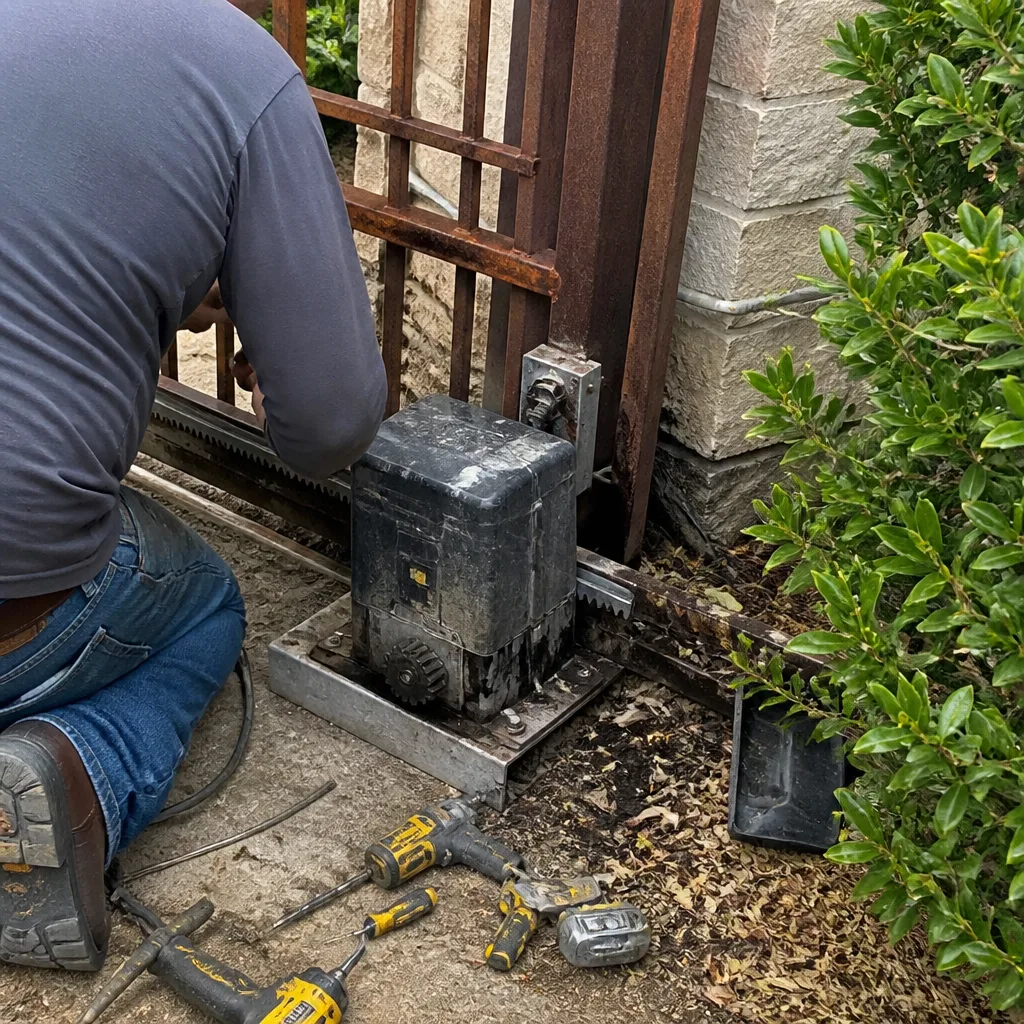 Before
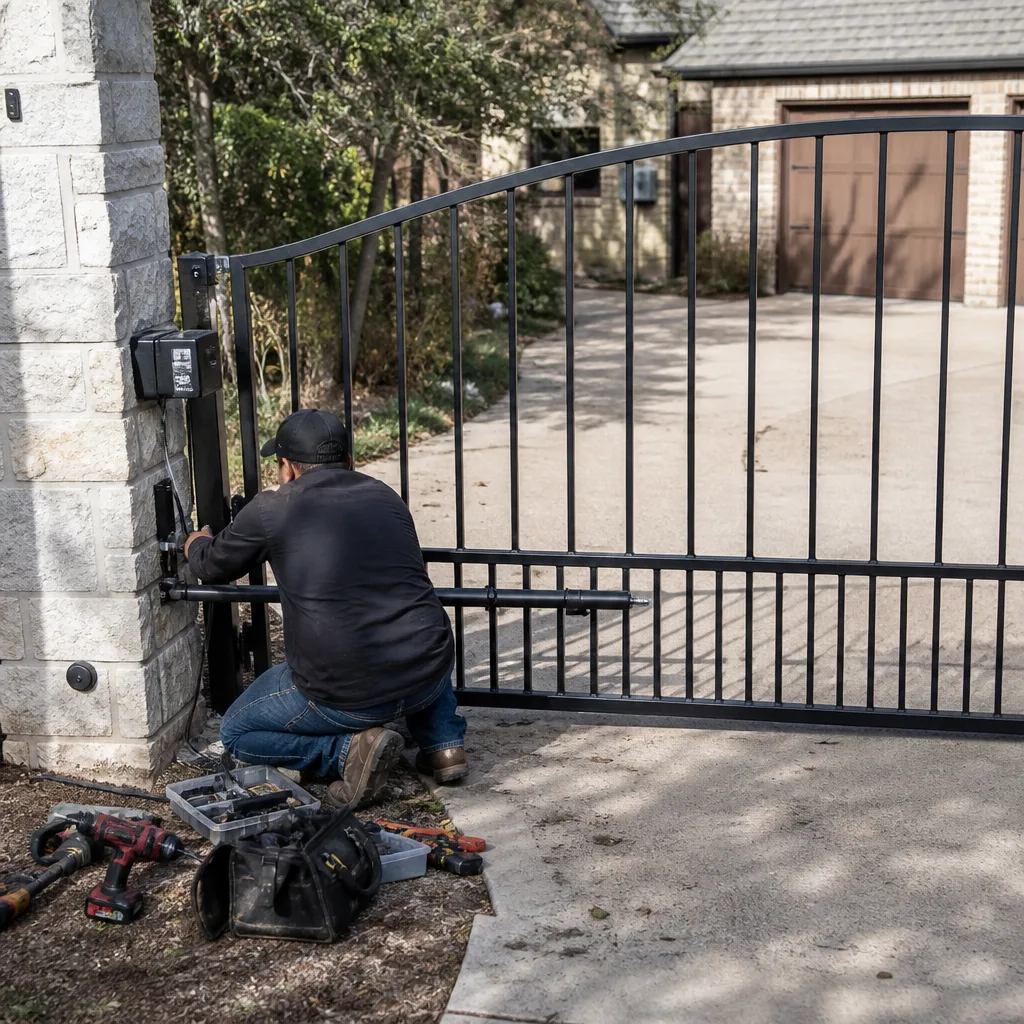 After
After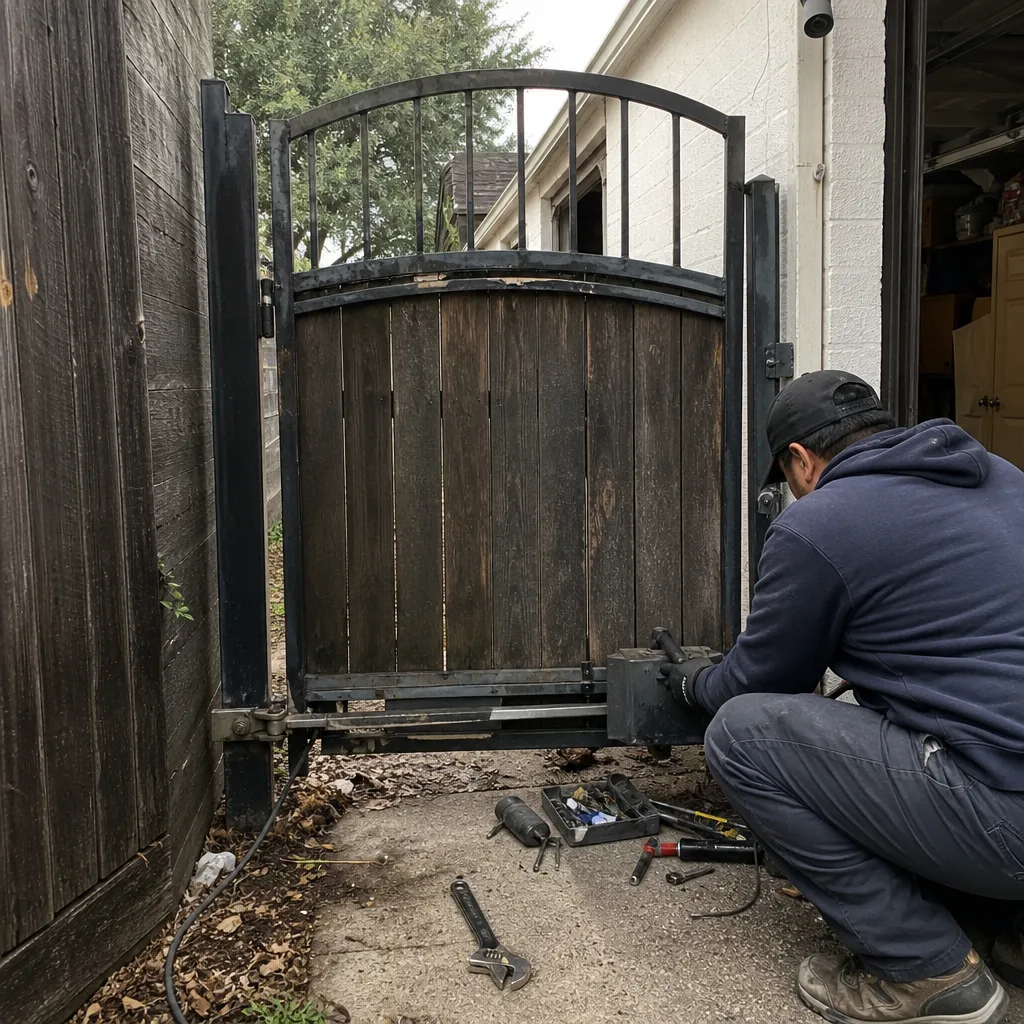 Before
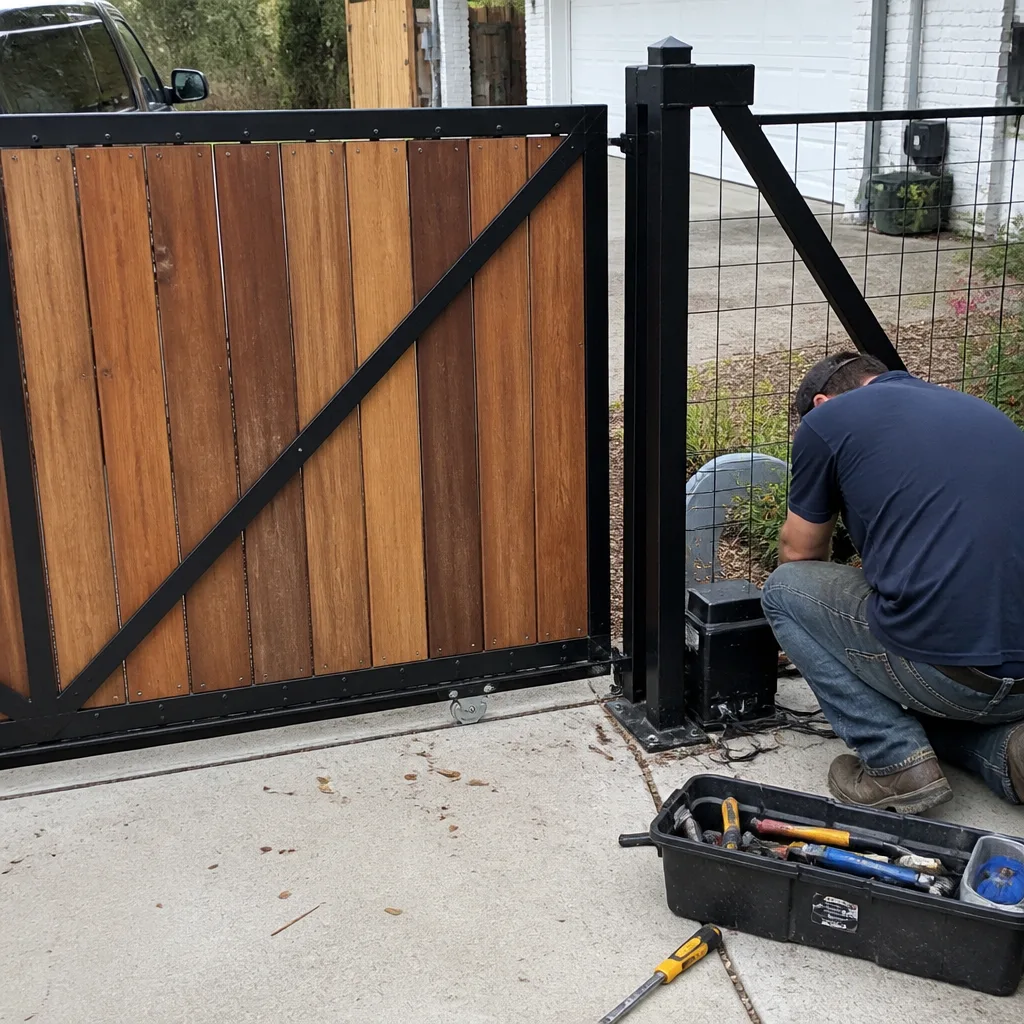 After
After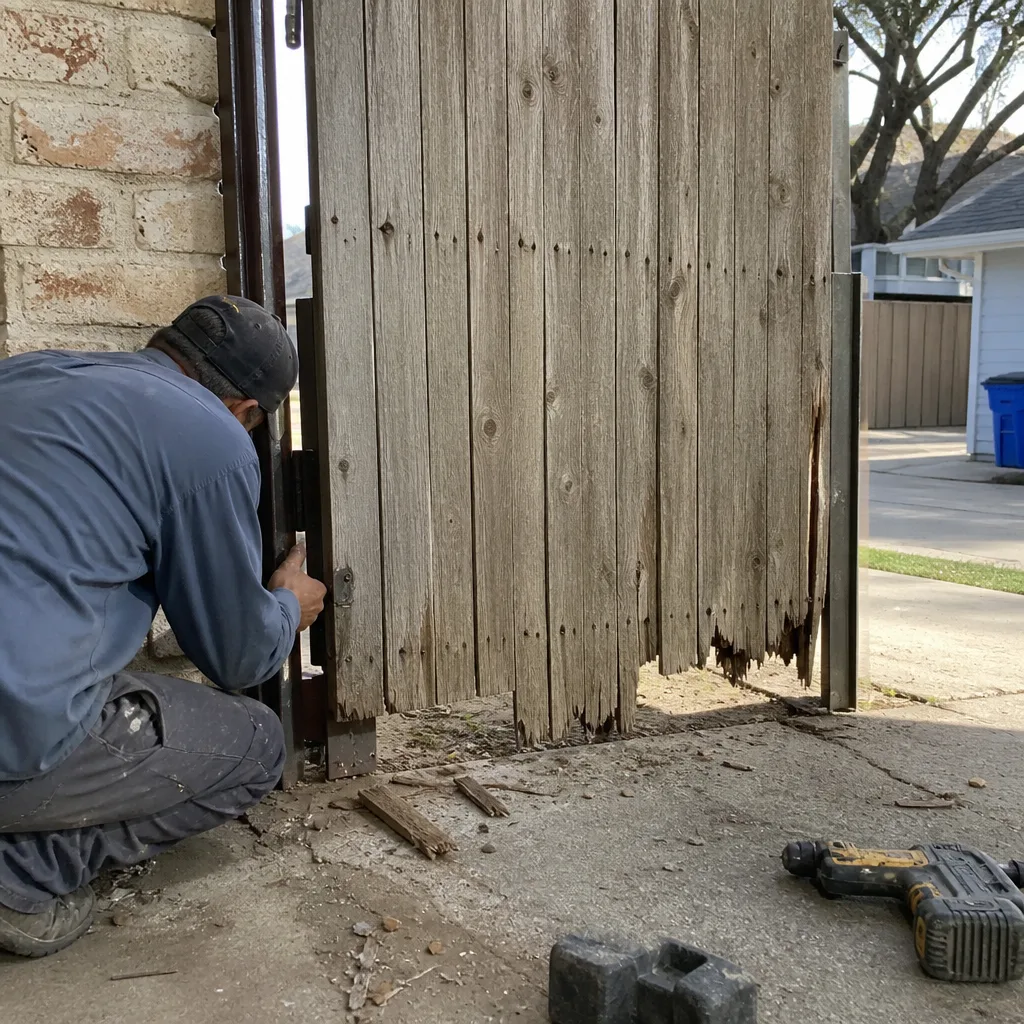 Before
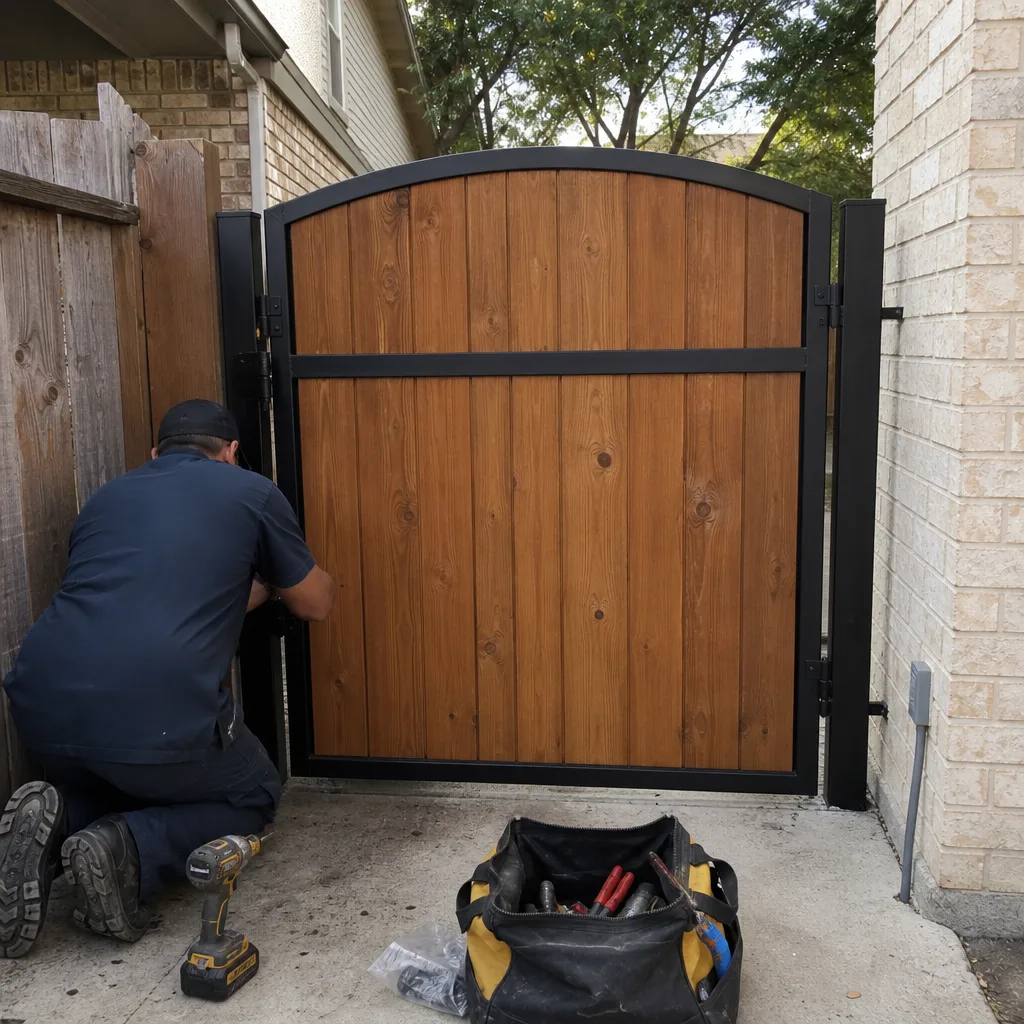 After
AfterGate Repair Cost Breakdown: The Fort Worth Homeowner’s Reference for 2026
Two Fort Worth contractors quoting $350 for a gate repair are not quoting the same job unless both quotes are in writing, itemized by diagnostic fee, parts, and labor – and in this market, almost none of them are. One of those $350 quotes might include a new control board and limit switch adjustment. The other might cover nothing more than a photo-eye realignment and a fresh set of batteries in a remote. You cannot know the difference from a verbal number. This Gate Repair guide breaks down what gate repair actually costs in Fort Worth in 2026, line by line, so you can read a written estimate the way a technician reads a wiring diagram: by seeing exactly what each number represents and what it does not.
Quick Answer
Most gate repairs in Fort Worth run between $180 and $650 in 2026, with the typical job landing around $300 to $450 once parts and labor are itemized. Simple fixes like photo-eye alignment or a limit switch adjustment sit at the low end around $120 to $220, while control board replacements and hinge rebuilds push toward $500 to $900 depending on brand and gate weight. The number that matters is not the total – it is whether the estimate separates diagnostic fees, parts at identified cost, labor by task, and any subcontracted electrical scope in writing before work begins.
Table of Contents
- The Four Cost Categories Every Gate Repair Estimate Should Separate
- Current Fort Worth Price Ranges for Common Gate Repairs
- How Parts Markup Works in the Gate Industry
- When Repair Crosses Into Replacement Territory
- How to Read a Written Gate Repair Estimate
- What Makes Fort Worth Gate Repair Different
- Common Mistakes to Avoid
- When to Call a Professional
- Frequently Asked Questions
- The Bottom Line
BeforeAfterThe Four Cost Categories Every Gate Repair Estimate Should Separate
Most gate repair invoices in Fort Worth show one number: a total. That single number is where opacity lives. A proper estimate separates four categories, and each one answers a different question about what you are actually paying for.
Category One: The Diagnostic or Service Call Fee. This is the charge for a technician to show up, assess the gate, and identify the fault. In Fort Worth, this typically runs $65 to $125 depending on distance and whether the call happens after hours. Some companies waive this fee if you approve the repair on the spot – ours is credited toward the work when a written estimate is accepted. But every company charges something for the truck roll, and if the estimate does not show a diagnostic line, the cost is buried elsewhere.
Category Two: Parts at Identified Cost. Every part installed should appear as its own line with the part number, brand, and unit price. A LiftMaster control board is not interchangeable with a FAAC board, and the price difference can be over $100. If a written estimate says “parts: $380” without naming the part, you cannot verify whether $380 is fair or whether the technician replaced a $40 limit switch and charged ten times that.
Category Three: Labor by Task, Not Blended Hourly. Blended hourly rates hide complexity. “Labor: 4 hours at $95” tells you nothing about what those four hours accomplished. Task-based labor says: limit switch replacement 0.5 hours at $95; photo-eye realignment 0.25 hours at $95; control board swap 1.0 hour at $95. You should be able to see what the technician did, not just how long they were on the property.
Category Four: Subcontracted Electrical Scope. Some gate repairs in Fort Worth require an electrician – running a new circuit, replacing a junction box, upgrading a breaker. If your gate operator needs electrical work beyond the low-voltage control wiring, a separate line for subcontracted electrical tells you that the gate company is not quietly marking up an electrician’s invoice. We show subcontractor costs at exactly what the electrician charges us, with the receipt attached to your job record.
These four categories are the difference between a quote you can hold someone to and a quote you have to trust on faith. The Haven Standard that governs every Gate Repair in Fort Worth job we perform requires all four to appear in writing before any tool leaves the truck.
Current Fort Worth Price Ranges for Common Gate Repairs

Prices below reflect what we have actually seen on Fort Worth jobs in 2025 and early 2026 – not national averages, which skew low because they include markets where labor costs are half of what a licensed DFW technician charges. Use these as reference ranges, not as a quote. Your gate, your motor brand, and your specific failure will move the number within or occasionally beyond the range.
| Repair Task | Typical Fort Worth Range | What Drives the Variance |
|---|---|---|
| Photo-eye alignment or cleaning | $80-$160 | Usually under 30 minutes; low parts cost. Higher end if mounting brackets need replacement. |
| Limit switch replacement and adjustment | $140-$280 | Parts cost $20-$60; labor depends on access and whether the operator housing is corroded. |
| Control board replacement (operator board) | $350-$850 | Board cost varies widely by brand – Mighty Mule boards run lower, LiftMaster and FAAC higher. Programming adds labor. |
| Hinge rebuild on a swing gate | $250-$550 per hinge | Weight of the gate, whether welding is required, and whether the post has shifted. |
| Loop detector replacement | $300-$600 | Includes the detector module and the saw-cut loop in the driveway if the existing loop is damaged. |
| Remote or keypad replacement and programming | $75-$200 | Mostly the price of the device; programming is usually a few minutes. |
| Full swing gate motor replacement | $850-$1,800 | Brand, gate weight, and whether the arm bracket and mounting post are reusable. |
Fort Worth’s soil movement also plays a role that national pricing guides never mention. Clay soil expands and contracts dramatically with moisture swings, and gates on posts set without deep concrete footings will shift over time. A hinge rebuild on a post that has drifted two degrees off plumb is a different job from the same hinge rebuild on a stable post. That is why two neighbors in Wedgwood can get quotes for what sounds like the same repair and see a $200 difference – one gate is square, the other is fighting its own post.
How Parts Markup Works in the Gate Industry
Parts markup is standard practice, and it is not inherently dishonest. A gate company buys a control board wholesale for $210 and charges you $285 to cover ordering time, warranty handling, and the risk of stocking parts that fail in the field. That 30 to 40 percent markup is normal and reasonable. What is not reasonable is a line item that says “parts” with no part number, no brand, and a price that seems disconnected from the repair described.
Here is what a reasonable markup looks like on a typical Fort Worth swing gate repair:
- FAAC 455D control board: wholesale ~$240, billed at $310-$330
- Mighty Mule limit switch assembly: wholesale ~$18, billed at $28-$35
- LiftMaster loop detector: wholesale ~$75, billed at $95-$110
- Photo-eye set: wholesale ~$40, billed at $55-$70
When a company refuses to itemize parts, the markup can be anything – 100 percent, 200 percent, whatever the market will bear from a homeowner who wants the gate working again. A verbal total hides that. A written estimate with identified parts shows you exactly what margin you are paying and lets you evaluate it against the reasonable range above.
The second thing to watch is parts substitution. A technician might quote a name-brand LiftMaster board at $380 and install a generic aftermarket equivalent that costs $60. Without a part number on the invoice, you cannot tell the difference. We identify every part by manufacturer and part number on every estimate and every final invoice for Gate Motor & Opener in Fort Worth work, and we photograph the part before and after installation.
When Repair Crosses Into Replacement Territory
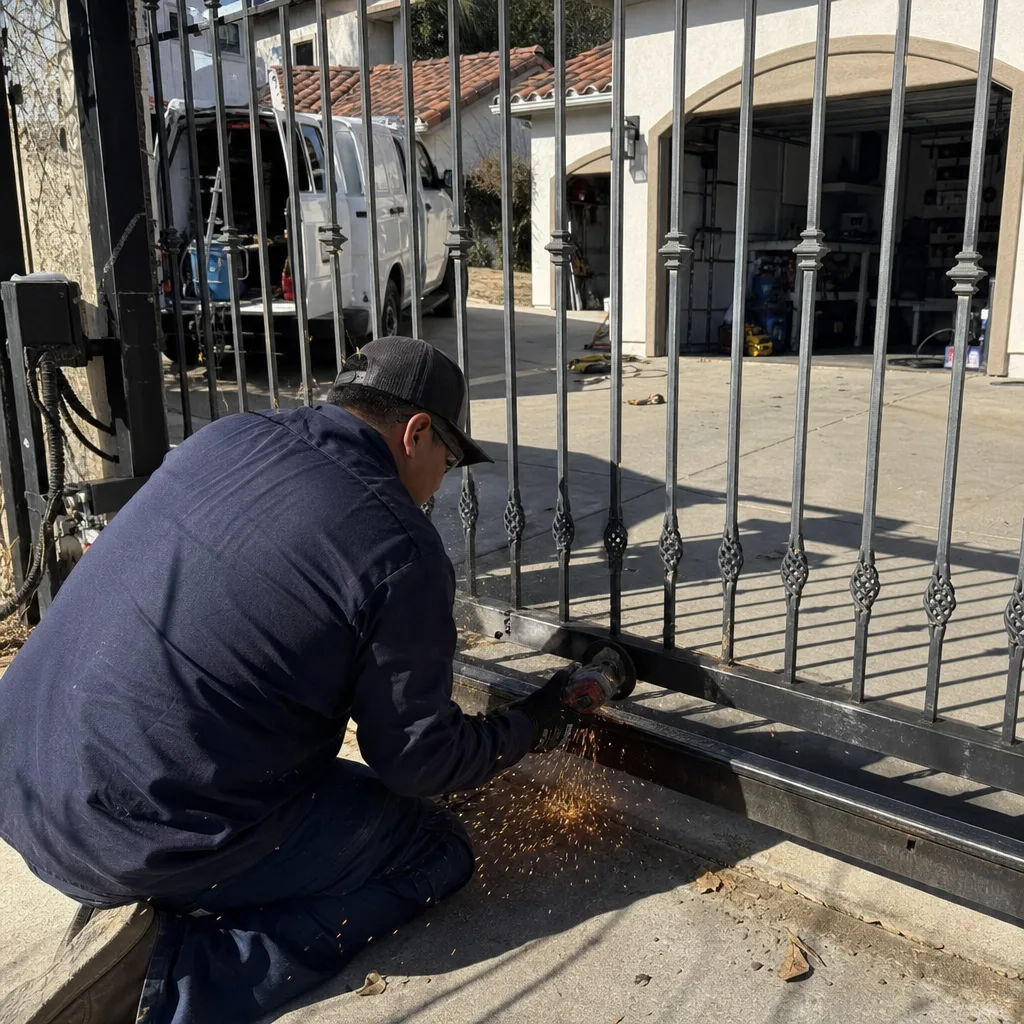
At some point, repairing an old operator stops making economic sense. The calculation is not based on the repair invoice total alone – it is based on part availability and board cost relative to operator replacement.
Here is the arithmetic we walk clients through on the phone and on site:
- Identify the failed component. If it is a limit switch, hinge, photo-eye, or remote, repair is almost always the right call – those parts are inexpensive and their failure does not indicate systemic operator decline.
- Check board cost against operator replacement cost. If the control board for a 9-year-old Mighty Mule costs $420 installed and a new Mighty Mule operator of equivalent spec costs $650 installed, you are spending 65 percent of replacement cost on a single component of an aging system.
- Check part availability. Some older BFT and FAAC boards have been discontinued. If the part must be sourced from a salvage yard or a liquidation warehouse at a premium, the warranty picture gets murky and the repair becomes less rational.
- Factor in the next likely failure. A 10-year-old operator with a failed board is a 10-year-old operator. Gearboxes, motor capacitors, and transformer windings have also been aging. The question is not whether this repair fixes the gate today – it is whether you are paying $400 now to defer a $900 replacement by six months.
Our rule of thumb, stated plainly: if the repair cost exceeds 60 percent of full replacement cost on a unit older than eight years, replacement is worth a hard look. At Gate Installation in Fort Worth jobs, we will show you both numbers side by side and let the arithmetic do the talking. No pressure, no steering – just the math.
How to Read a Written Gate Repair Estimate
A written estimate should look like a parts diagram, not a ransom note. Here is what to expect and what to ask for if you receive a single-total number instead of an itemized breakdown.
What a proper written estimate includes:
- Diagnostic fee and whether it is credited toward the repair
- Each part by brand, part number, and unit price
- Labor broken into specific tasks with hours per task
- Any subcontracted electrical scope at identified cost
- Total, stated in dollars, with tax called out separately or noted as included
- Warranty terms, in writing, with the duration in months and what it covers
What to ask for if you get a single number:
- “Can you break that into diagnostic, parts, and labor?” – This one question moves you from a verbal guess to a written scope.
- “What brand and part number is the board you’re quoting?” – If they cannot answer on the spot, they have not looked at your gate closely enough to quote it accurately.
- “Does the labor line item show what tasks are covered?” – Task-based labor is the standard; blended hourly is a flag.
- “Is the diagnostic fee credited if I approve the repair today?” – Most companies do credit it, but some do not, and that $90 matters.
- “What is the warranty on the part and on your labor?” – If the answer is vague, the warranty is probably weak.
A written estimate does not protect you because it is pretty. It protects you because it is specific. Specificity is what lets you hold a contractor to their number and their scope. That is why the price you receive from us is the price you pay – the flat rate is written and handed over before any work starts. No addenda, no “we found additional work,” no new total at the end unless you approved a written change order first.
What Makes Fort Worth Gate Repair Different
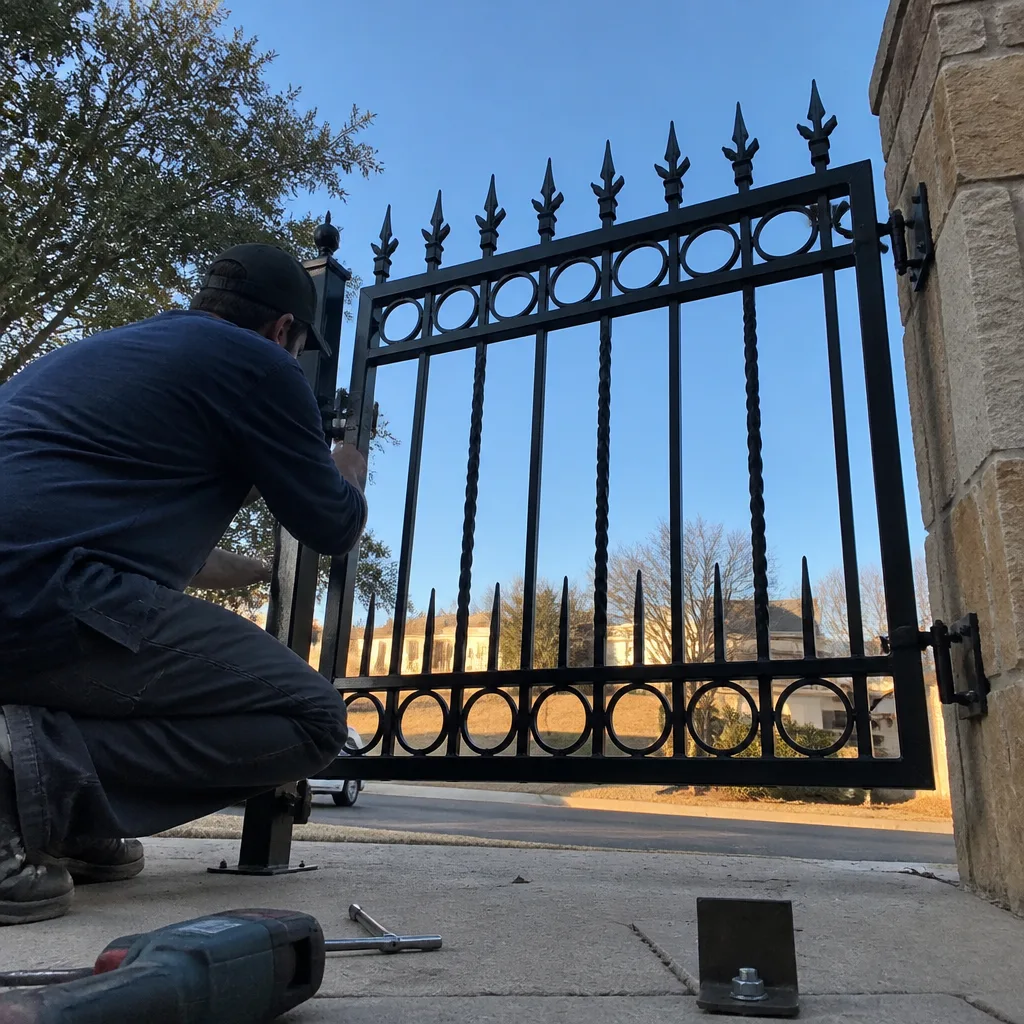
Gate repair in Fort Worth is not the same job in Phoenix or Chicago, and the differences show up in what fails and what a fix costs.
Clay soil movement. Fort Worth sits on expansive clay that swells with spring rain and contracts through dry Texas summers. Gate posts set in shallow footings shift seasonally, which stresses hinges, misaligns photo-eyes, and throws off limit switch calibration. A Fort Worth gate that worked perfectly in March can bind in August because the post moved half a degree. Repair work here is as much about correcting geometry as replacing failed parts.
Severe weather exposure. Hail, high winds, and the occasional ice event stress gate hardware. Wind loads on wide swing gates loosen hinge bolts and wear out closers faster than in calmer markets. Control boards in metal housings bake in 100-degree heat, and thermal cycling is the quiet killer of electrolytic capacitors on older LiftMaster and BFT boards. We see more capacitor-related board failures in July and August than in any other months.
Permit context. Most gate repairs in Fort Worth do not require a permit – you are replacing components, not installing a new system. But if a repair turns into a full operator replacement with new concrete footings or a new gate leaf, some Fort Worth neighborhoods with HOA covenants and older historic districts may trigger code review. The technician you choose should know Gate Repair Permits, Codes & Inspections in TX: What You Need to Know and tell you before work starts, not after the inspector shows up.
Driveway configurations. Fort Worth neighborhoods like Ridglea Hills, Monticello, and Tanglewood feature long driveways and wide setbacks. That means longer trench runs for loop detectors, longer wire pulls for photo-eyes, and more labor per repair than a compact urban lot in Dallas. When you compare a Fort Worth gate repair quote to a friend’s quote across the metroplex, the lot geometry matters as much as the price.
We have been doing Vance Gate Repair Fort Worth home work since 2014, and we keep a running record of what fails most often in this specific market. That record is why our estimates for Fort Worth homeowners reflect what we know happens here – not what a national pricing chart says should happen.
Common Mistakes to Avoid
- Accepting a verbal total without line items. A single number offers no basis for comparison and no protection if the job expands. Ask for the four-category breakdown described above before you approve anything.
- Approving a repair without asking about the diagnostic fee credit. Some Fort Worth companies collect a $99 service call fee and then bill the repair on top of it without applying the credit. That is $99 you should not have to absorb twice.
- Comparing quotes from two companies without checking part numbers. A $400 quote for a “board replacement” and a $600 quote for a “board replacement” might be quoting two different boards – or one might be quoting a used board. Part numbers make comparisons real.
- Skipping the warranty question because the technician seemed confident. Confidence is not a warranty. A one-year written guarantee on parts and labor is the minimum floor in this industry; if a company will not put it in writing, take that seriously.
- Deferring maintenance until the gate stops moving. A gate that scrapes, whines, or reverses erratically is cheaper to fix before the stressed component takes out a control board or a gearbox with it. Early repair is almost always a smaller invoice than failure repair.
- Assuming the lowest quote is the best value. A low quote that lacks itemization often means one of two things: the scope is smaller than you think, or the technician plans to find “additional work” after the gate is apart. Itemized quotes reveal which one you are dealing with.
When to Call a Professional
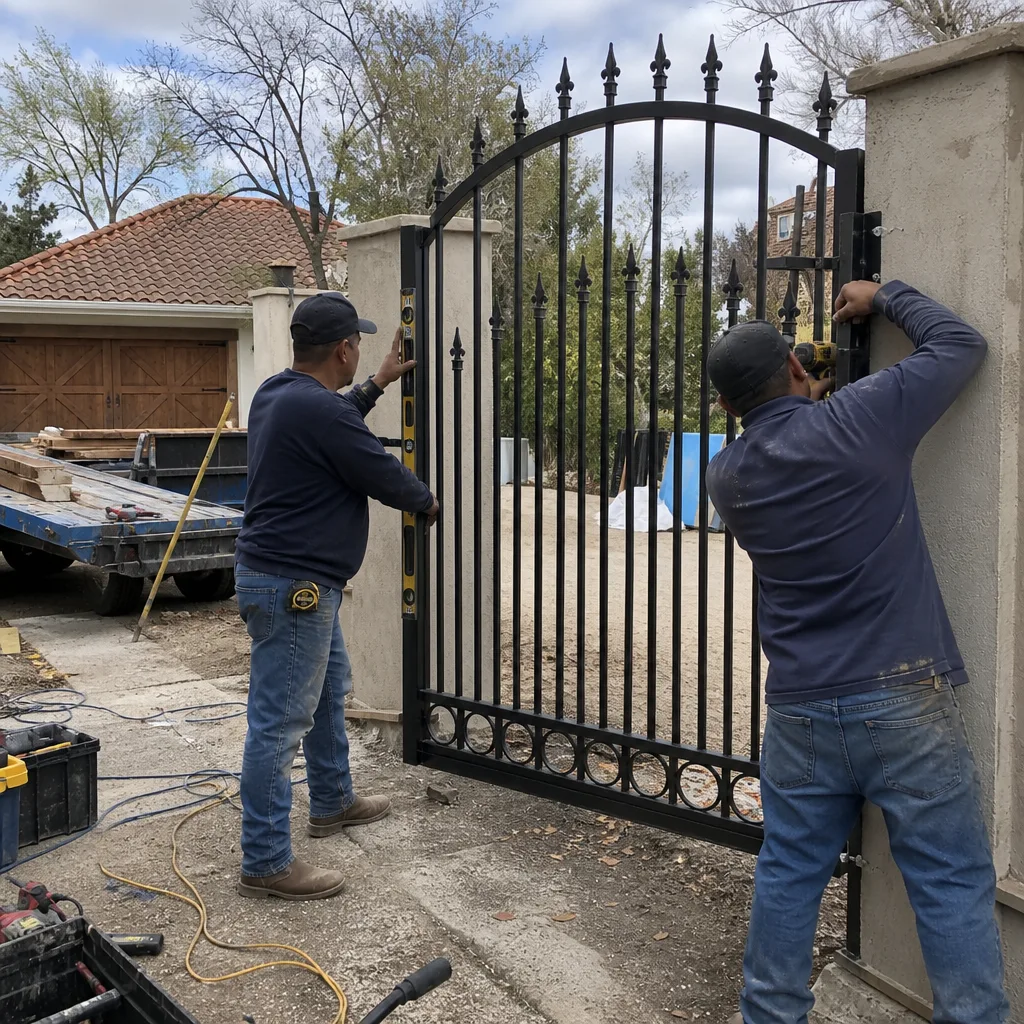
Some gate problems are visible and simple – a remote battery is dead, a hinge visibly sagging, a photo-eye lens covered in mud. But the dangerous and expensive failures in a gate system are often invisible: a failing capacitor on a control board, a limit switch set past travel, a gearbox running dry, a spring under tension that is about to let go. Gate springs on heavier residential gates store enough energy to cause serious injury if they fail during adjustment. If your gate is making a grinding noise, reversing direction mid-cycle, failing to close completely, or tripping a breaker repeatedly, stop using the gate and call a professional. Vance Gate Repair Fort Worth offers free estimates in Fort Worth – call (817) 476-9945 and a live person answers, at any hour, no voicemail loop.
Frequently Asked Questions
Most gate repairs in Fort Worth run between $180 and $650, with the typical job landing around $300 to $450 once diagnostic fees, parts, and labor are itemized. Simple fixes like photo-eye realignment or limit switch adjustment sit at the low end around $120 to $220, while control board replacements run $350 to $850 depending on brand. Call (817) 476-9945 for a free estimate with the full breakdown in writing before any work begins.
Yes – most common repairs like photo-eye alignment, limit switch adjustment, remote programming, and many control board replacements can be completed the same day. Same-day service depends on part availability for your specific operator brand, which is why we keep common LiftMaster, FAAC, BFT, and Mighty Mule parts stocked on our vehicles. Call (817) 476-9945 and a live person will tell you honestly whether your repair can happen today.
A full gate installation includes the gate leaf or leaves, posts set in concrete below frost line, hinge hardware, an operator matched to gate weight and cycle frequency, safety photo-eyes, a control board with programming, keypad and remotes, and any required electrical run from the house to the operator. A written installation estimate should separate all of these components so you can see exactly what is included. Call (817) 476-9945 for a free measure and a written installation price.
Yes – we handle the complete electrical scope on gate installations and repairs, including the power run from the house panel to the operator, the low-voltage control wiring for photo-eyes and keypads, and the installation or replacement of safety edges on automatic gates. Any subcontracted electrical work appears on your written estimate at identified cost with the electrician’s receipt attached to your job record. Call (817) 476-9945 to discuss your specific property and get a written scope of work.
Quotes vary because companies charge differently for the same underlying scope: some bury parts markup in a blended total, some quote budget aftermarket parts without saying so, and some price based on neighborhood rather than the actual task. Fort Worth’s clay soil and climate extremes also mean that two similar-looking gates may need different work depending on post movement and component stress. A written itemized estimate is the only way to compare quotes accurately. Call (817) 476-9945 and we will put the full breakdown in writing before anyone picks up a tool.
On operators under eight years old with a failed non-board component, repair is almost always cheaper. On operators over eight years old with a failed control board costing more than 60 percent of replacement cost, replacement typically makes more economic sense because the next major component failure is likely close behind. We show both numbers side by side and let you make the call based on the arithmetic, not our margin. Call (817) 476-9945 for a free estimate that includes both the repair and replacement figures.
The Bottom Line
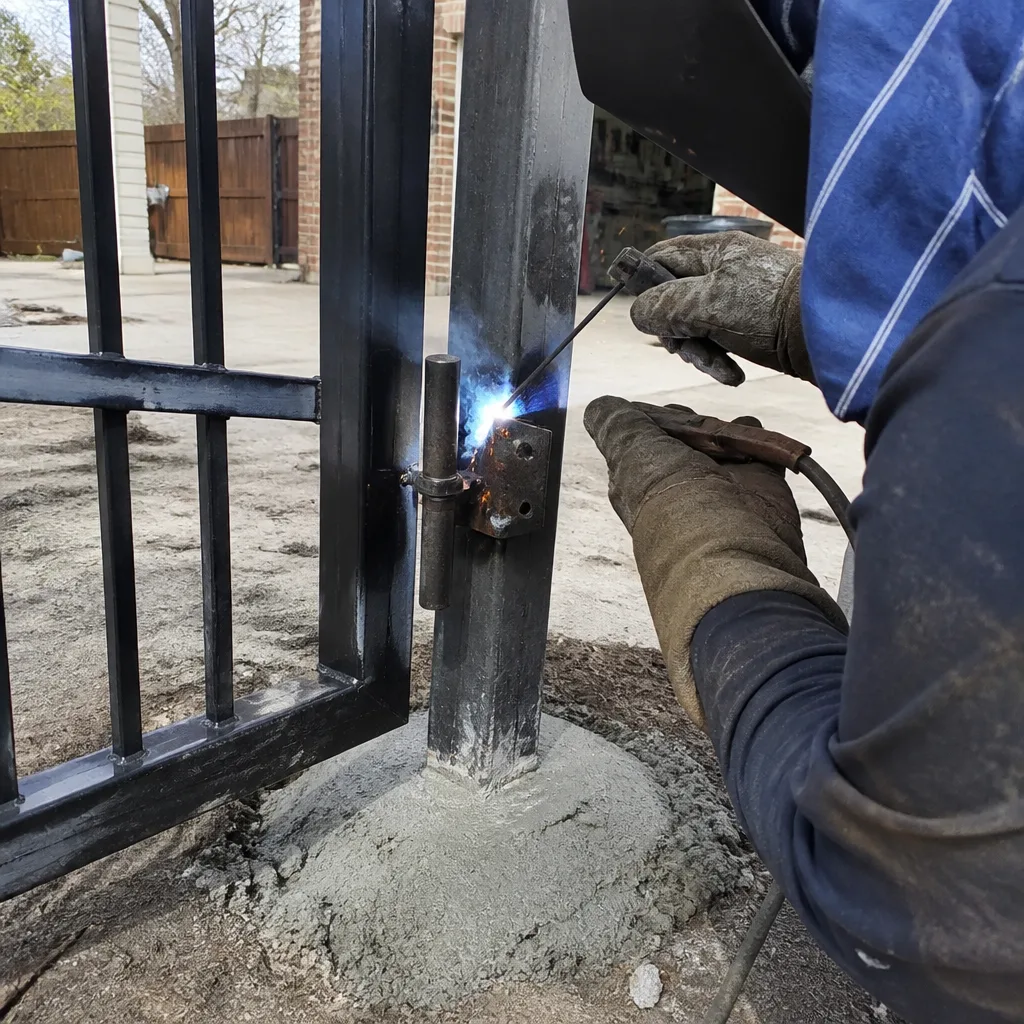
Gate repair costs in Fort Worth become transparent the moment you demand a written estimate that separates diagnostic fees, parts at identified cost, task-based labor, and any subcontracted electrical scope. Without that separation, two $350 quotes are not comparable, and a homeowner has no way to know which one actually fixes the problem. The numbers in this guide reflect what we see on real Fort Worth jobs in 2026 – not national averages – and they should give you a reference frame for evaluating any written estimate you receive, alongside more guides & resources on our blog. When you are ready for a written price before any work starts, with a documented photo record on every visit and a 365-day promise on completed work, call ours.
For a free estimate on gate repair in Fort Worth, call (817) 476-9945. A live person answers, 24 hours a day, seven days a week. The price is written before work begins, the scope is specific, and the record is left with you when the job is done.
Written by Adrian Vance, Owner at Vance Gate Repair Fort Worth, serving Fort Worth since 2014.