
Last updated September 20, 2026
Free on-site gate assessment - hinges, posts, and your LiftMaster or Nice gate operator checked before anything is quoted
The assessment is free and the quote is the invoice.
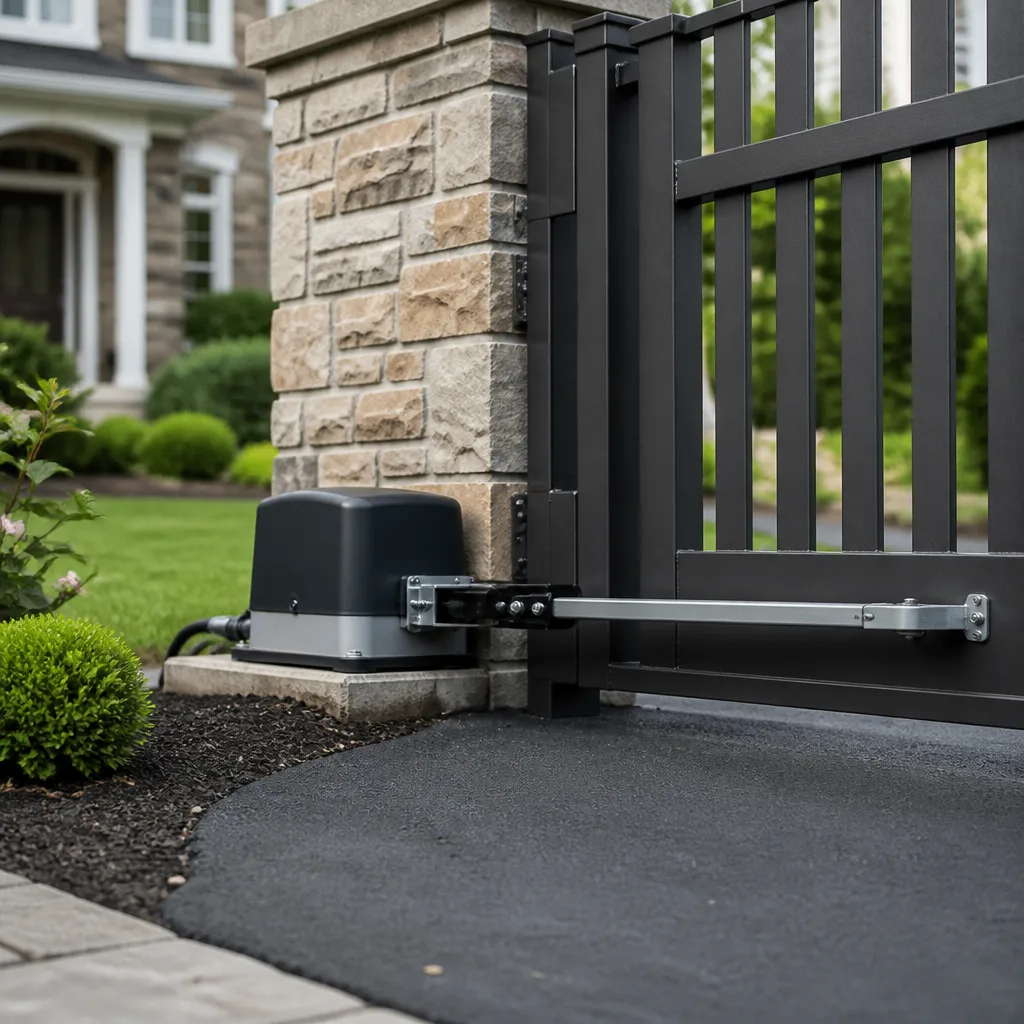
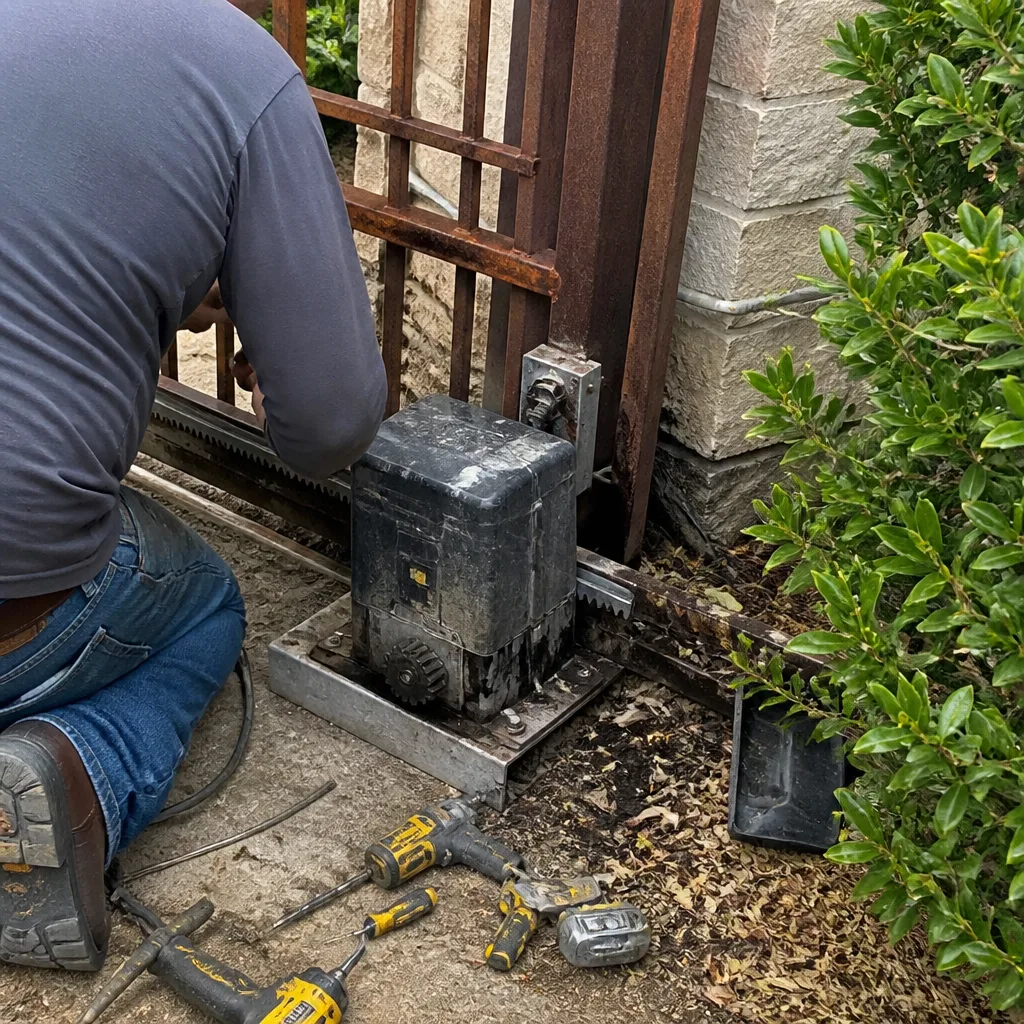 Before
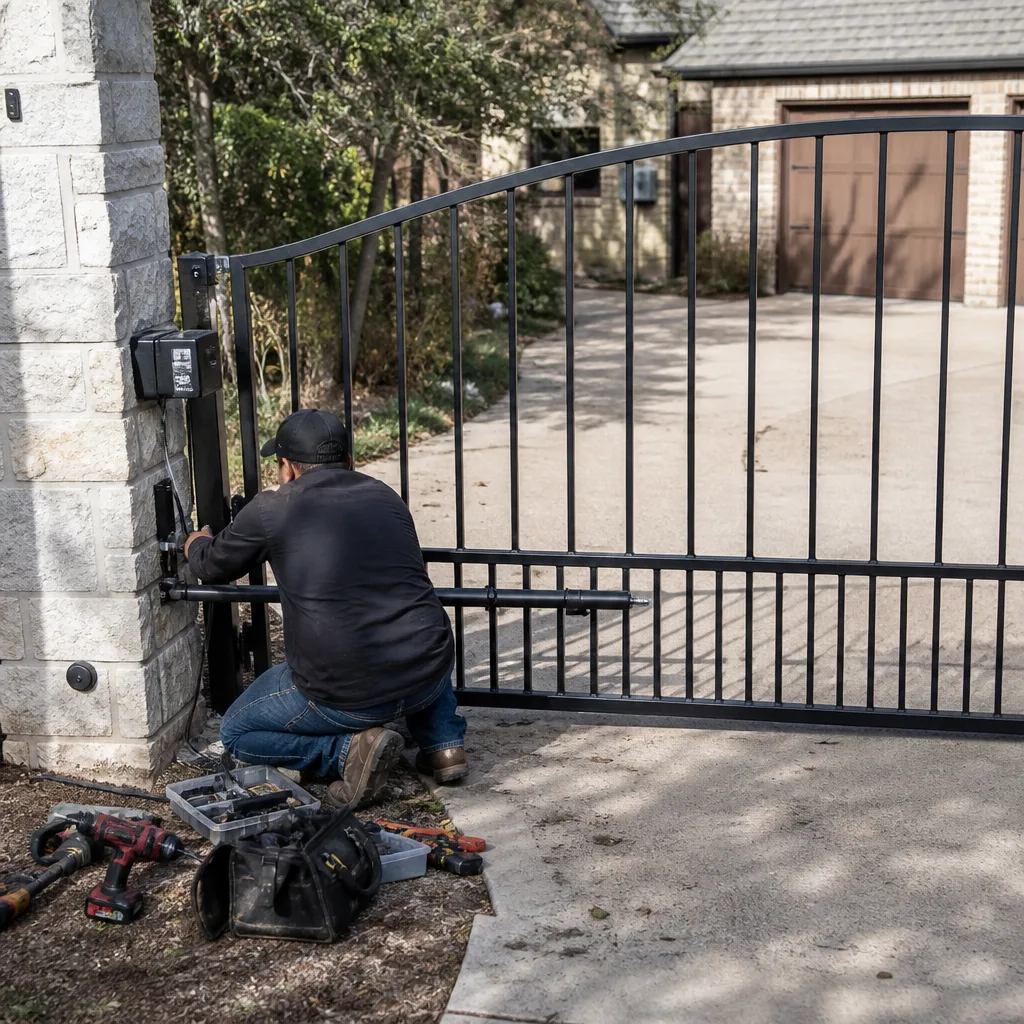 After
After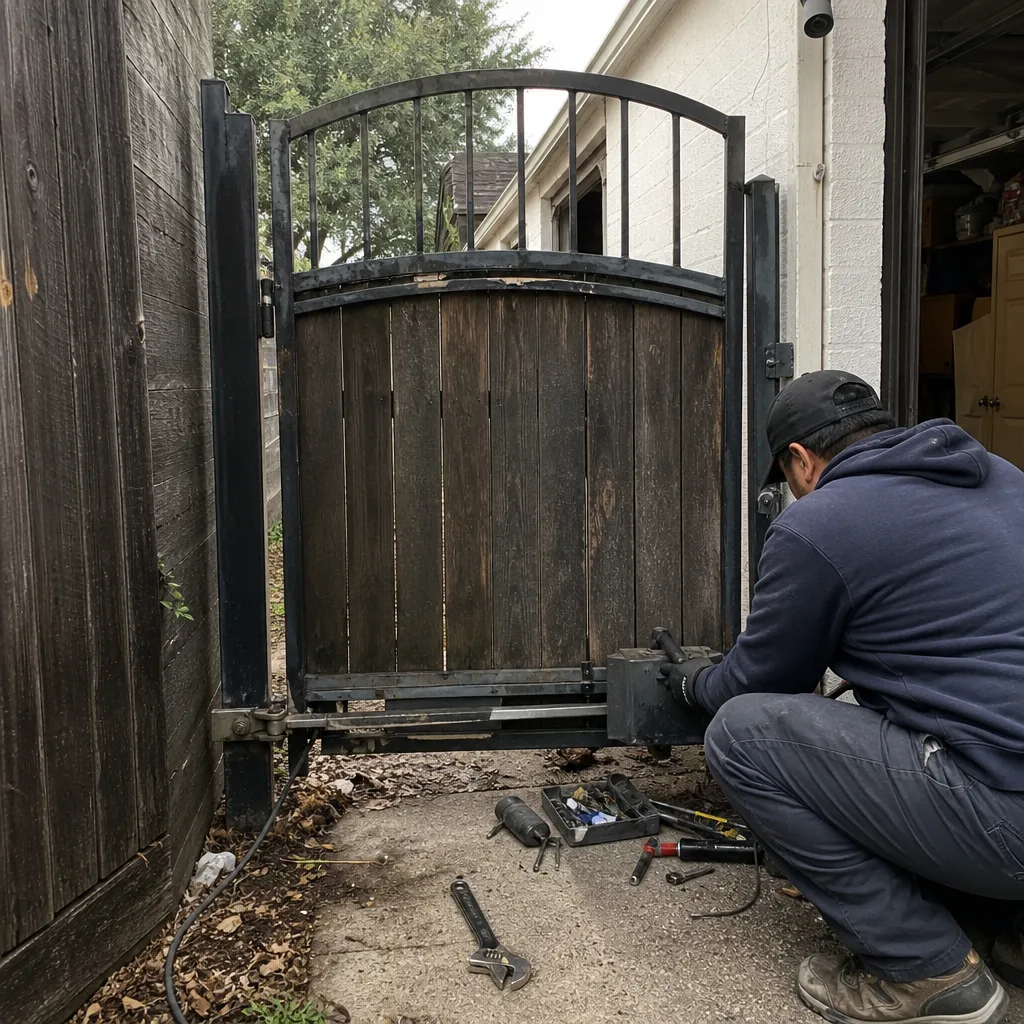 Before
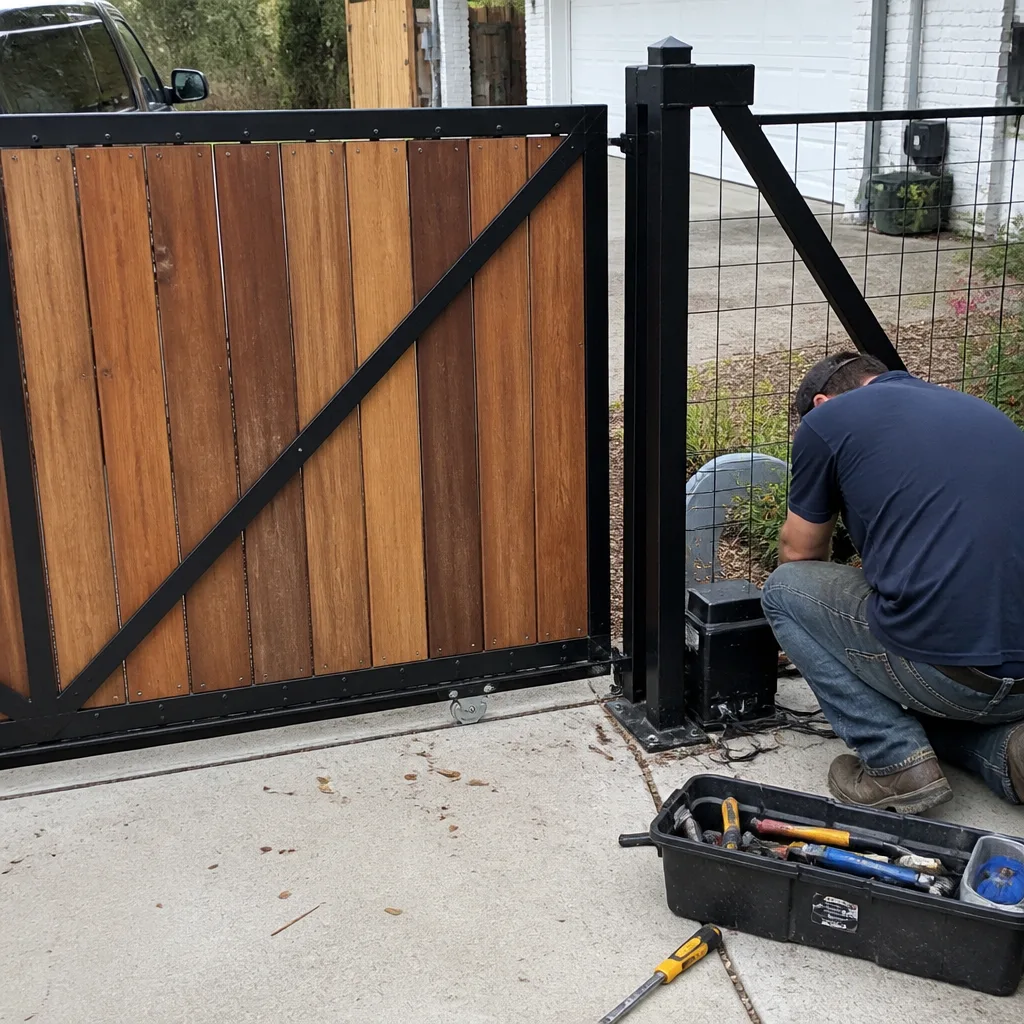 After
After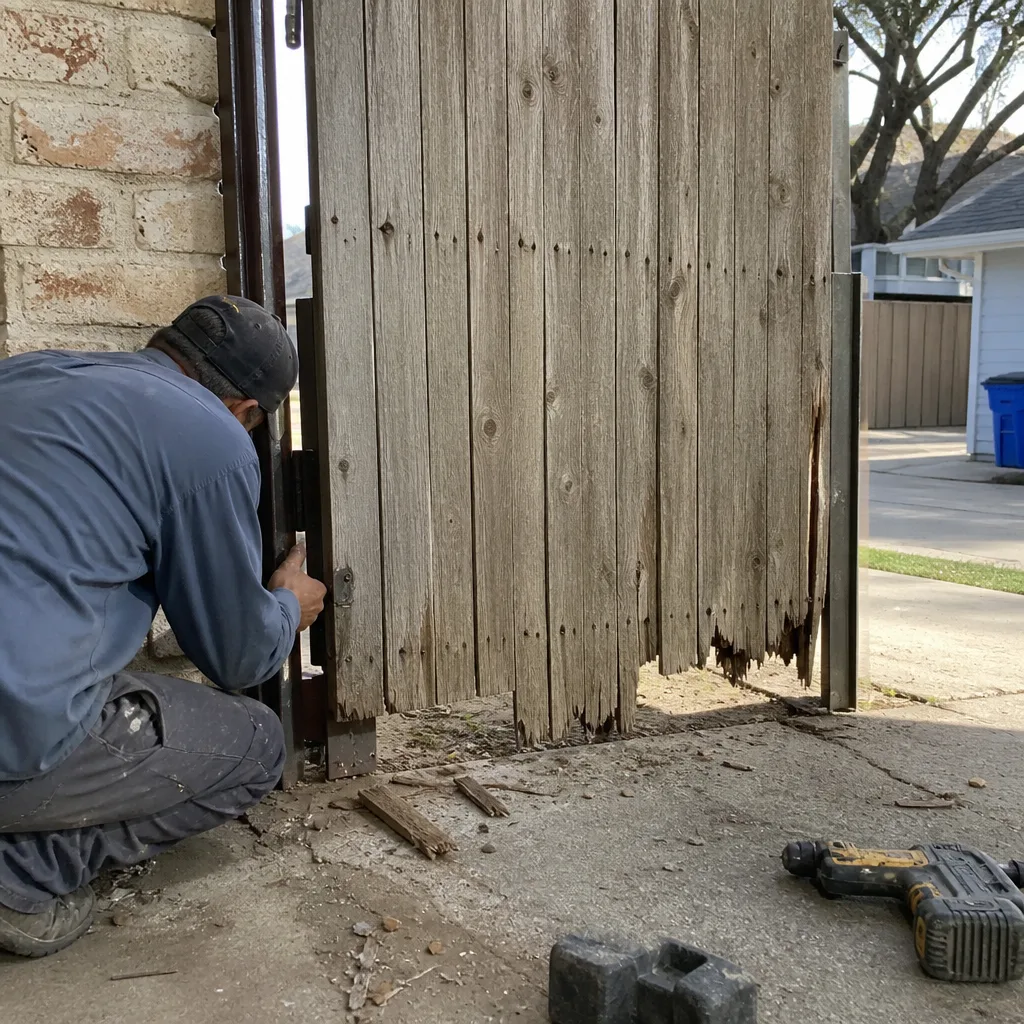 Before
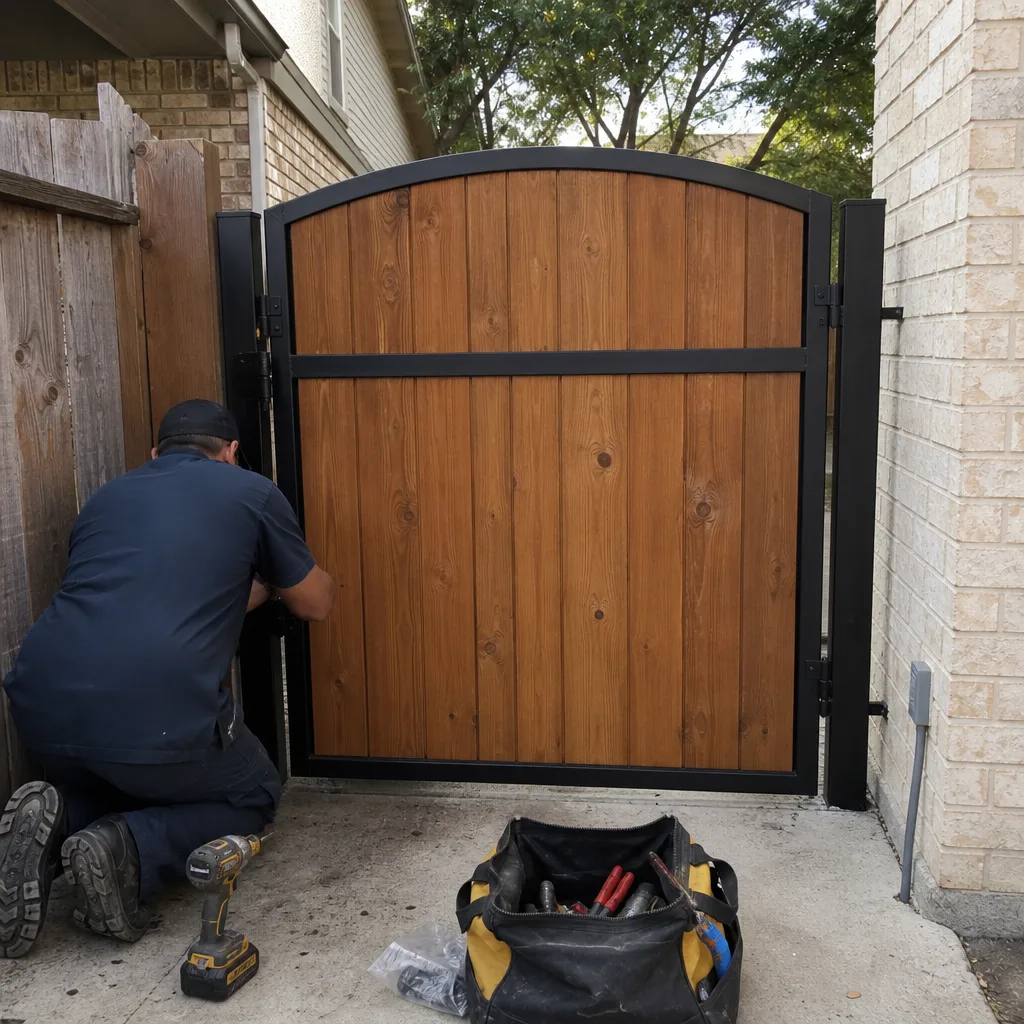 After
AfterGate Repair Permits, Codes & Inspections in TX: What You Need to Know
Here’s the counterintuitive truth about gate repair in Texas: most repairs genuinely never touch the permit counter, and that’s exactly why the exceptions catch people off guard. A gate that needed a permit but never got one won’t fail an inspection the day the work is done. It fails years later, when you’re signing closing documents and the buyer’s inspector pulls the property file and asks where the electrical permit is for the operator circuit. We wrote this guide because Fort Worth homeowners deserve a clear line between what’s exempt and what’s not, before the work happens, not after the paperwork question surfaces. For related reading, see our Gate Repair Warning Signs: A Fort Worth Homeowner’s Reference Guide.
Quick Answer
Most gate repairs in Fort Worth, Texas require no permit at all. The exceptions are narrow but expensive: running new 120V or 240V electrical circuits to an automated gate operator, constructing masonry pillars, increasing post height beyond local limits, or altering drainage easements. Like-for-like motor swaps, hinge repairs, wheel replacements, and photo-eye adjustments are generally exempt. The safest habit is to have your gate repair contractor document the scope in writing before work starts, so if a permit question ever comes up at resale, you can prove the work was exempt.
Table of Contents
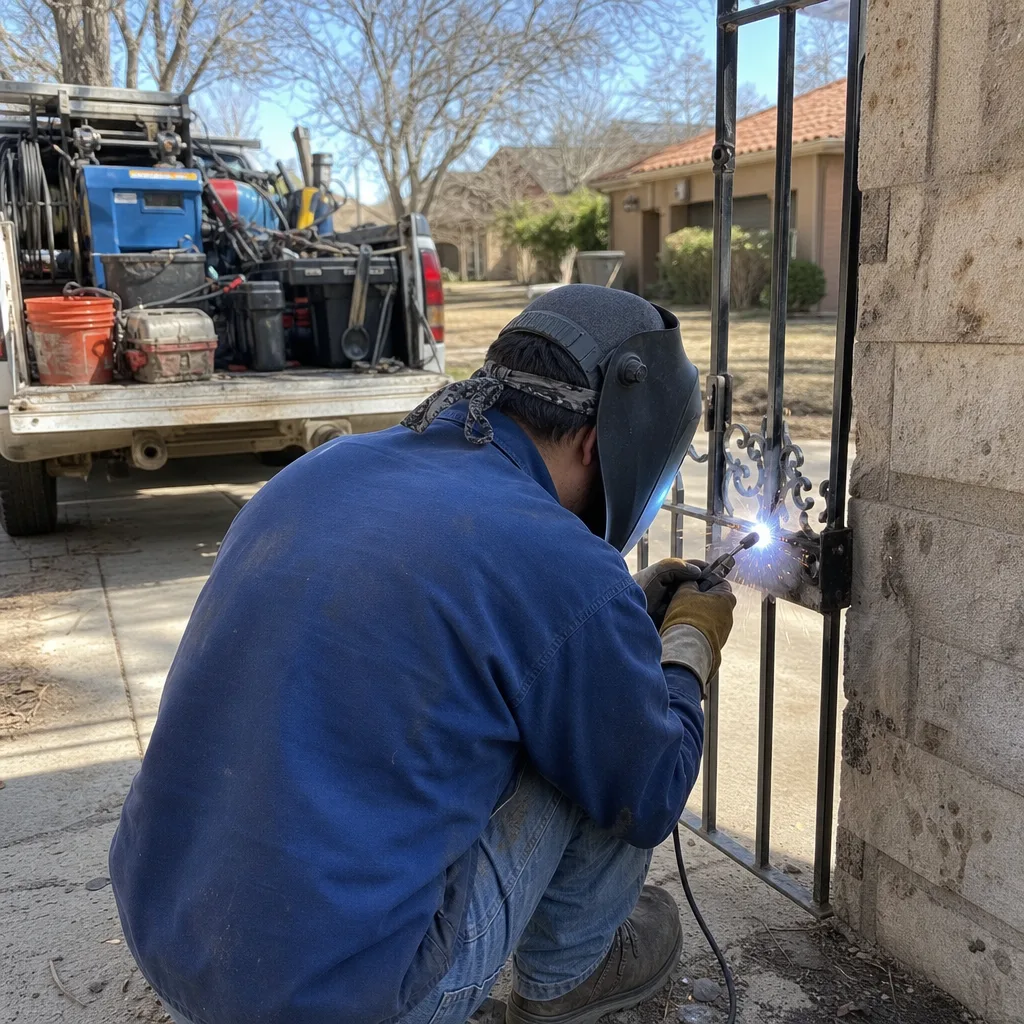
- The Permit Line: What Actually Triggers a Gate Permit in Fort Worth
- Electrical Scope: When a Gate Operator Swap Crosses Into Permitted Work
- HOA Overlay: When Deed Restrictions Exceed City Code
- Beyond Electrical: Post Height, Masonry, and Drainage Easement Triggers
- How to Look Up Permit History on an Existing Gate Installation
- The Documentation You Should Retain After Permitted Work Closes
- Common Mistakes to Avoid
- When to Call a Professional
- Frequently Asked Questions
- The Bottom Line
BeforeAfterThe Permit Line: What Actually Triggers a Gate Permit in Fort Worth
Fort Worth operates under the 2021 International Residential Code with local amendments, and the city’s Development Services department draws the gate permit line based on two factors: structural scope and electrical scope. A swinging gate that hangs on existing posts, uses the same hinges, and operates manually is almost never a permit item. The city treats that as maintenance, not construction.
What changes the equation is when the work touches permanent infrastructure. If you’re digging new post footings deeper than the frost line requirement, pouring concrete piers for a cantilever slide gate, or installing masonry columns that exceed four feet in height above grade, you’ve entered structural territory the city wants to see. Fort Worth’s wind load requirements matter here. The Metroplex sits in a 110 mph wind zone, and a tall masonry pillar with an attached gate arm becomes a wind sail. That’s a code concern, not a bureaucratic formality.
The breakdown looks like this:
- Exempt: Replacing hinges, rollers, wheels, brackets, photo-eyes, limit switches, keypads, or receiver boards on existing gate hardware.
- Exempt: Swapping a gate motor with a like-for-like model using the existing electrical circuit and mounting plate.
- Exempt: Welding a cracked gate frame or replacing individual pickets on an existing gate leaf.
- Permit-triggering: Running a new 120V or 240V branch circuit from the panel to a gate operator location.
- Permit-triggering: Constructing new masonry piers or columns, or increasing existing post height above code limits.
- Permit-triggering: Moving a gate location so it encroaches on a drainage easement or dedicated utility easement.
In our experience across Fort Worth neighborhoods like Arlington Heights, Ridglea Hills, and far north subdivisions, most homeowners only encounter the permit question when the gate motor installs for the first time. A gate that was always manual and is getting automated usually needs a new electrical run. That run almost always needs a permit.
Electrical Scope: When a Gate Operator Swap Crosses Into Permitted Work

This is the single most common gray area in Fort Worth gate work, so let’s draw the line clearly. Replacing an existing gate operator with a new motor that connects to the same circuit, same conduit, same disconnect, and same wire gauge is maintenance. No permit required under the city’s electrical amendments. The National Electrical Code applies to the installation, but the city only inspects work that alters the branch circuit itself.
The moment you run new wire, you need an electrical permit. That means:
- New conduit run from the main panel to the gate operator location. Even if the operator itself is identical to the old one, the circuit is new and must be inspected.
- Upgrading the circuit capacity. If an old 120V operator is being replaced with a 240V unit, the wiring, breaker, and disconnect all change. That’s new electrical scope.
- Adding a dedicated ground rod at the gate. Operators in Fort Worth sit in clay-heavy soil that varies in conductivity. Some installations need a supplemental ground. If a new ground rod goes in, the inspection covers it.
- Installing a gate operator for the first time where none existed. This is new construction from a code perspective, even if the gate itself is existing.
A note on the brands we work on: when a homeowner has a BFT or Linear operator that failed and wants a different brand installed, the motor swap is exempt if the circuit is untouched. If the new operator needs a different voltage, the permit comes into play. We service Ghost Controls, Viking, and several other brands in Fort Worth, and we always flag the electrical scope in writing before the work begins. If you’re evaluating contractors, our How to Hire a Gate Repair Contractor in Fort Worth: A Step-by-Step Guide covers what to ask. That written scope is what protects you later.
One more electrical reality specific to Fort Worth: the city follows NEC Article 430 for motor circuit protection on gate operators, which requires a dedicated circuit. We’ve seen older homes where the gate operator was tapped off a garage GFCI circuit. That was never code-compliant, and when the operator fails and it’s time to swap it, the right repair corrects the circuit, not just the motor. Correcting the circuit is permitted work.
HOA Overlay: When Deed Restrictions Exceed City Code
Here’s what most permit guides miss: in Fort Worth’s master-planned communities and older deed-restricted subdivisions, the HOA’s architectural review process can be stricter than the city’s permit process. The city cares about safety and code. The HOA cares about appearance, uniformity, and property values. You can have a gate repair that sails through Development Services with no permit and still violates a recorded deed restriction.
Fort Worth has a large number of HOA-governed communities. Neighborhoods like Walsh, Saratoga, Ventana, and the newer developments along Chisholm Trail Parkway overlay aesthetic standards on top of municipal code. Common gate-related HOA restrictions we’ve encountered include:
- Gate appearance standards. An HOA may require all driveway gates to match the fencing style used throughout the community. Replacing a wooden gate leaf with steel or aluminum can trigger an architectural review.
- Automation requirements or prohibitions. Some communities require automated driveway gates; others prohibit slide gates in favor of swing gates due to setback rules.
- Photoelectric sensor placement. A few HOA boards in Fort Worth have adopted rules requiring photo-eyes to be paired with edge sensors on any automated gate, exceeding the city’s baseline safety standard.
- Landscape screening. Some communities require certain setbacks from the street and specific landscaping near the gate piers, which can restrict where a new gate operator housing can be placed.
The practical takeaway: when you own property governed by an HOA, the correct sequence is to check the deed restrictions first, then the city permit requirements. We’ve seen homeowners complete a permitted, inspected gate installation in Fort Worth only to face a deed-restriction violation letter two weeks later because the gate profile didn’t match the community standard. That’s an avoidable double cost.
If you’re planning gate work and don’t have your HOA’s design guidelines, request them before any contractor steps on the property. Most Fort Worth HOAs respond to written requests within five to ten business days.
Beyond Electrical: Post Height, Masonry, and Drainage Easement Triggers
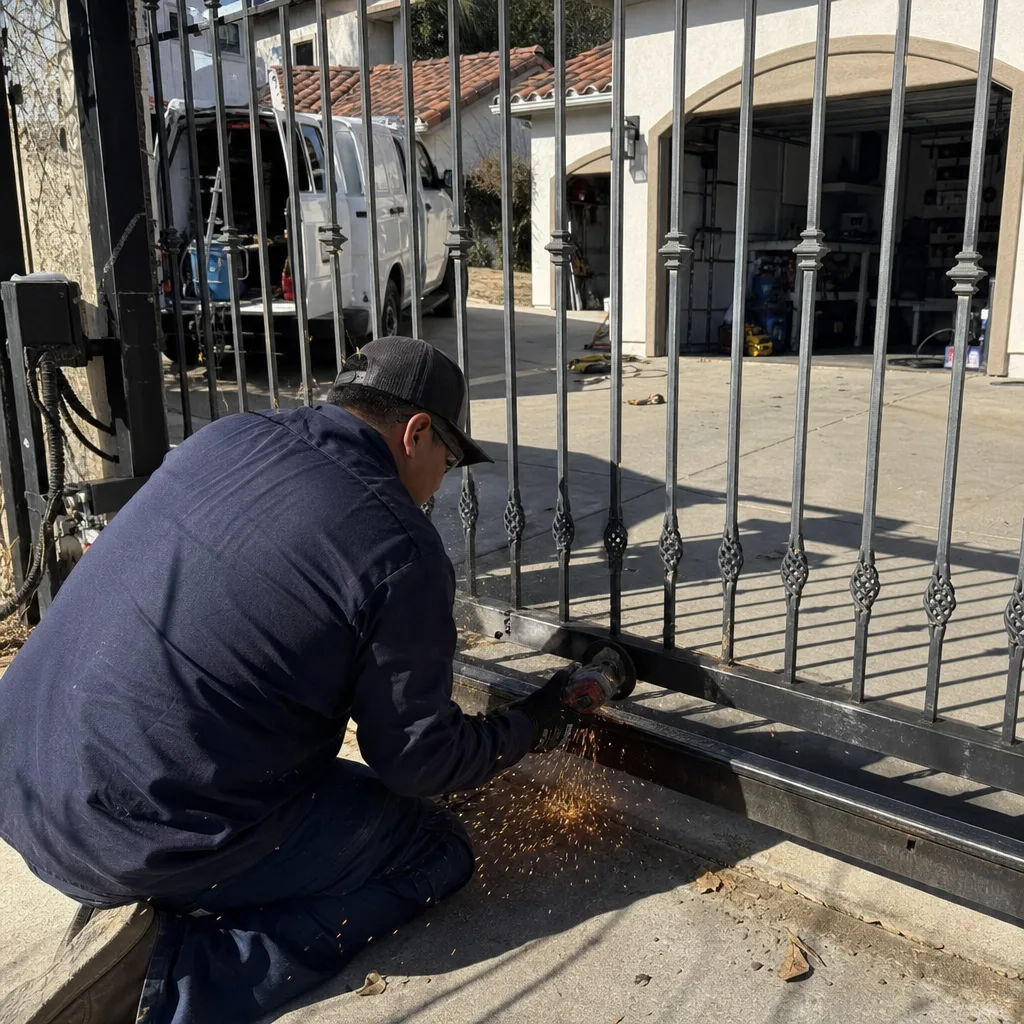
Electrical work isn’t the only permit trigger. Fort Worth has specific fence and gate regulations buried in its zoning ordinance and building codes, and three structural scenarios commonly require review.
Post Height Changes
Fort Worth limits fence height in residential districts, generally maxing out at eight feet for rear and side yard fencing and lower for front yard and corner-lot visibility zones. When a gate repair involves replacing posts with taller posts to accommodate a taller gate leaf, the new height can exceed the permitted limit. The city treats that as new construction requiring a zoning review, and possibly a variance if the height exceeds the district standard. This comes up most often when a homeowner replaces a four-foot walk gate with a six-foot privacy gate on a corner lot.
Masonry Pillar Construction
Masonry gate pillars are common in Fort Worth’s older neighborhoods, especially in Berkeley Place, Mistletoe Heights, and Ryan Place, where brick piers frame original driveway gates. When one of those piers fails due to freeze-thaw cycling or the gate arm pulling loose, rebuilding it is not a repair. It’s new masonry construction, and the city wants to see footing specifications and reinforcement. A masonry column that supports a cantilevered gate arm is under constant torsional load, and an under-built column becomes a safety hazard. We’ve repaired gates in Fort Worth where a cracked pillar was the root cause of a misaligned track, and the correct fix required footing replacement and a masonry permit.
Drainage Easement Encroachment
Tarrant County subdivisions are built around engineered drainage. Many Fort Worth lots have dedicated drainage easements along the rear or side property line. If a gate installation, gate relocation, or slide gate track extends into that easement, the city and sometimes the county stormwater office get involved. This is especially common in newer developments in far north Fort Worth and along the Trinity River corridor, where lots are engineered for sheet flow. A slide gate’s steel track and concrete pad are exactly the kind of obstruction that a drainage easement prohibits. If the original gate was built before the easement was dedicated, a repair that extends the track further into the easement may trigger a notice. Before any gate relocation in Fort Worth, pull the plat map and look for easement markings. It’s a five-minute check that can save a five-thousand-dollar correction.
How to Look Up Permit History on an Existing Gate Installation
If you’re buying a home in Fort Worth with an automated gate, or if you’ve owned one for years and want to know whether the previous work was permitted, the city makes it fairly straightforward. This matters because unpermitted electrical work typically comes to light during a home inspection, and knowing before you list gives you time to correct it.
- Go to the Fort Worth Development Services portal. The city maintains a public permit search tool. You can search by address without creating an account.
- Search the property address, not the owner name. Permits are tied to the parcel, not the person who pulled them. Older permits may be under previous owners’ names.
- Look for electrical permit records specifically. Structural permits for gate pillars or new fencing will appear separately from electrical permits for operators. Search both.
- Note the final inspection date. A permit that was pulled but never passed final inspection is an open item. In Fort Worth, an open permit can delay a sale.
- Request paper records if the portal is incomplete. Fort Worth’s online records are generally reliable for recent years, but older permits, pre-2005 in some cases, may only exist on microfilm. A records request through Development Services is a formal process, and there may be a small fee.
When we perform gate repair in Fort Worth, we document what we find on site, including whether existing work shows signs of having been permitted, like conduit labeled with an inspection sticker or panel schedules showing the gate circuit. That documentation goes in the file we hand over, so the next owner isn’t starting from zero.
A practical caution: if the gate operator was installed by a previous owner with no permit record and the circuit is tapped off a garage outlet, you have a latent code violation. The city doesn’t retroactively inspect for this going forward, but a buyer’s home inspector will flag it. The correction, running a dedicated circuit with a proper disconnect, is permitted work. It’s worth doing before listing, because it becomes a negotiating chip otherwise.
The Documentation You Should Retain After Permitted Work Closes
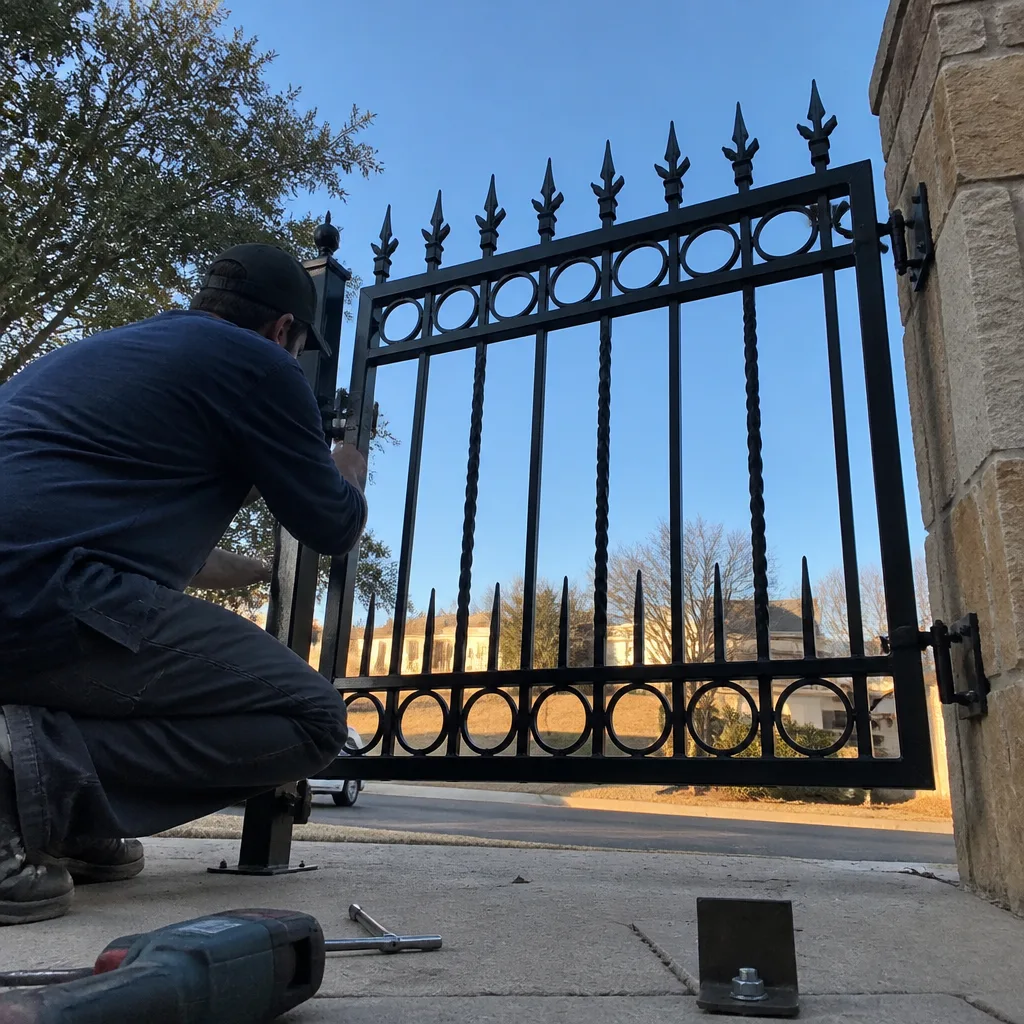
When permitted gate work in Fort Worth closes, the homeowner should leave the process holding a specific set of documents. Most people take the final inspection sign-off and file it in a drawer, never to be seen again. The problem is that resale often happens five to ten years after the work, and the city’s portal may not be the first place a buyer’s agent looks.
Here’s what to retain and where to keep it:
- The permit number. This links to the city’s record. Without it, a buyer’s agent has to search by address, which works, but having the number makes everything faster.
- The final inspection sign-off date. This shows the work was inspected and approved, not just permitted. An open permit without a final inspection is a red flag.
- The inspector’s name. Fort Worth inspectors work by district. Having the name is useful if a question comes up later about what was inspected.
- The contractor’s scope of work and invoice. This verifies what was done matched what was permitted. Keep it with the permit record.
- Photos of the final installation. Fort Worth’s climate shifts from freeze-thaw winters to 100-degree summers. A photo record at installation shows the condition at handoff, which matters when disputes arise about later damage.
Store these in the same file you’d keep for a roof replacement or an HVAC install. When you sell, that file becomes part of the seller’s disclosure package. Buyers in Fort Worth’s market are increasingly asking for exactly this kind of documentation, especially on automated gates, which are uncommon enough that inspectors don’t always know what to check. A complete paper trail deflects a lot of closing-table friction.
Common Mistakes to Avoid
- Assuming all gate work is permit-free. The majority is, but the expensive exceptions, electrical circuits, masonry, easement encroachment, are the ones that create resale headaches. Check the scope before the work starts.
- Swapping a 120V operator for a 240V unit without touching the permit counter. The motor may bolt onto the same plate, but the circuit is new. In Fort Worth, that’s an electrical permit and a final inspection.
- Ignoring HOA design guidelines because the city approved the work. City code and deed restrictions are separate layers. A city-approved gate can still violate an HOA’s architectural standard, and the HOA fine accrues until corrected.
- Building new masonry pillars without footing documentation. In Fort Worth’s expansive clay soil, an unreinforced footing shifts long before the crack is visible from the street. The city wants reinforcement details for a reason.
- Failing to retain permit records. The work may be good, but if you can’t prove it was permitted and inspected, a buyer can use it as leverage. Paperwork is cheap insurance.
- Extending a slide gate track into a drainage easement without checking the plat. This is one of the few gate mistakes that can draw a city notice even years later. Easements don’t expire.
- Treating a gate operator circuit like it can piggyback on any outlet. NEC Article 430 requires a dedicated circuit for a motor load. Tapping off an existing circuit is a code violation no matter how well the motor works.
When to Call a Professional
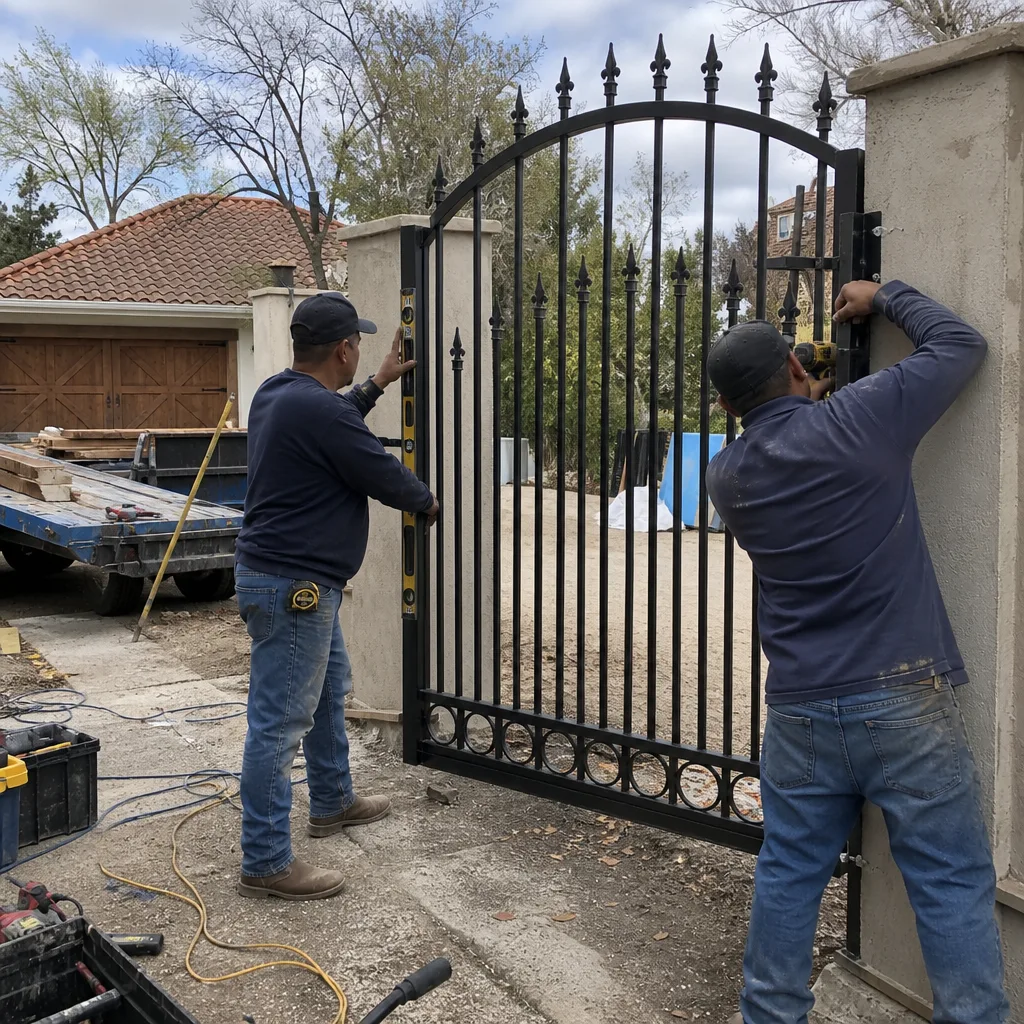
Call a professional when the repair touches electrical wiring, new circuits, masonry construction, or gate relocation that could affect easements. These are the jobs where a mistake becomes a safety hazard, a code violation, or both. High-tension gate springs, cantilevered gate arms, and 240V operator circuits all carry genuine injury risk. Don’t guess on these. If you’re not certain whether your planned gate work crosses the permit line in Fort Worth, get a written scope from a contractor who documents what they see. Gate motor and opener work is the most common area where a like-for-like swap is actually a new circuit, and a trained eye catches it in five minutes. Vance Gate Repair Fort Worth offers free estimates in Fort Worth, call (817) 476-9945 and we’ll tell you whether your job is exempt or permitted before any work starts.
Frequently Asked Questions
No, if the replacement motor uses the same voltage, the same circuit, and the same mounting location as the old unit. You need an electrical permit only if new wiring is run, the circuit capacity changes, or the operator is being installed for the first time. Call (817) 476-9945 for a written scope that confirms which side of the line your job falls on.
Running a new 120V or 240V circuit to an operator, building masonry gate pillars, increasing post height above the district limit, or extending a gate into a drainage easement are the four main triggers. Standard hardware repair, like hinge replacement or welding a cracked frame, is exempt.
Yes. Many Fort Worth HOAs, especially in master-planned communities, have architectural standards that restrict gate style, automation type, and even photo-eye placement. Check your deed restrictions before starting work, because the city’s approval won’t prevent an HOA violation notice.
Search your address in the Fort Worth Development Services online permit portal. Look for both electrical and structural permits. If you find a permit without a final inspection date, that’s an open item worth resolving before you sell.
Keep the permit number, the final inspection sign-off date, the inspector’s name, the contractor’s scope of work, and photos of the finished installation. Store them with your property records so they’re ready at resale.
Yes. The correction involves running a dedicated circuit, installing a proper disconnect, and pulling the electrical permit for the new work. It’s a common fix in older Fort Worth homes. Gate installation work of this type includes documentation that clears the prior violation.
The Bottom Line
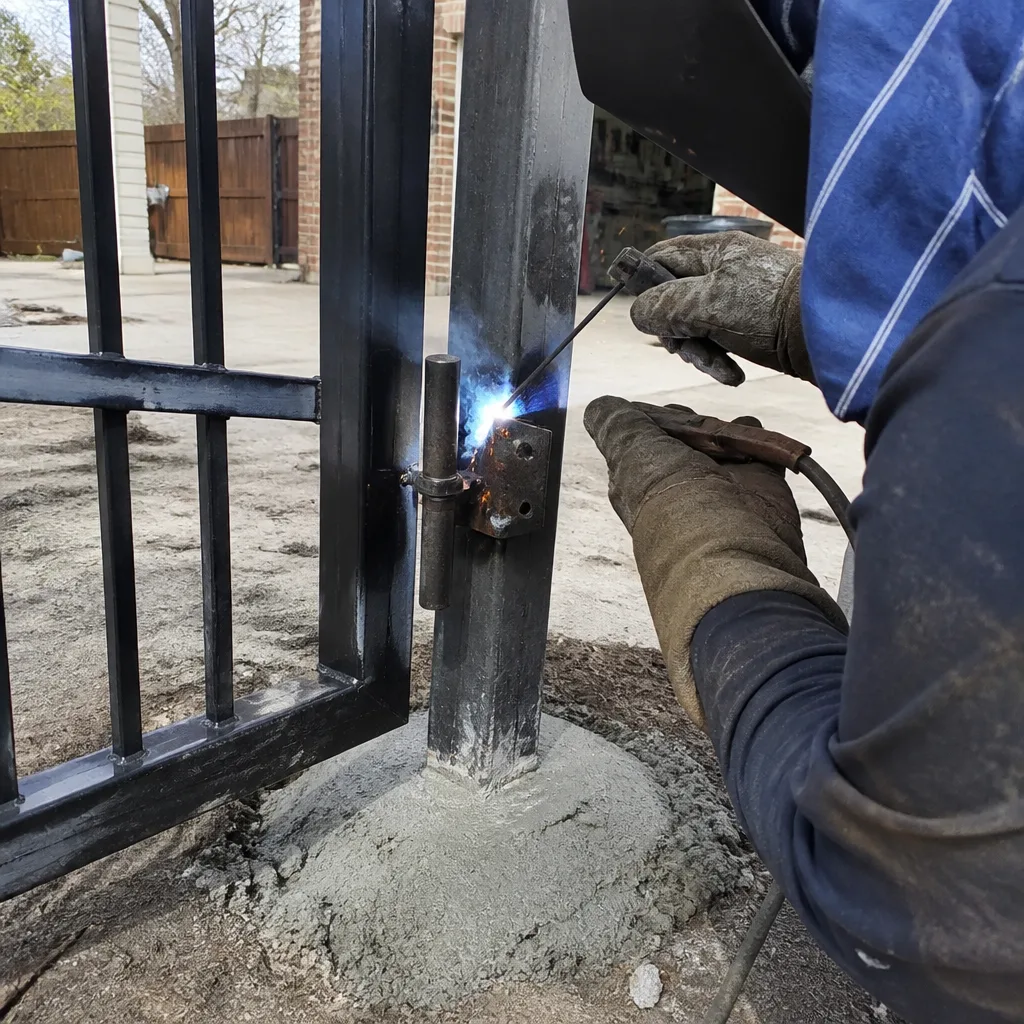
The permit line in Fort Worth gate work is narrower than most people assume, but it’s drawn exactly where the expensive problems live: new electrical circuits, masonry structure, easement encroachment, and HOA overlay. Most repairs are exempt, and the exemption is defensible if you have a written scope from the contractor that names the work and confirms nothing crossed the line. Browse our more guides & resources for additional Fort Worth gate topics. Keep the paperwork. Check the portal before you buy or sell. And when the job touches wiring or structure, don’t guess. Get the scope in writing, get the permit when needed, and keep the record. That’s the difference between a gate that works and a gate that sells.
For a free estimate on any gate repair in Fort Worth, call Vance Gate Repair at (817) 476-9945. We’ll tell you what’s exempt, what’s permitted, and we’ll put both the scope and the price in writing before any work starts. Learn more at Vance Gate Repair Fort Worth home.
Written by Adrian Vance, Owner at Vance Gate Repair Fort Worth, serving Fort Worth since 2014.