
Last updated September 20, 2026
Free on-site gate assessment - hinges, posts, and your LiftMaster or Nice gate operator checked before anything is quoted
The assessment is free and the quote is the invoice.
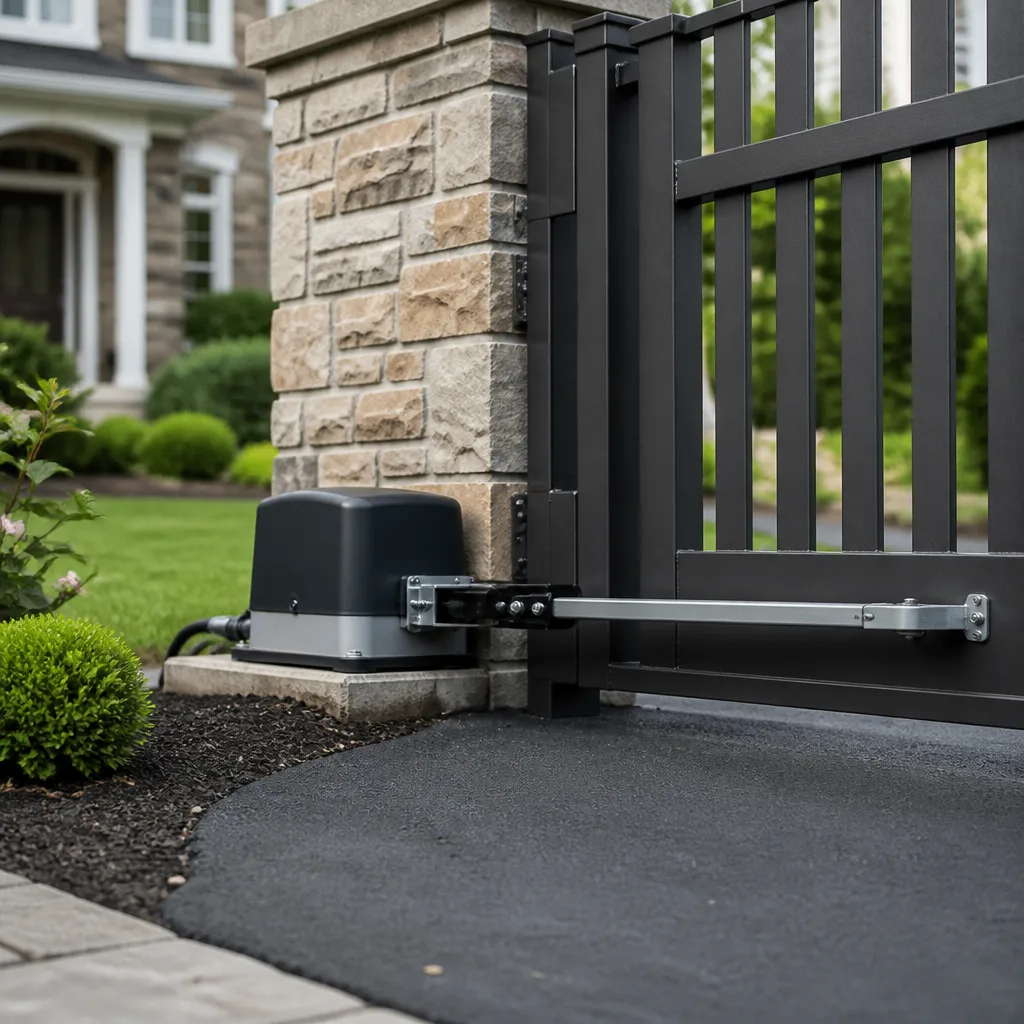
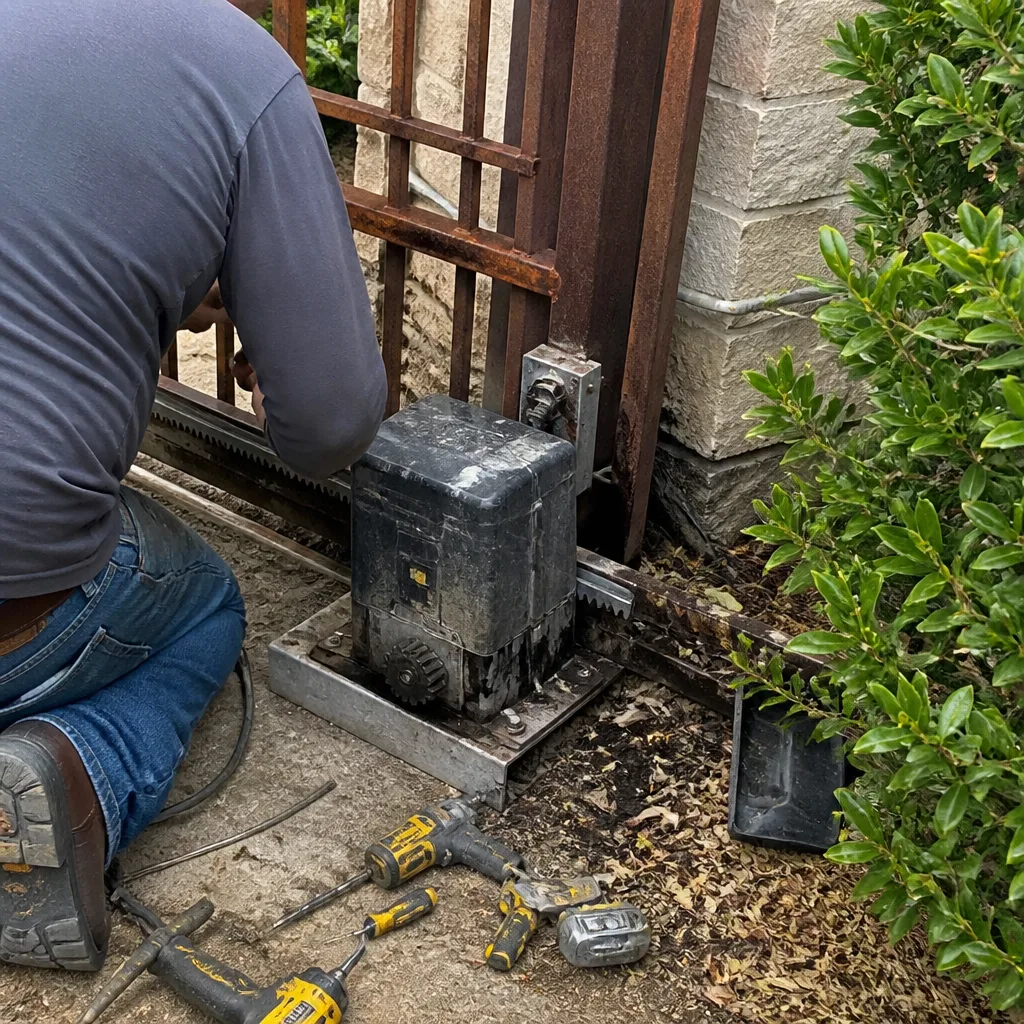 Before
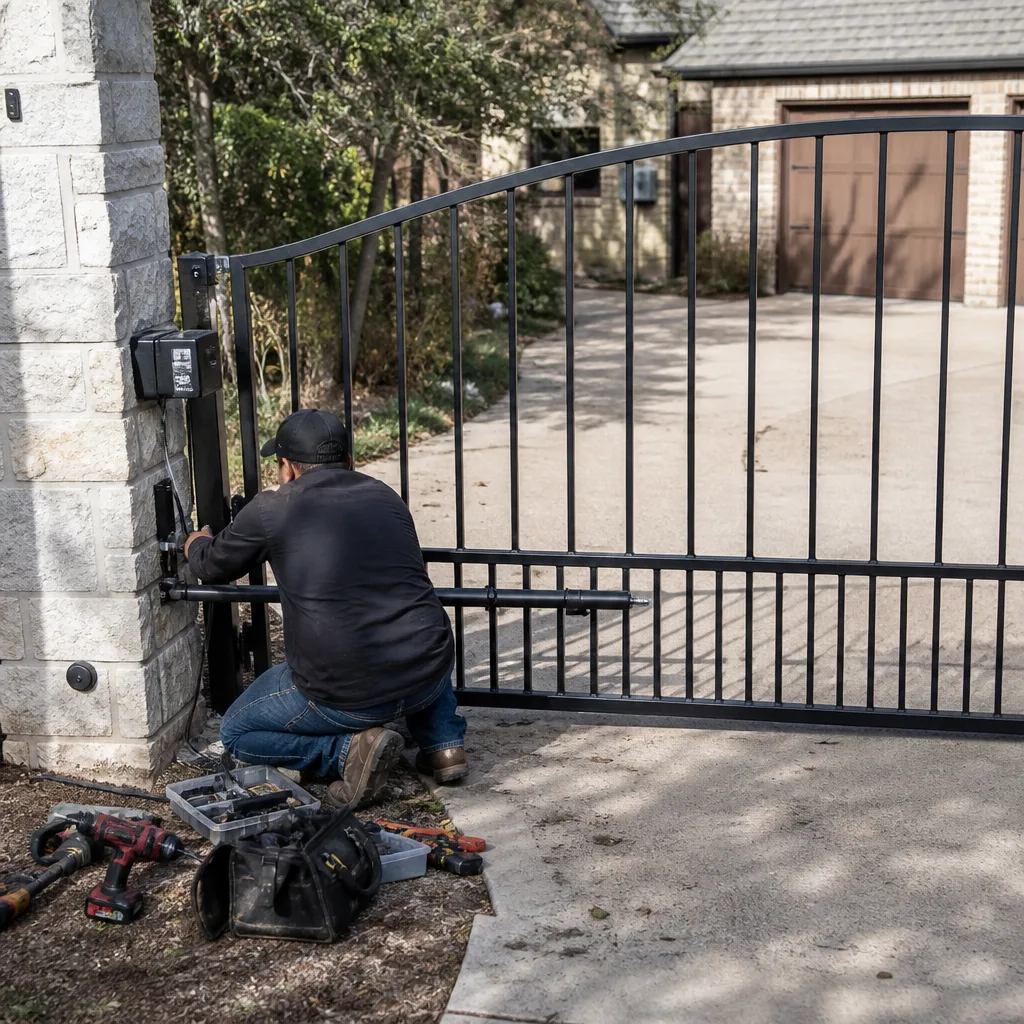 After
After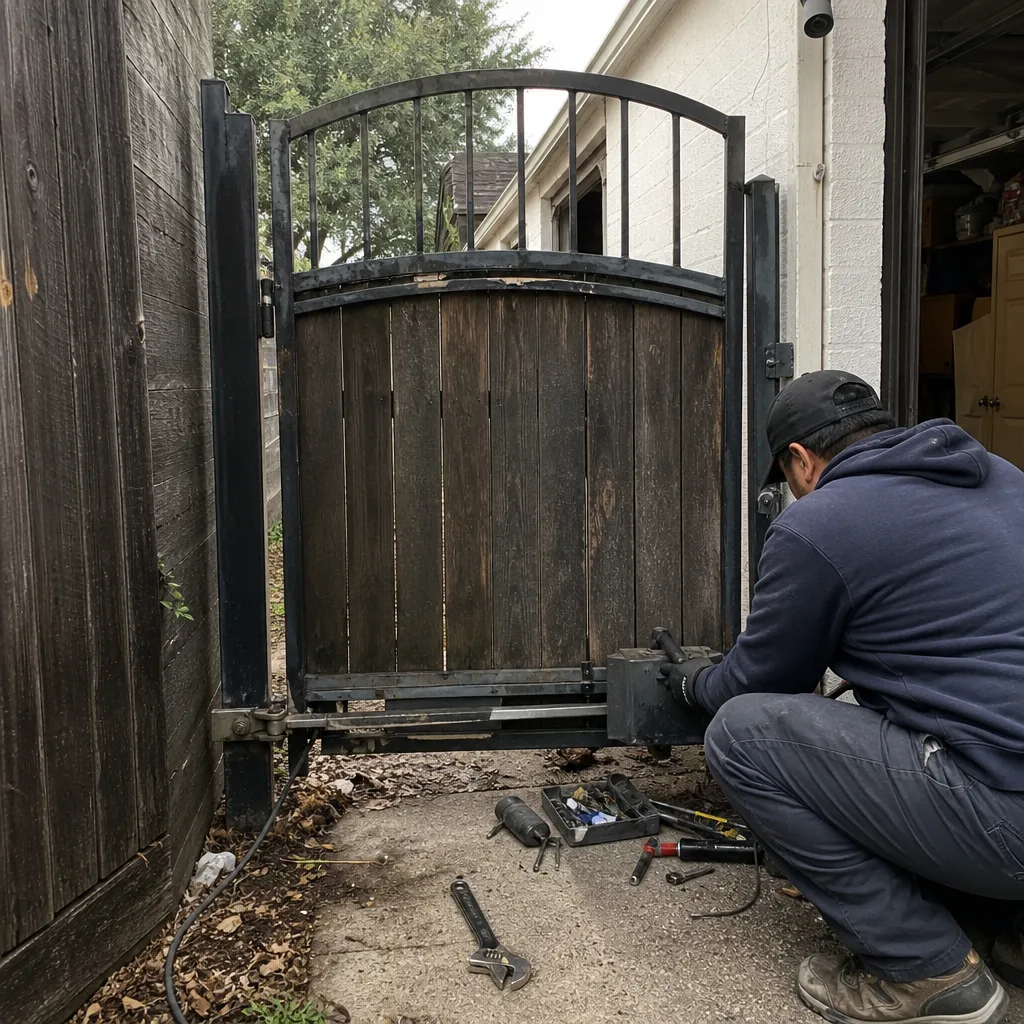 Before
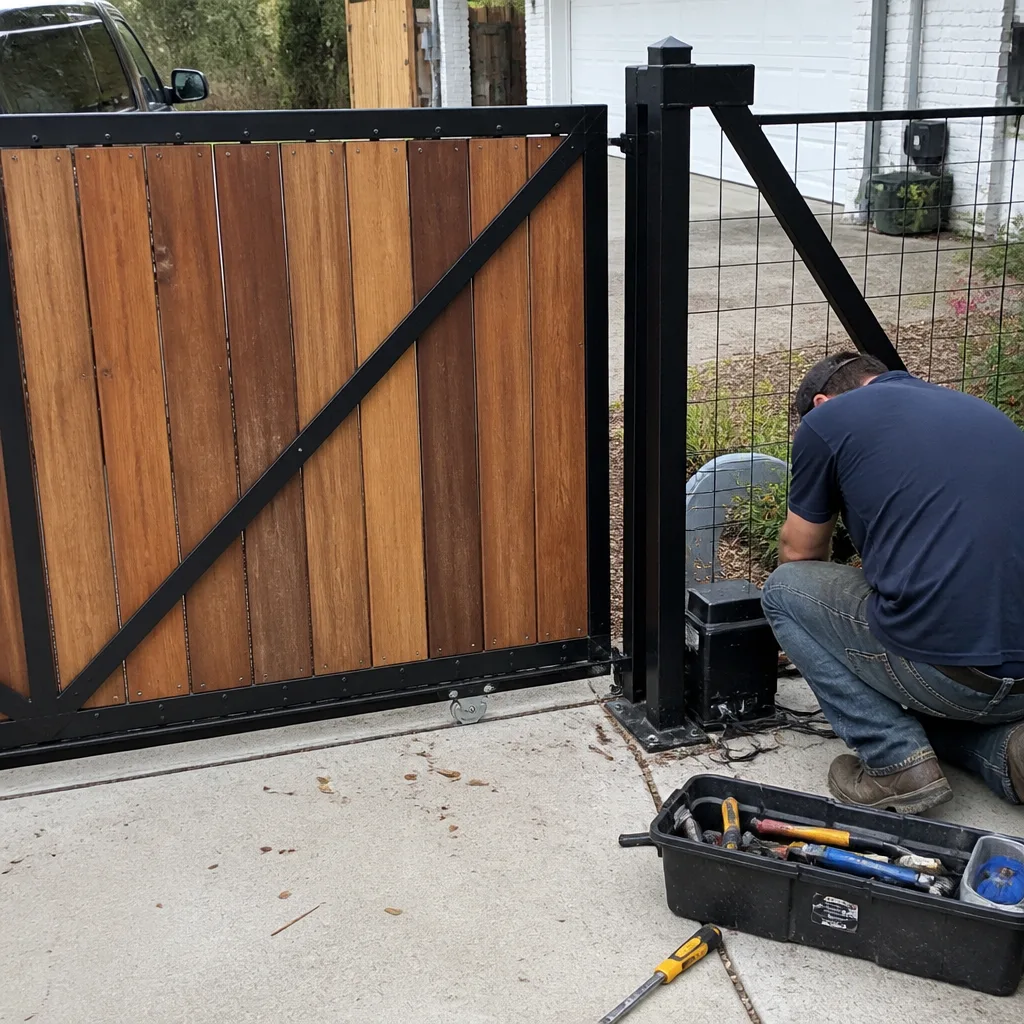 After
After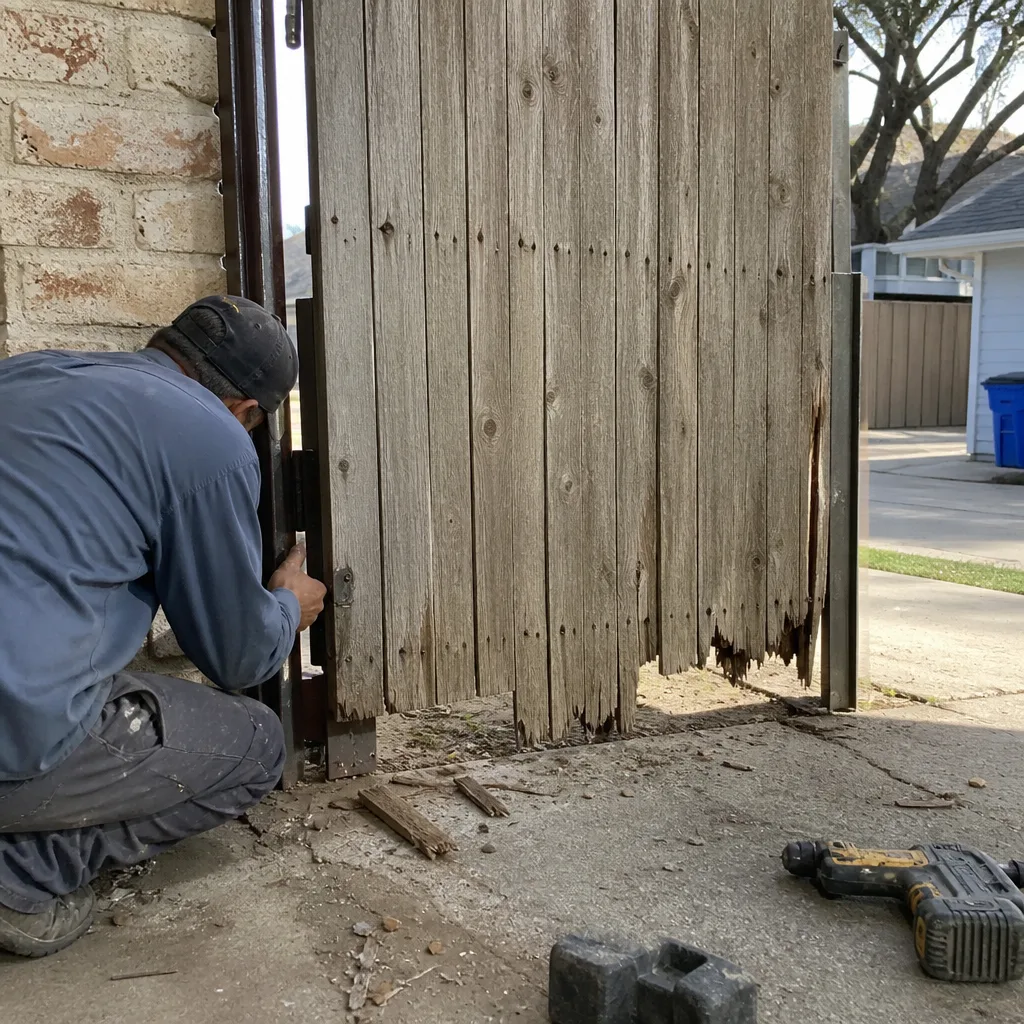 Before
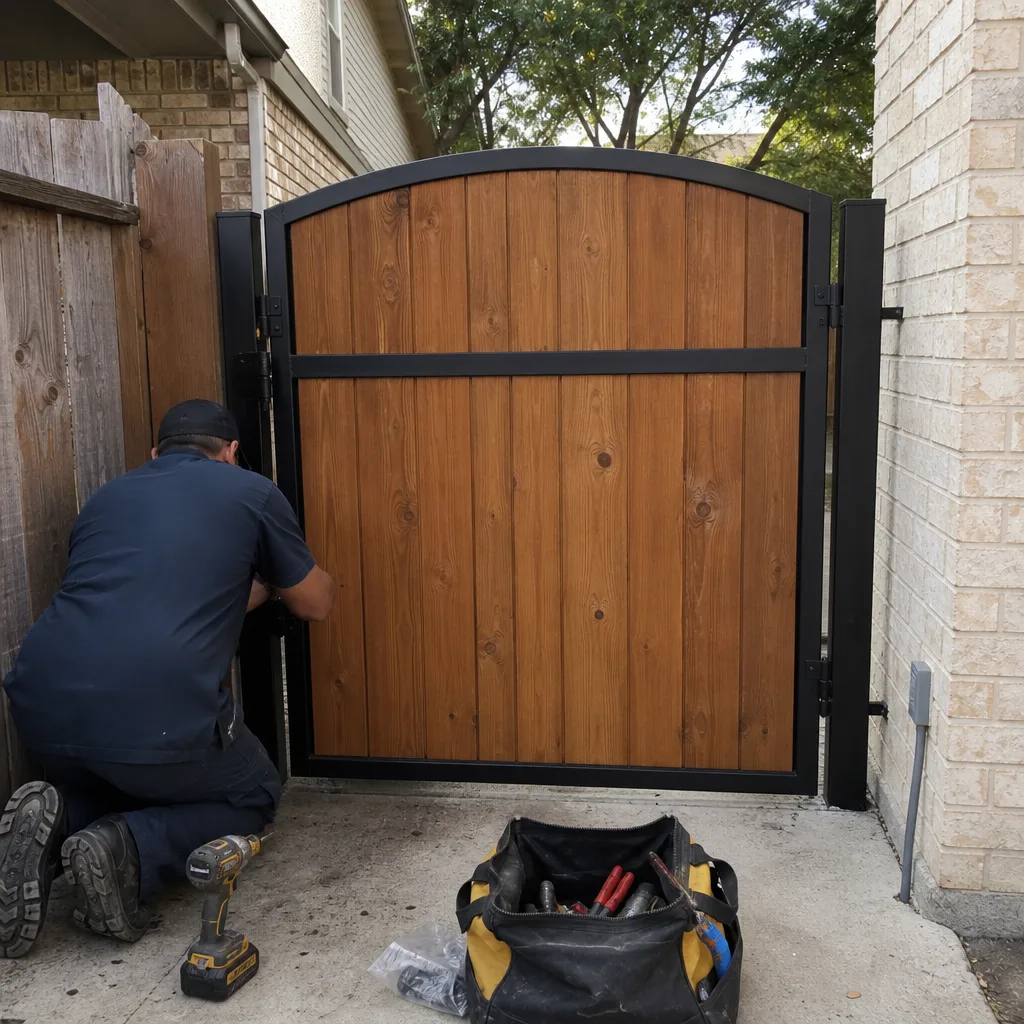 After
AfterThe Complete Guide to Gate Repair in Fort Worth
A gate operator that fails twice in 18 months almost never failed for two different reasons. It failed once, and the first repair left no record of what was actually found. The technician replaced a part, the gate worked for a season, and then the same underlying problem surfaced again. This guide breaks down every component of a residential gate system, how each fails in Fort Worth‘s specific climate, and what a thorough Gate Repair services visit actually looks like, so you can evaluate the work before anyone touches a wrench. By the end, you will know the difference between a symptom fix and a root-cause fix, and what documentation to demand from any gate company that works on your property.
Quick Answer
Gate repair in Fort Worth typically costs between $180 and $340 for common fixes like limit-switch resets, photo-eye realignment, and hinge bolt replacement. Full operator replacements run $950 to $2,400 depending on the motor brand and whether the existing arm bracket, wiring, and safety devices can be reused. The single biggest factor in whether a repair lasts is whether the technician documents what was found, because undocumented repairs are how Fort Worth homeowners end up paying twice for the same fault. For a detailed look at pricing, see our Gate Repair Cost Breakdown: The Fort Worth Homeowner’s Reference for 2026.
Table of Contents
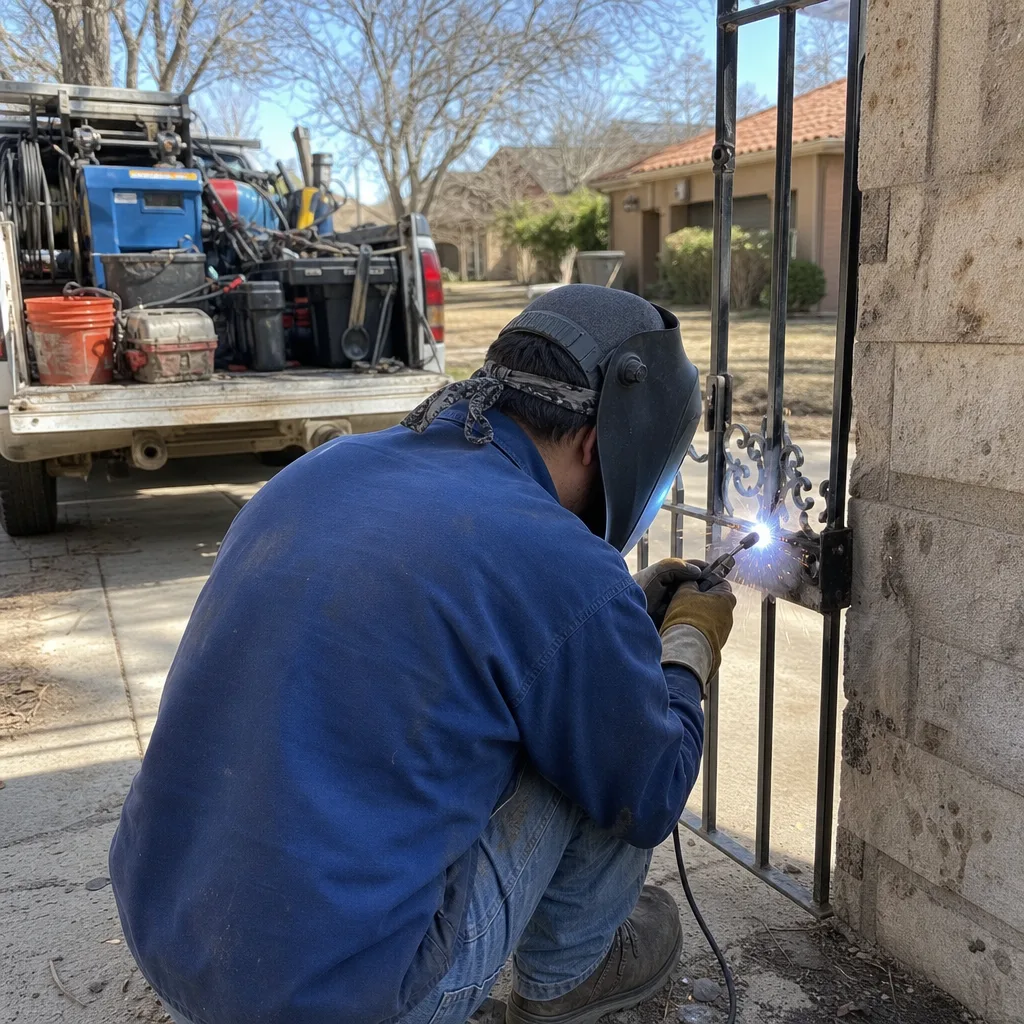
- Anatomy of a Residential Gate System
- How North Texas Heat and Clay Soil Destroy Gates
- The Most Common Gate Failures in Fort Worth
- Symptom Fix vs. Root-Cause Fix: The Difference That Determines Whether You Pay Once or Twice
- What a Documented Repair Record Should Contain
- Repair vs. Replace: How to Decide Using Part Availability and Board Cost
- What Gate Repair Costs in Fort Worth
- Common Mistakes to Avoid
- When to Call a Professional
- Frequently Asked Questions
- The Bottom Line
BeforeAfterAnatomy of a Residential Gate System
A driveway gate is not one machine. It is a system of components that have to stay in agreement with each other. When one part drifts out of spec, the others compensate until they cannot, and that is when the gate fails. Most homeowners never see the inside of this system, so here is what is actually mounted on and around your gate.
The Operator (Motor and Gearbox)
The operator is the box mounted on the post or the gate itself that houses the motor, gear reduction, and sometimes the control board. Swing gates in Fort Worth subdivisions commonly use linear arm operators (the piston-style unit that pushes and pulls) or articulated arm operators (the hinged elbow style). Slide gates use a gear rack and a drive sprocket inside the operator housing. The motor itself rarely burns out first. What fails first is usually the gear train, the capacitor, or the arm bracket, which is why a $40 capacitor replacement can fix a gate that would otherwise be quoted as a $1,100 operator swap.
Limit Switches
Limit switches tell the operator where “open” ends and “closed” ends. On a linear swing arm, these are typically magnetic reed switches or mechanical cams inside the operator. On a slide gate, they are often physical stops tripped by the gate carriage. When a limit switch drifts or fails, the operator does not know when to stop pushing. The gate slams against the post, reverses, or stalls mid-travel. In our experience, roughly a third of “my gate won’t close all the way” calls in Fort Worth are limit-switch issues, not motor failures.
Photo-Eyes and Safety Edges
A photo-eye is the infrared beam that stops or reverses the gate if something crosses the path while it is moving. Safety edges are the pressure-sensitive strips mounted on the leading edge of the gate that reverse it on contact. UL 325, the federal safety standard for automated gates, requires these devices to be present and functional. In Fort Worth, dust from new construction and clay soil kicked up by mowers collects on photo-eye lenses. A gate that reverses for no visible reason is often just a dirty or misaligned photo-eye.
Loop Detectors
Exit loops are wire loops buried under the driveway that detect a vehicle and tell the gate to open automatically. The loop detector is the circuit board that reads the loop. In Fort Worth’s shifting clay soil, loop wires can crack or break as the ground expands and contracts through wet and dry cycles. When the loop fails, the gate still opens with a remote or keypad but will not auto-exit. Fixing this correctly means locating the break, splicing it, and resealing, or in some cases cutting a new loop.
Hinge Hardware
Swing gates hang on hinge plates bolted through the post or welded to the frame. Hinge bolts are the highest-wear mechanical component on any swing gate. Fort Worth’s clay soil shifts, the gate post leans slightly, and suddenly the entire weight of a 400-pound gate is riding on the top hinge instead of being distributed across both. The result is a gate that scrapes the ground, a hinge bolt that snaps, or a post that pulls out of plumb.
Control Board
The control board is the brain. It interprets commands from remotes, keypads, the loop detector, and the safety devices, then tells the motor what to do. Boards fail from power surges (common in Fort Worth’s spring and fall storm seasons), lightning strikes, or chronic water intrusion. A board replacement without investigating what killed the board is the definition of a symptom fix, and it is a very common one in this industry.
We service nine gate-automation brands, including BFT, Linear, and Ghost Controls, which means the repair recommendation is based on what is already on your property, not on what we happen to stock. This guide is structured so you understand the system regardless of brand. If you need help with a specific opener issue, our Gate Motor & Opener in Fort Worth page covers motor-level diagnostics in depth.
How North Texas Heat and Clay Soil Destroy Gates

Fort Worth’s two environmental realities are thermal expansion and expansive clay soil. Both affect gates more than most homeowners realize, and both explain why a gate that works fine in Dallas or Arlington suburbs will fail differently on the west side of Fort Worth where the soil is heavier.
Thermal Expansion and Contraction
Fort Worth summers push gate metal well past 140 degrees Fahrenheit on the surface. Steel expands when it gets hot. A 12-foot steel gate can grow by roughly 1/16 to 1/8 of an inch in length between winter and summer. That does not sound like much, but it changes the gap at the post, the load on the hinges, and the alignment of the closure stops. Operators that were tuned in January shift out of adjustment by August. This is why limit switches, not motors, are the recurring repair on many Fort Worth gates.
Clay Soil and Post Lean
Fort Worth sits on a mix of Houston Black clay and other expansive soils. These soils swell when wet and shrink when dry. A gate post set in concrete can still lean if the soil around the footing shifts during a dry spell and the footing was not poured deep enough or wide enough for the post type. When a post leans even two or three degrees, three things happen in sequence:
- The gate’s center of gravity shifts toward the lean, loading the top hinge bolt and the lower hinge pin unevenly.
- The operator must work harder to move the same gate, increasing amp draw and heat build-up in the motor and control board.
- The face of the gate no longer meets the close stop squarely, so limit switch settings become unreliable.
A gate that starts scraping the driveway or sagging out of plumb is not primarily a cosmetic issue. It is a mechanical load problem that shortens the life of every powered component attached to it. The fix is not just tightening hinge bolts. It is securing the post properly, re-shimming the hinges, resetting the operator travel, and re-verifying the safety devices. We document each of those steps so the next service call does not start from zero.
This is also why a full Gate Installation in Fort Worth from a company that understands Fort Worth soil conditions matters more than the brand of motor you pick. The best operator in the world cannot overcome a leaning post.
The Most Common Gate Failures in Fort Worth
Here are the failures we see repeatedly across Fort Worth, from Benbrook to Saginaw, and what they typically mean.
- Gate opens but won’t close: Almost always a misaligned photo-eye or a dirty lens. It can also be a failed safety edge or a loop detector stuck in “detect” mode. The fix is diagnosis first, not board replacement.
- Gate closes but won’t open: Check the remote first, then the receiver board, then the operator power source. In Fort Worth, lightning strikes on the receiver antenna are a common cause after spring storms.
- Gate reverses halfway through travel: Usually an obstruction, a bad limit switch, or a photo-eye that is detecting something it should not. Less commonly, a failing capacitor causes the motor to stall and the board to interpret it as an obstruction.
- Gate hums but does not move: A humming sound with no movement usually means the capacitor is failing or the gear train is stripped. This is a repair, not an operator replacement, if caught early.
- Gate slams open or closed: This is almost always a limit-switch failure. The operator does not know when to stop, so it over-travels. If this has been happening for a while, the repeated slamming can damage the arm bracket and the hinge bolts.
- Remote opens the gate, keypad does not: The keypad wiring, keypad battery, or the keypad’s zone on the control board is the issue. The board itself is rarely the cause.
- Gate works sometimes, then stops working for a day: Intermittent failures are the hardest to diagnose and the most likely to be misdiagnosed as “bad board.” In our experience in Fort Worth, intermittent faults usually trace to a wire splice that is corroding inside the conduit, a loop wire that makes contact only when the soil is wet, or a thermal overload in the operator that resets once it cools down.
Each of these symptoms has a root cause, and each root cause has a specific diagnostic path. The problem in the gate repair industry is that many technicians stop at the symptom and replace the most expensive component that could be involved. We do not do that, and we have the photo record to prove what we found and what we set.
Symptom Fix vs. Root-Cause Fix: The Difference That Determines Whether You Pay Once or Twice
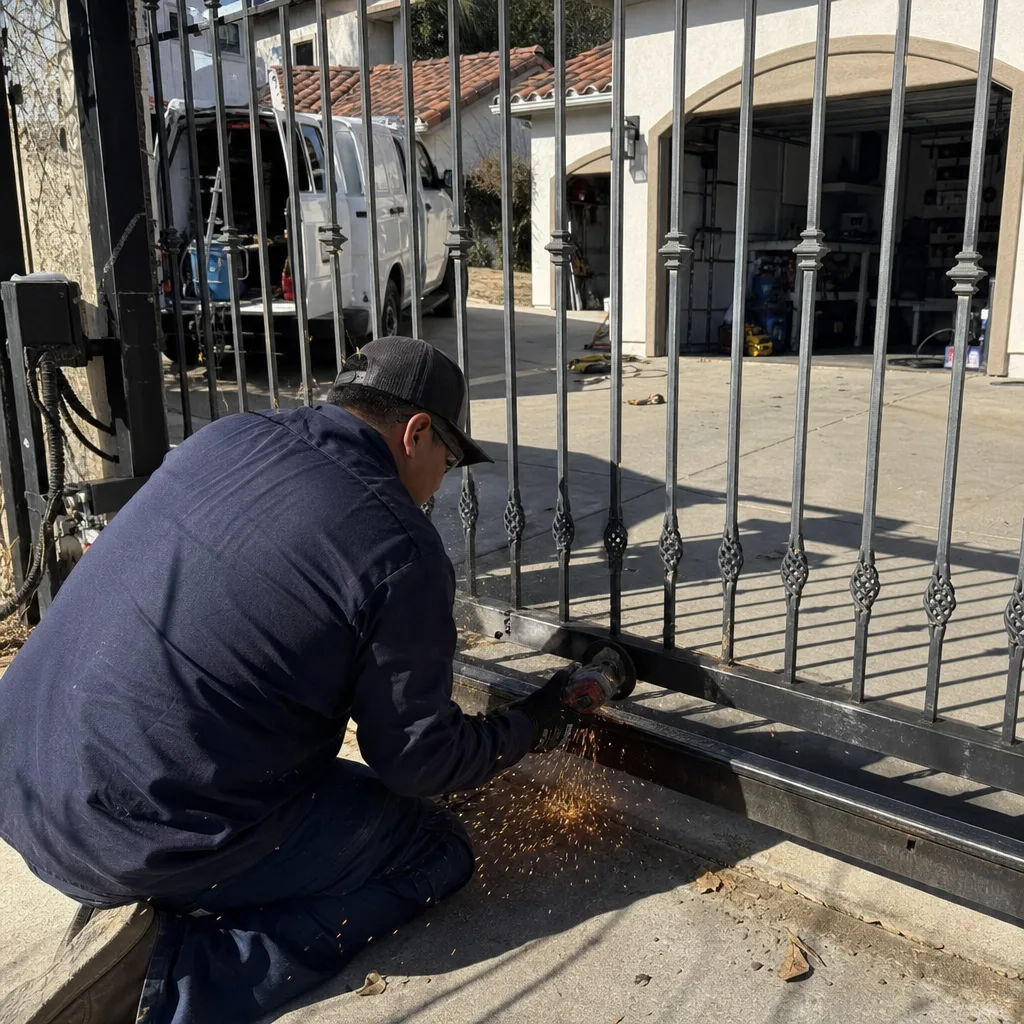
This is the single most important section of this guide. A symptom fix makes the gate work today. A root-cause fix makes the gate work next year. The difference is diagnostic effort and documentation. If you are weighing whether to tackle issues yourself, our DIY vs Professional Gate Repair: The Fort Worth Homeowner’s Decision Guide can help you decide.
Example 1: Replacing a Board vs. Finding the Wiring Fault That Fried It
A Fort Worth customer calls because their gate is dead. The technician arrives, verifies power, and jumps the board. The board is dead. The symptom fix is to replace the board for $400 to $600 and leave. The gate works for three weeks, then the new board dies too. Why? Because a staple or a conduit clamp had nicked the low-voltage wire running from the board to the photo-eye, and every time it rained, the exposed wire shorted and sent voltage somewhere it should not go. The root-cause fix is to trace the wire, locate the nick, splice it properly, seal it, replace the board once, and document the wire location in the job record. That is the difference between a $500 repair and a $1,000 repair spread across two visits.
Example 2: Replacing an Operator vs. Fixing the Post That Killed It
A gate operator burns out. The homeowner is quoted a new operator. Fourteen months later, the new operator starts struggling. What no one fixed was the post lean that was causing the gate to bind. The root-cause fix includes the operator replacement but also includes resetting the post footing or re-shimming the hinges, then re-verifying that the gate swings freely with the operator disengaged. A gate that binds will kill any operator eventually, regardless of brand. We have seen this exact pattern with BFT, Viking, and Linear operators in Fort Worth.
How to Tell Which Fix You Are Getting
Ask the technician one question: “What caused the failure?” If the answer is “the board is bad” or “the motor is shot,” you are getting a symptom fix. If the answer is “the board failed because a photo-eye wire was shorted where it enters the conduit, and here is the photo of the wire,” you are getting a root-cause fix. A technician who can show you the evidence of the cause is a technician who found the cause. A technician who cannot is guessing.
This is the entire reason Vance Gate Repair exists the way it does. Vance Gate Repair Fort Worth home is built around a simple premise from Adrian Vance’s commercial access-control background: document every finding, photograph every change, and write down what was done so the next technician never pays for the last technician’s mystery.
What a Documented Repair Record Should Contain
Most Fort Worth homeowners do not know what documentation they should receive after a gate repair, because most gate companies do not leave any. A proper repair record is not a line item on an invoice. It is a set of specific technical notes that allow any future technician to understand the gate’s history without re-diagnosing it from scratch. Here is what it should contain:
- A written list of readings taken before work began. This includes amp draw on the motor, incoming voltage at the operator, limit-switch positions, and photo-eye alignment. Without baseline readings, no one can verify what changed.
- A description of the failure as found. Not “gate not working.” Something like: “Operator hums on open command, no arm movement. Capacitor rated 25µF reads 11.4µF. Motor windings test within spec.” That is the language of a technician who found the problem.
- The part number installed. Not “new board.” The actual part number, so the homeowner or the next technician can source a replacement if needed. This matters more as operators age and manufacturers discontinue boards.
- New readings taken after the repair. What was the amp draw after? What was the limit position set to? This proves the fix corrected the underlying condition, not just the symptom.
- Photo evidence. Photos of the failed part, the installed part, the wiring before and after, and the final gate position. A photo of the limit-switch setting prevents the next technician from guessing where it was set.
- A note on what was not replaced and why. If the board was fine and the capacitor was the issue, the record says so. This prevents a future technician from recommending a board replacement that is not needed.
We leave this record on every visit, at no additional charge. It is not a premium option. It is the bare minimum for a gate that will be serviced again, because every gate will be serviced again. Explore our more guides & resources for additional homeowner guidance.
Repair vs. Replace: How to Decide Using Part Availability and Board Cost
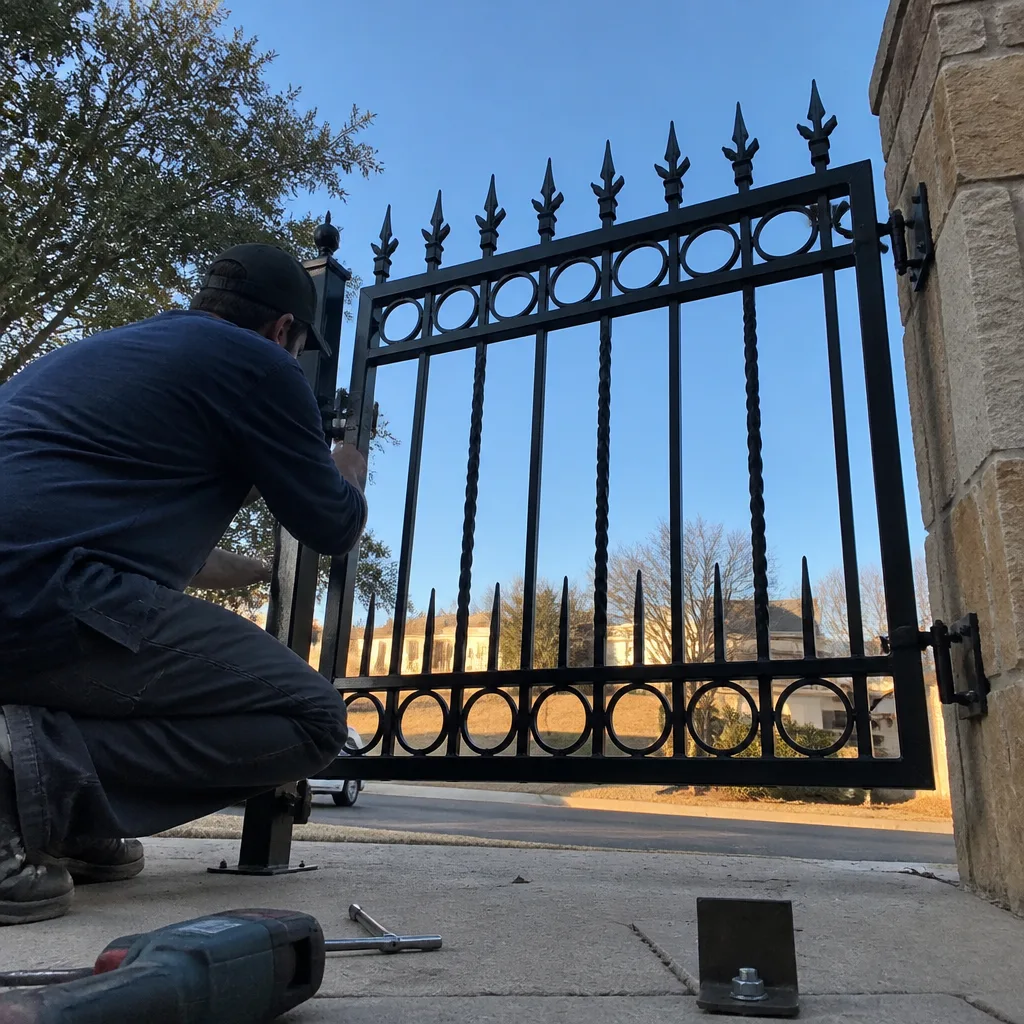
The decision to repair or replace an operator should be a math problem, not a sales pitch. Most gate companies make it the opposite. Here is the honest framework we use with Fort Worth customers.
When to Repair
- The part is available and the operator is under 12 years old. Major brands like LiftMaster, BFT, Linear, FAAC, and Viking keep parts available for years. If the limit switch, capacitor, or control board can be sourced, repair is usually the right call.
- The failure is mechanical, not electrical, and the gear train is intact. Hinge bolts, arm brackets, photo-eyes, and capacitors are inexpensive compared to a full operator. Replacing an entire operator because a $30 capacitor failed is wasteful.
- The operator is still in production or recently discontinued. If the manufacturer still supports the unit, repair extends its life without stranding you on orphaned hardware.
When to Replace
- The control board is discontinued and the replacement board costs more than 50% of a new operator. Board prices have climbed significantly on some discontinued models. When a board is $700 and a new operator with a fresh warranty is $1,100, replacement deserves honest consideration.
- The gearbox or gear train is stripped and the replacement cost approaches a new unit. Gear replacement on some swing operators is labor-intensive, and if the operator is already 15 years old, the remaining service life does not justify the investment.
- The operator has had multiple repairs in 2 years and no one documented the cause of the earlier failures. If you are looking at your third repair in 24 months and no prior record exists, that is a sign the underlying issue has never been found. In that case, replacing the operator is only half the fix. The other half is diagnosing what killed the previous two.
The Cost Threshold in Fort Worth
As a general rule, if the repair cost is under 40% of a full operator replacement and the part is available, repair it. If the repair cost exceeds 60% of replacement, replace it. Between 40% and 60%, it depends on the operator age, brand, and whether the failure mode is likely to recur. We walk every Fort Worth customer through this math before any work starts, with the written price in hand.
What Gate Repair Costs in Fort Worth
Here are the price ranges we typically see in the Fort Worth market. These are provided upfront and in writing before any work begins.
| Repair Type | Typical Cost in Fort Worth |
|---|---|
| Photo-eye realignment or cleaning | $95-$145 |
| Limit-switch reset or replacement | $140-$220 |
| Capacitor replacement | $110-$180 |
| Hinge bolt or hinge plate replacement | $180-$340 |
| Safety edge replacement | $190-$310 |
| Loop detector replacement | $240-$390 |
| Control board replacement | $380-$650 |
| Full operator replacement (swing) | $950-$1,800 |
| Full operator replacement (slide) | $1,400-$2,400 |
These ranges assume a standard residential gate in a typical Fort Worth neighborhood. Gates that are significantly longer than 14 feet, gates with custom ornamental work, or gates on steep driveways can push the high end of these ranges. Every job under The Haven Standard carries the same rule: the flat price is written and handed over before anyone picks up a tool. That is Clause 1, and it is not optional.
Every repair and installation also carries the 365-Day Done Right Promise. If the repair is not right within one full year, we make it right. No argument, no fee, no expiration date within that window. You can read more about our repair scope on the Gate Repair in Fort Worth page.
Common Mistakes to Avoid
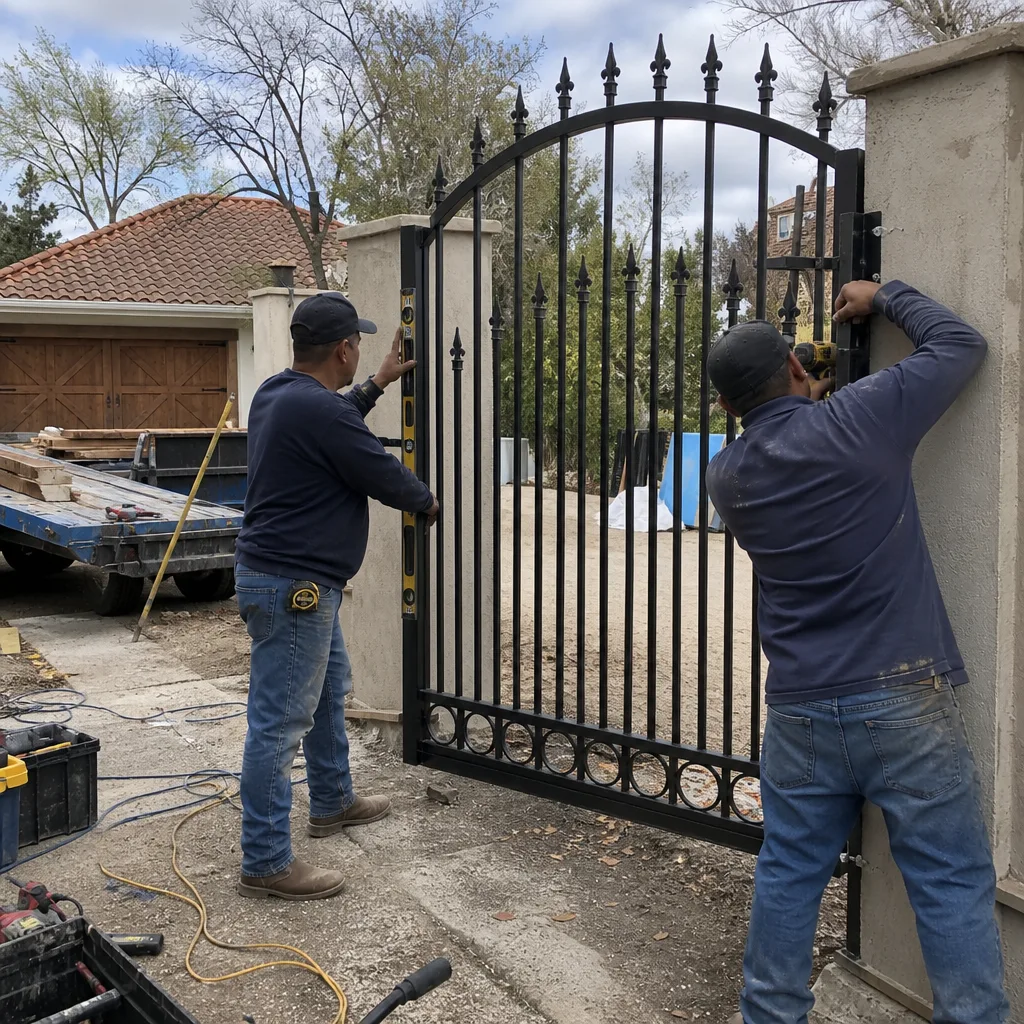
- Accepting a verbal quote. If the price is not written down, it does not exist. Clause 1 of The Haven Standard exists because verbal quotes are how surprise invoices happen. Insist on a written price before work starts.
- Replacing a motor before checking the capacitor. A bad capacitor is a $15 part and a 20-minute fix. A technician who wants to replace the whole operator without testing the capacitor first is either inexperienced or not doing diagnostics.
- Ignoring post lean. The operator cannot compensate for a leaning post forever. Tightening hinge bolts without addressing the post lean means the same repair will be needed again within 12 to 18 months.
- Power-washing the operator housing. We see this constantly in Fort Worth. High-pressure water forces its way past the gaskets and into the control board enclosure. Water intrusion is one of the fastest ways to kill a board. Clean operators with a damp cloth, not a pressure washer.
- Setting the open limit to full travel on a swing gate. When a swing gate opens to exactly 90 degrees or more, it puts maximum stress on the operator arm, hinges, and post. Setting the open limit to around 85 to 88 degrees extends component life and costs nothing.
- Hiring based on price alone and skipping the documentation question. The cheapest quote without a documented record is the most expensive repair you will buy, because the next technician will spend billable hours rediscovering what the first one should have written down.
When to Call a Professional
Call a professional the moment a gate starts behaving differently than it did last month, even if it still works. A gate that opens slowly, reverses occasionally, or hums on startup is telling you something. Waiting converts a $140 limit-switch fix into a $1,200 operator replacement. You should also call a professional immediately if the gate strikes a person, pet, or vehicle, if the safety devices are not functioning, or if you see exposed wiring anywhere along the gate path. High-voltage and high-tension components on an automated gate can cause serious injury, and UL 325 compliance is not optional for residential installations. Vance Gate Repair Fort Worth offers free estimates in Fort Worth. Call (817) 476-9945 and a live person will answer, day or night.
Frequently Asked Questions
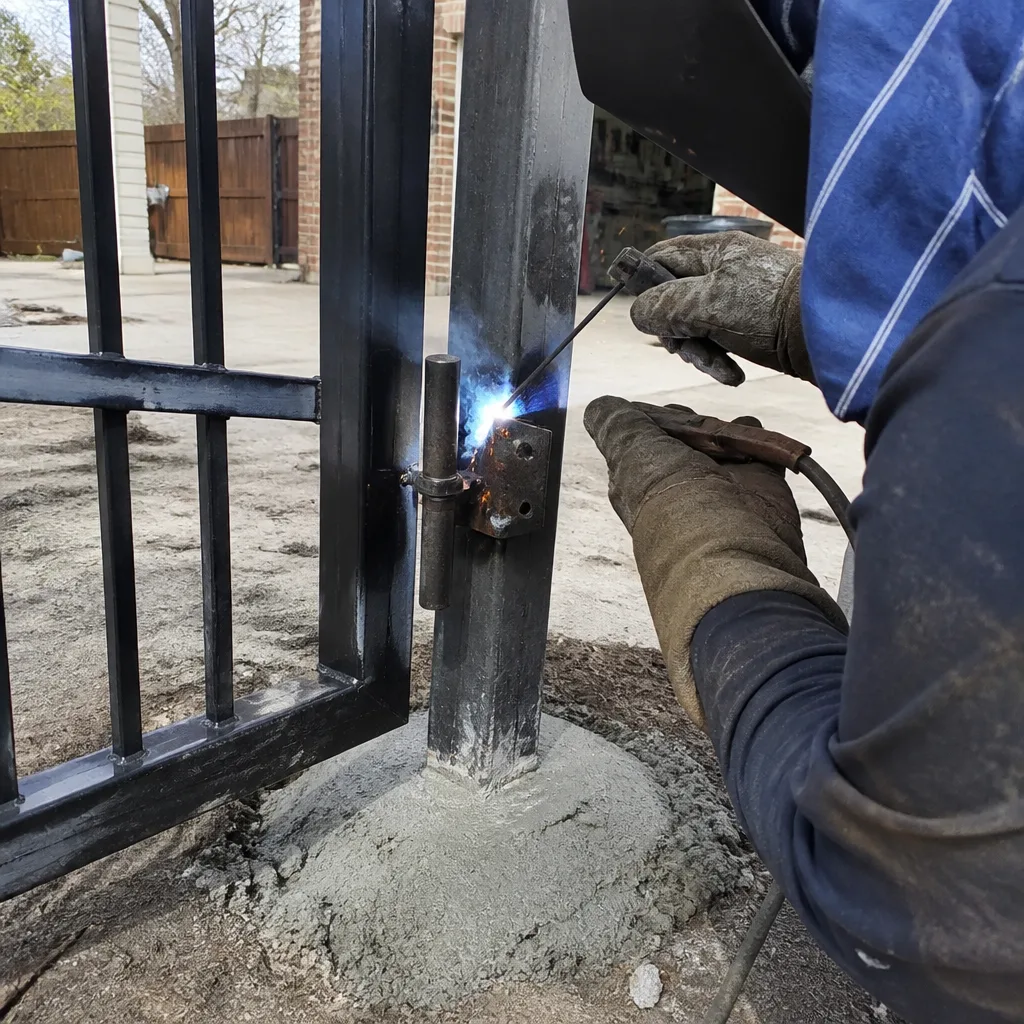
Gate repair in Fort Worth typically costs between $95 and $390 for common fixes like photo-eye realignment, capacitor replacement, limit-switch resets, and loop detector replacement, while full operator replacements range from $950 to $2,400. The exact price depends on the failure point, the brand of operator, and whether any structural work is required on the post or hinges. Call (817) 476-9945 for an exact quote. Estimates are free, and the price is in writing before any work starts.
Yes. We dispatch same-day in Fort Worth for gate failures, and a live person answers the phone 24 hours a day, seven days a week. No voicemail loop, no callback queue. Call (817) 476-9945 and you will speak to a person who can schedule the visit.
We service nine major gate-automation brands, including LiftMaster, FAAC, BFT, Linear, Viking, Ghost Controls, DoorKing, Elite, and Mighty Mule. The repair recommendation is based on what is already on your property, not on what we happen to stock or prefer to install.
If the repair cost is under 40% of a full replacement and the part is available, repair is usually the right call. If the repair exceeds 60% of replacement, replacement deserves consideration. We walk every Fort Worth customer through this calculation with the written price in hand before any work begins.
It covers any repair Vance Gate Repair performs for one full year. If the work is not right within that window, we make it right at no additional charge. No argument, no fee, no expiration date within the 365 days.
Yes. Every visit includes a documented photo record and written technical notes covering what was found, what was set, and what was installed. That is Haven Standard Clause 4, and it is included at no additional charge on every job in Fort Worth.
The Haven Standard is the operating code of Vance Gate Repair. It has four clauses: a written price before work starts, a written scope, a documented photo record on every visit, and the 365-Day Done Right Promise. It exists so no homeowner has to argue about what was promised after the fact.
The Bottom Line
A gate is a system with a history, and the history matters more than the brand of the motor. Most Fort Worth gate failures are not mysterious. They are the predictable result of North Texas heat, shifting clay soil, and repairs that never found the root cause. The way to stop paying twice for the same failure is to demand evidence: a written price before work starts, a documented record of what was found, and a technician who can explain the cause in plain language. That is what we do on every job. If you need gate repair, installation, or service in Fort Worth, call (817) 476-9945 for a free estimate. The price will be in writing, the record will be in your hands, and a live person will answer the phone.
Written by Adrian Vance, Owner at Vance Gate Repair Fort Worth, serving Fort Worth since 2014.